Understanding Minangkabau Hospitality: Homestay Etiquette and Respectful Behavior for Guests
Minangkabau hospitality is legendary within the landscape of Indonesia tourism. Rooted in the highlands of West Sumatra, the Minangkabau people adhere to a unique matrilineal society governed by ‘Adat’ (traditional custom). For travelers seeking an authentic experience, staying in a local homestay—often a traditional Rumah Gadang—offers an unparalleled window into this vibrant culture. However, to truly appreciate the warmth of your hosts, understanding the nuances of local etiquette is essential.
The Essence of Minangkabau Hospitality
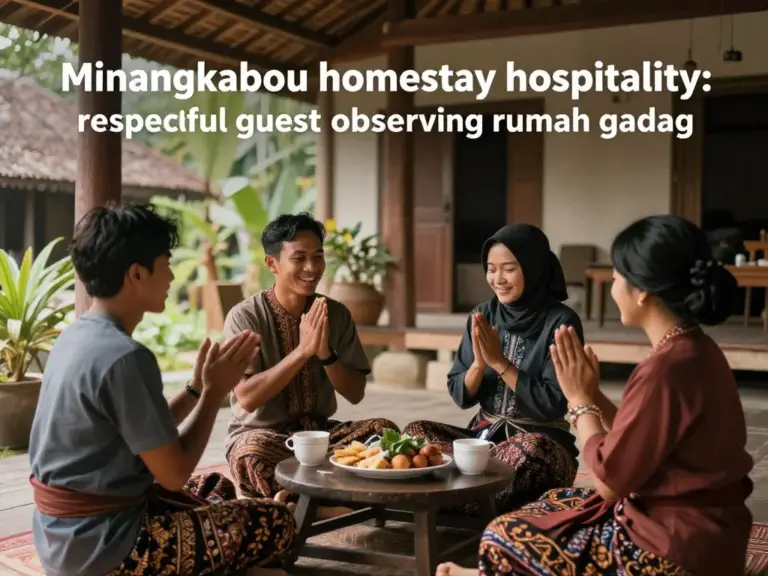
In West Sumatra, a guest is seen as a blessing. The concept of ‘Baso-Basi’ (politeness and small talk) is central to Minangkabau hospitality. Hosts will often go out of their way to ensure you are well-fed and comfortable. This generosity is not just a personal trait but a cultural obligation to uphold the honor of the family and the village. When you enter a Minang home, you aren’t just a customer; you are treated as an extended family member.
Essential Homestay Etiquette for Guests
To navigate your stay gracefully, keep these fundamental behaviors in mind:
- Remove Your Shoes: Always leave your footwear at the entrance. Most Minang homes are kept meticulously clean for prayer and daily activities.
- Use Your Right Hand: Whether giving, receiving, or eating, always use your right hand. The left hand is traditionally reserved for personal hygiene.
- Dress Modestly: As a conservative region, wearing clothing that covers shoulders and knees is highly appreciated and shows respect for local norms.
Dining Customs: The Heart of the Home
Food is the primary language of Minangkabau hospitality. You will likely be introduced to ‘Bajamba’ style dining or served a variety of spicy, coconut-rich dishes like Rendang. It is polite to wait for the eldest person or the host to invite you to eat. Even if you are full, try a small portion of what is offered, as refusing food can be seen as rejecting the host’s kindness.
| Action | Meaning in Minang Culture |
|---|---|
| Accepting Tea/Coffee | Accepting the host’s friendship and welcome. |
| Sitting with legs crossed (men) | A standard, respectful way to sit on the floor. |
| Sitting with legs tucked (women) | The ‘Basimpuah’ position, showing modesty. |
Respecting the Matrilineal Tradition
The Minangkabau are the world’s largest matrilineal society. Property and family names are passed down through the female line. In a homestay, you will notice that the ‘Bundo Kanduang’ (the senior woman/mother of the house) holds significant authority. Acknowledging her role and showing deference to the women of the household is a key part of respectful behavior.
คำถามที่พบบ่อย (FAQ)
Q1: Is it necessary to bring a gift for the homestay host?
A1: While not mandatory, a small gift from your home country or some fruit/snacks bought locally is a lovely gesture of ‘Baso-Basi’ and will be greatly appreciated.
Q2: How should I handle the spicy food if I have a low tolerance?
A2: Minang food is famous for its heat. It is perfectly okay to politely tell your host ‘Tidak pedas, tolong’ (Not spicy, please), though many traditional dishes are pre-prepared with chili.
Q3: Can I take photos of the traditional Rumah Gadang?
A3: Yes, but always ask for permission first, especially if you are photographing the interior or the residents. It is a sign of respect for their privacy.
Q4: What is the best way to greet my hosts?
A4: A polite ‘Assalamualaikum’ (if they are Muslim) or a slight bow with a smile is appropriate. Some may offer a ‘Salim’ (touching the elder’s hand to your forehead), but a smile and a nod are usually sufficient for tourists.
References
- Official Indonesia Tourism – West Sumatra Guide
- UNESCO: Sawahlunto Old Coal Mining Town & Minangkabau Culture
- Minangkabau Homestays: Etiquette, Traditional Foods, and Matrilineal Customs Every Visitor Should Know
- A Guide to Minangkabau Cuisine at Homestays: Must-Try Dishes, Dining Customs, and Dietary Etiquette
- Matrilineal Society Explained: How Minangkabau Inheritance, Family Roles, and Clan Systems Shape Homestay Life