What to expect on a Bali cacao and coffee agroforestry tour: typical itineraries, hands-on activities, and cultural immersion
- What to expect on a Bali cacao and coffee agroforestry tour: typical itineraries, hands-on activities, and cultural immersion
Bali is often celebrated for its pristine beaches and vibrant nightlife, but deep within its emerald heart lies a world of sustainable agriculture and ancient traditions. A Bali cacao and coffee agroforestry tour offers a unique window into the island’s soul, moving beyond simple sightseeing to provide a holistic experience of how Balinese farmers work in harmony with nature.
Typical Itineraries: A Day in the Highlands
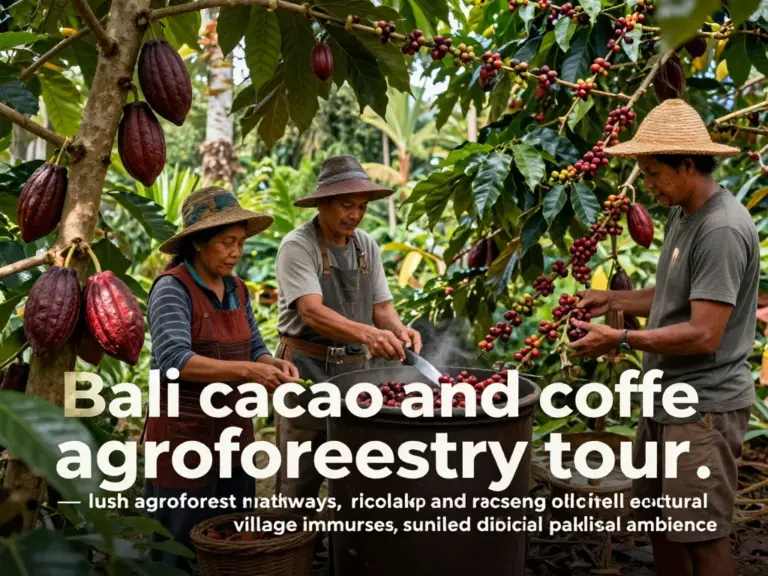
Most tours begin in the cool, misty highlands of regions like Munduk, Bedugul, or the slopes of Mount Batukaru. A typical itinerary is designed to follow the natural flow of the farm’s daily cycle. You will usually start with a warm welcome from a local family, followed by a guided walk through the ‘Kebun’ (garden). Unlike industrial plantations, these agroforestry sites look like lush jungles where cacao trees, coffee shrubs, vanilla vines, and fruit trees grow together in a complex, symbiotic ecosystem.
Mid-morning usually involves transitioning from the field to the processing area. Here, you witness the transformation of raw pods and cherries into the aromatic products known worldwide. The afternoon often concludes with a communal meal—often a traditional ‘Nasi Campur’—prepared with ingredients sourced directly from the forest you just explored.
Hands-on Activities: From Soil to Cup
The highlight of any Bali cacao and coffee agroforestry tour is the opportunity to get your hands dirty. These tours are rarely passive; they invite you to participate in the age-old crafts of the island.
- Harvesting: Learn how to identify a perfectly ripe cacao pod by its color and sound, or selectively pick only the brightest red coffee cherries.
- Fermentation & Drying: Understand the science behind the flavor. You might help stir fermenting cacao beans or spread coffee beans out on drying mats under the tropical sun.
- Traditional Roasting: Experience the ‘old way’ of roasting coffee in a clay pot over an open wood fire. The aroma is intoxicating and vastly different from industrial roasters.
- Pounding and Grinding: Use a traditional mortar and pestle to grind roasted beans into a fine powder, feeling the physical effort required before modern machinery took over.
| Activity | Sensory Experience | Difficulty |
|---|---|---|
| Cacao Tasting | Sweet, tart, and fruity raw pulp | Easy |
| Manual Grinding | Rhythmic sounds and intense aromas | Moderate |
| Tree Planting | Connection with the earth | Moderate |
Cultural Immersion and the ‘Tri Hita Karana’ Philosophy
What sets a Balinese agroforestry tour apart from a standard plantation visit is the deep integration of spirituality. Balinese agriculture is guided by Tri Hita Karana—the three causes of prosperity: harmony with God, harmony among people, and harmony with nature.
During your tour, you will likely see small shrines nestled among the trees. Your guide might explain the ‘Tumpek Uduh’ ceremony, a day dedicated to giving thanks to the plants that provide food and oxygen. This cultural immersion allows visitors to see the farm not just as a business, but as a sacred space where every plant has a purpose and a spirit.
Why Agroforestry Matters in Bali
Agroforestry is a vital tool for conservation in Indonesia. By mimicking a natural forest, these farms prevent soil erosion, preserve water tables, and provide a habitat for local wildlife like birds and civets. Choosing a Bali cacao and coffee agroforestry tour supports local families who are committed to regenerative practices rather than destructive monoculture. It is a form of travel that gives back to the land as much as it gives to the traveler.
คำถามที่พบบ่อย (FAQ)
What should I wear on an agroforestry tour?
It is recommended to wear comfortable walking shoes with good grip, as paths can be muddy or uneven. Light, breathable clothing and a hat are essential, and don’t forget insect repellent.
Is this activity suitable for children?
Yes! Most tours are very family-friendly. Children often enjoy the hands-on aspect of cracking open cacao pods and learning where their chocolate comes from.
How long do these tours usually last?
A standard tour usually lasts between 3 to 5 hours, including the walk, the hands-on processing, and a tasting session or meal.
Can I buy products directly from the farm?
Absolutely. Most farms have a small shop where you can purchase fresh coffee beans, raw cacao powder, or artisanal chocolate bars, with the proceeds going directly to the farming community.
References
- Agroforestry Tours in Bali: Explore Cacao, Coffee, and Community Farms for Sustainable Travel Experiences
- Why choose agroforestry tours in Bali? Benefits of cacao, coffee & community-led farm visits for eco-conscious travelers
- How agroforestry supports Bali’s communities and ecosystems: sustainable farming practices, fair trade, and biodiversity conservation