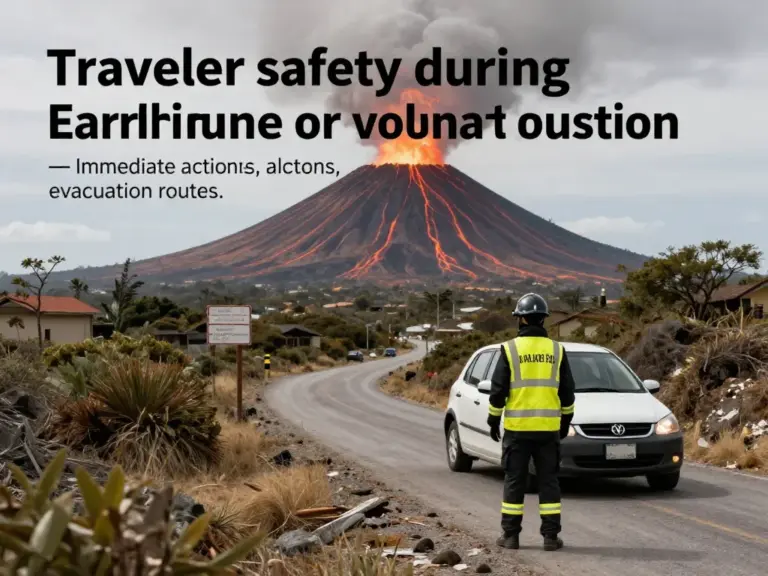
What to Do During an Earthquake or Volcanic Eruption While Traveling: Immediate Safety Actions, Evacuation Routes, and Shelter-in-Place Guidance
- What to Do During an Earthquake or Volcanic Eruption While Traveling: Immediate Safety Actions, Evacuation Routes, and Shelter-in-Place Guidance
Indonesia is a breathtaking archipelago known for its stunning landscapes, but its location on the ‘Ring of Fire’ means it is geologically active. For travelers, understanding What to Do During an Earthquake or Volcanic Eruption While Traveling is not just a precaution—it is a vital skill. Whether you are trekking in Lombok or relaxing in Bali, being prepared for seismic or volcanic activity ensures that you can navigate unexpected situations with confidence and safety.
Understanding the Risks in Indonesia
Indonesia is home to over 130 active volcanoes and experiences thousands of earthquakes annually. While most are minor, major events can occur. As a tourist, your primary challenge is unfamiliarity with the local terrain and emergency protocols. This guide provides actionable steps to bridge that gap and keep you safe.
Immediate Safety Actions During an Earthquake
If the ground begins to shake, the most important thing is to stay calm. Most injuries occur when people panic or try to run while the ground is moving. Follow the internationally recognized ‘Drop, Cover, and Hold On’ protocol.
- Drop: Get down on your hands and knees. This protects you from falling and allows you to move if necessary.
- Cover: Take cover under a sturdy table or desk. If no shelter is nearby, cover your head and neck with your arms.
- Hold On: Stay in place until the shaking stops.
If you are outdoors, move away from buildings, streetlights, and utility wires. If you are near the coast in Indonesia, be aware that a strong earthquake may trigger a tsunami. If the shaking lasts more than 20 seconds, move to higher ground immediately without waiting for an official warning.
Volcanic eruptions often provide more warning time than earthquakes, but they present unique hazards like ashfall, pyroclastic flows, and volcanic gases. If you are near a volcano that begins to erupt, follow these steps:
Immediate Evacuation Routes
Follow the instructions of local authorities (BPBD) and hotel staff. In Indonesia, evacuation routes are marked with yellow and black signs. Avoid valley floors and low-lying areas, as these are primary paths for lahars (mudflows) and pyroclastic flows.
Shelter-in-Place Guidance
If you cannot evacuate, sheltering in place is necessary. Close all windows and doors to prevent volcanic ash from entering. Ash is abrasive and can damage your lungs and eyes. Use an N95 mask if available, or a damp cloth over your nose and mouth.
| Hazard | Action | Safety Gear |
|---|---|---|
| Earthquake | Drop, Cover, Hold On | Sturdy Furniture |
| Volcanic Ash | Stay Indoors, Seal Vents | N95 Mask, Goggles |
| Tsunami Risk | Move to Higher Ground | Emergency Whistle |
Communication and Emergency Contacts
In the event of a disaster, communication networks may be congested. Use SMS or social media to check in with family rather than making voice calls. Keep the following numbers saved in your phone:
- Emergency Services (General): 112
- Ambulance: 118 / 119
- Search and Rescue (BASARNAS): 115
คำถามที่พบบ่อย (FAQ)
What is the safest place to be during an earthquake in a hotel?
Under a sturdy desk or table inside your room. Stay away from glass windows, mirrors, and heavy wardrobes. Do not use the elevators.
How do I know if a volcano is about to erupt in Indonesia?
The Indonesian government uses a 4-level alert system (Level I: Normal, Level II: Vigilance, Level III: Standby, Level IV: Caution). Check the MAGMA Indonesia website for real-time updates.
Should I wear a mask for volcanic ash?
Yes. Volcanic ash consists of tiny glass fragments. An N95 mask is best, but a surgical mask or a wet cloth is better than no protection at all.
What should be in my travel emergency kit?
A portable power bank, copies of your passport, essential medications, a flashlight, and an N95 mask.
References
BMKG – Indonesian Agency for Meteorology, Climatology and Geophysics
MAGMA Indonesia – Volcanic Activity Reports
Ready.gov – Earthquake Safety Guidelines
- Earthquake and Volcano Safety Preparedness for Travelers: Essential Strategies to Stay Safe Before, During, and After an Event
- Why Earthquake and Volcano Risks Matter for Travelers: Assessing Destinations, Travel Insurance, and Local Alerts
- Preparing to Travel to Seismically Active Regions: Packing Essentials, Emergency Plans, and Communication Strategies