Day 2 — Pre-dawn Ijen Blue Flame Trek: What to Expect, Safety, Permit, Gear, and Photography Tips
Welcome to the most electrifying leg of your East Java journey. The Ijen Blue Flame Trek is not just a hike; it is a pilgrimage into a volcanic underworld that feels like another planet. Located on the border between Banyuwangi and Bondowoso, the Kawah Ijen crater is one of only two places in the world where you can witness the ethereal electric-blue fire. This phenomenon occurs when sulfuric gases emerge from the earth at high pressure and temperatures, igniting upon contact with the air. To see it, you must brave the darkness, the steep trails, and the pungent sulfur clouds before the sun rises over the world’s largest acidic crater lake.
What to Expect on the Ijen Blue Flame Trek
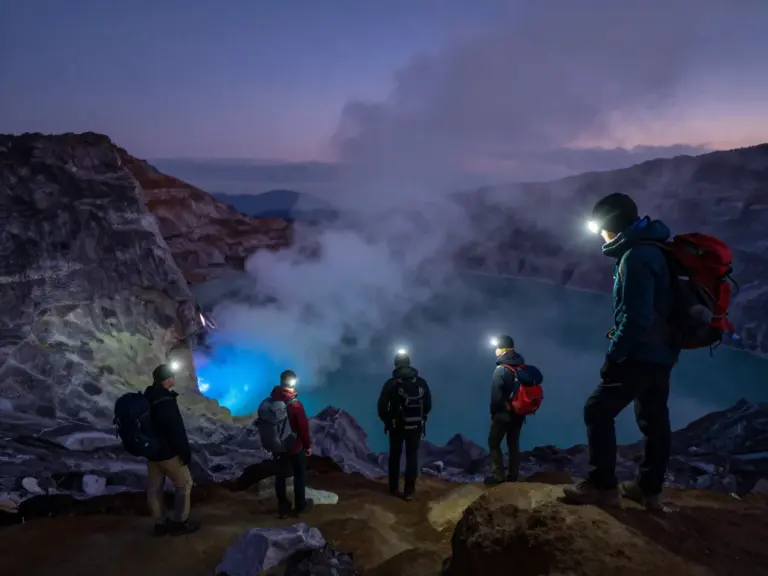
The journey begins at the Paltuding base camp. From here, you will face a 3-kilometer uphill climb. The first half is quite steep, with a sandy incline that tests your calves. As you reach the rim, the wind picks up, and the smell of sulfur becomes more pronounced. To see the ‘Blue Fire,’ you must descend about 800 meters into the crater itself on a narrow, rocky path. This is the most challenging part, as you will be sharing the trail with local sulfur miners carrying up to 80kg of rock on their shoulders. Once at the bottom, the sight of the flickering blue flames dancing among the vents is nothing short of magical.
Safety is paramount during the Ijen Blue Flame Trek. The primary hazard is the sulfur dioxide gas. Depending on the wind direction, thick clouds of toxic smoke can suddenly engulf the trail. You must wear a professional respirator mask with multi-gas filters; a simple surgical mask is useless here. If you have respiratory issues or heart conditions, please consult a doctor before attempting this trek. Additionally, the descent into the crater is slippery; always yield to the miners, as they have the right of way and are performing grueling physical labor.
Permits and Logistics
As of 2024, visitors are required to book their entry tickets online through the official BBKSDA East Java website. It is highly recommended to book at least a few days in advance, especially during weekends or public holidays. You will also need a medical certificate (Surat Keterangan Sehat) stating you are fit for hiking, which can be obtained at local clinics in Banyuwangi for a small fee. The park typically opens at 2:00 AM, though this can change based on volcanic activity levels monitored by the authorities.
| Item | Description |
|---|---|
| Entry Fee (Foreigner) | IDR 100,000 – 150,000 |
| Local Guide | Recommended (approx. IDR 200,000 – 300,000) |
| Gas Mask Rental | Available at Paltuding (approx. IDR 50,000) |
Essential Gear Checklist
The temperature at the summit can drop to 5°C (41°F) before sunrise. Layering is key. Start with a moisture-wicking base layer, add a fleece, and top it with a windproof jacket. Sturdy hiking boots with good grip are non-negotiable for the rocky descent. Don’t forget a headlamp; you will need your hands free to navigate the rocks. Lastly, bring plenty of water and a few snacks to refuel once you reach the top for sunrise.
Photography Tips for the Blue Fire
Capturing the blue flame is notoriously difficult. Since it is dark and you are dealing with moving gas, you need a camera with manual settings. Use a fast lens (f/2.8 or wider) and a high ISO (1600-3200). A tripod is essential for long exposures, but be mindful of the limited space on the crater floor. For smartphone users, use ‘Night Mode’ and try to keep your hands as steady as possible. Once the sun starts to rise, head back up to the rim to capture the stunning turquoise acidic lake and the silhouettes of the surrounding peaks.