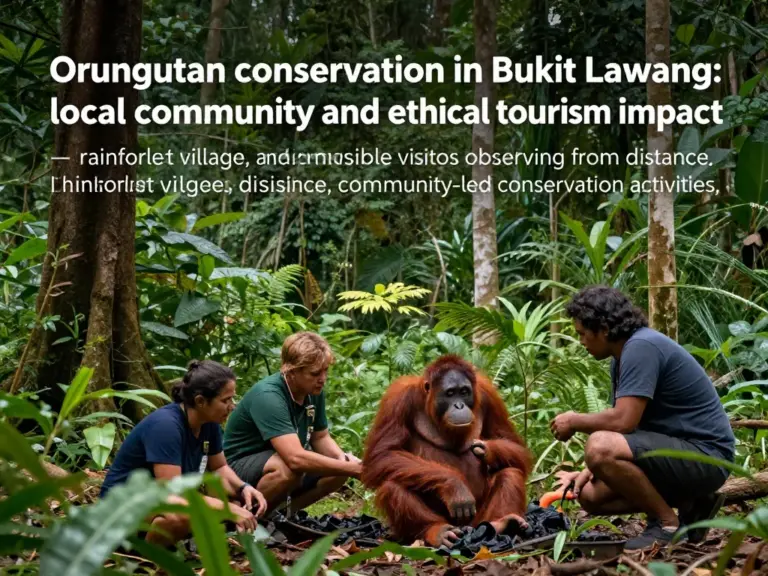
Why Ethical Tourism Matters: Understanding Orangutan Conservation, Local Communities, and Visitor Impact in Bukit Lawang
Deep within the lush rainforests of North Sumatra lies Bukit Lawang, a gateway to the Gunung Leuser National Park and one of the last strongholds of the critically endangered Sumatran orangutan. As global travel expands, the concept of Ethical Tourism Matters more than ever in this fragile ecosystem. Visitors flock here to catch a glimpse of these ‘people of the forest,’ but the line between a life-changing encounter and ecological disruption is thin. This article explores how responsible travel practices protect wildlife, empower local inhabitants, and ensure the survival of this UNESCO World Heritage site.
The Critical State of Orangutan Conservation
The Sumatran orangutan (Pongo abelii) is facing an uphill battle against habitat loss and poaching. Bukit Lawang was once a rehabilitation center site, and many of the semi-wild orangutans seen today are graduates of that program. However, their proximity to humans brings significant risks. Ethical Tourism Matters because direct interaction—such as feeding or touching—can transmit human diseases to primates, which can be fatal. Furthermore, feeding alters their natural foraging behavior, making them dependent on humans and potentially aggressive.
Empowering Local Communities
Conservation cannot succeed without the support of the people living on the forest’s edge. In Bukit Lawang, ethical tourism provides a sustainable alternative to destructive industries like illegal logging or palm oil expansion. When you hire a licensed local guide, stay in locally-owned guesthouses, and eat at village warungs, your money stays within the community. This economic incentive encourages locals to become the primary guardians of the rainforest, as they realize that a living orangutan in a healthy forest is worth more to their future than a cleared plot of land.
Minimizing Visitor Impact: The ‘No Trace’ Rule
Being a responsible visitor means more than just not littering. It involves following strict guidelines during jungle treks. To ensure Ethical Tourism Matters in practice, visitors must maintain a distance of at least 10 meters from wildlife, keep noise levels low, and never bring food into the sightings area. The goal is to be a silent observer of nature, not a participant in it. By minimizing our footprint, we ensure that the jungle remains a sanctuary for its inhabitants rather than a playground for tourists.
Quick Guide to Ethical Trekking
- Always hire a licensed guide from the Bukit Lawang Guide Association.
- Never feed, touch, or approach orangutans.
- Pack out everything you pack in—leave no waste.
- Keep voices low to avoid stressing the animals.
Finding Your Way to Bukit Lawang
Bukit Lawang is located approximately 90 kilometers northwest of Medan, the capital of North Sumatra. The journey involves a scenic (though often bumpy) drive through rubber and palm oil plantations, serving as a stark reminder of why protecting the remaining primary forest is so vital.
คำถามที่พบบ่อย (FAQ)
References
- Sumatran Orangutan Society (SOS) – Conservation Efforts
- UNESCO – Tropical Rainforest Heritage of Sumatra
- Official Indonesia Tourism – Bukit Lawang Guide
- Ethical Orangutan Encounters in Sumatra: How to Choose Responsible Guides in Bukit Lawang for a Sustainable Wildlife Experience
- How to Identify Responsible Guides and Tours: Certifications, Animal Welfare Practices, and Community-Based Partnerships
- What to Expect on an Ethical Orangutan Trek: Itineraries, Safety Protocols, Visitor Guidelines, and Minimizing Disturbance