Understanding Ramadan in Indonesia: significance, local customs, and expected public behaviors for travelers
Ramadan is the holiest month in the Islamic calendar, and in Indonesia—home to the world’s largest Muslim population—it is a period of profound spiritual reflection, communal harmony, and vibrant cultural expression. For travelers, Understanding Ramadan in Indonesia is essential for navigating the country with respect and appreciation. While the pace of life slows down during the day, the evenings come alive with shared meals and festivities that offer a unique glimpse into the heart of Indonesian society.
The Spiritual Significance of Ramadan
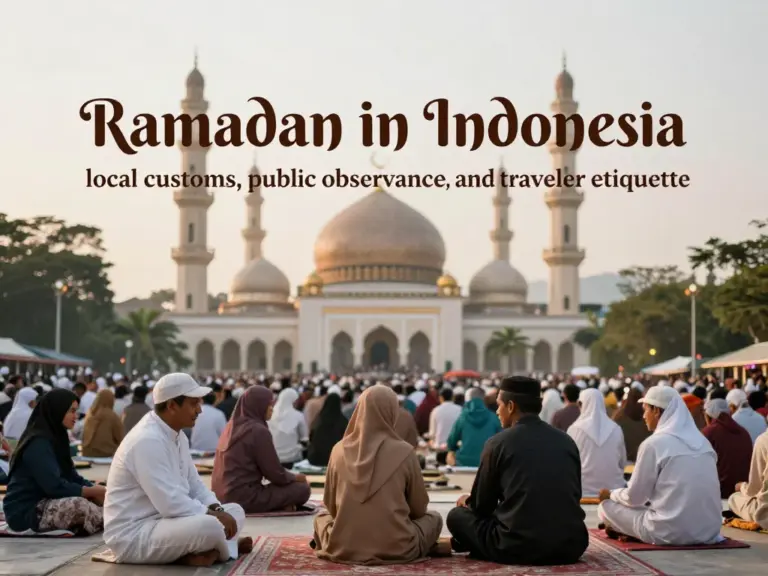
Ramadan commemorates the month when the Quran was first revealed to the Prophet Muhammad. For Indonesian Muslims, it is a time for Sawm (fasting) from dawn until sunset. This practice is not merely about abstaining from food and drink; it is a spiritual exercise in self-discipline, empathy for the less fortunate, and devotion to God. You will notice a shift in the atmosphere as communities engage in more frequent prayers, especially the evening Tarawih prayers held in local mosques.
Local Customs and Traditions
Indonesia’s diverse archipelago adds unique local flavors to Ramadan. One of the most cherished traditions is Ngabuburit, the practice of spending time together while waiting for the sun to set. Streets often fill with vendors selling Takjil—sweet snacks and drinks like Kolak (banana/sweet potato in coconut milk) or Es Buah (fruit soup) to break the fast.
Another significant custom is Buka Puasa Bersama (Breaking the Fast Together). Friends, families, and colleagues gather in homes or restaurants for a communal meal. As a traveler, being invited to a ‘Bukber’ is a high honor and a fantastic way to experience Indonesian hospitality firsthand.
Expected Public Behaviors for Travelers
While non-Muslims are not expected to fast, showing respect for those who are is vital. Here are the key behaviors to keep in mind when Understanding Ramadan in Indonesia:
- Dining in Public: Avoid eating, drinking, or smoking in public spaces during daylight hours. Many local Warungs (small eateries) may be closed or use curtains to shield diners from view.
- Dress Modestly: While Indonesia is generally tolerant, dressing more conservatively during Ramadan is a sign of respect. Ensure shoulders and knees are covered, especially when visiting religious sites or rural areas.
- Noise Levels: Be mindful of noise, particularly near mosques during prayer times. The ‘Sahur’ (pre-dawn meal) call may happen as early as 3:00 AM, so expect some early morning activity.
- Business Hours: Many offices and shops may close earlier than usual to allow employees to break their fast at home. Plan your errands and sightseeing accordingly.
If your travels coincide with the end of Ramadan, you will encounter Mudik. This is the massive annual exodus where millions of people travel from cities back to their hometowns to celebrate Idul Fitri (Eid al-Fitr). During this time, transport hubs are extremely crowded, and tickets for trains, buses, and flights sell out months in advance. If you plan to travel within Indonesia during the final week of Ramadan, book your transportation well ahead of time.
| Aspect | Daytime (Fasting) | Evening (Iftar) |
|---|---|---|
| Atmosphere | Quiet, slower pace | Energetic, festive |
| Food Availability | Limited to malls/hotels | Abundant street food (Takjil) |
| Traffic | Relatively light | Heavy (just before sunset) |
คำถามที่พบบ่อย (FAQ)
1. Can I find food during the day in Indonesia during Ramadan?
Yes. In major cities and tourist hubs like Bali or Jakarta, many restaurants and malls remain open. However, smaller local stalls might be closed until the afternoon.
2. Is Bali different during Ramadan?
Yes. Since Bali is a Hindu-majority island, Ramadan is less visible there compared to Java or Sumatra. Most businesses operate normally, though Muslim-owned establishments will still follow fasting traditions.
3. How should I greet people during this time?
You can say “Ramadan Kareem” or “Selamat Menunaikan Ibadah Puasa” (Happy Fasting) to show your respect and friendliness.
4. Are tourist attractions closed?
Most major tourist attractions remain open, but they may have slightly shortened operating hours. Always check the schedule in advance.
References
Official Indonesia Tourism Website
Ministry of Religious Affairs Republic of Indonesia
- Ramadan Travel Etiquette in Indonesia: Fasting Hours, Cultural Do’s and Don’ts for Respectful Visitors
- Fasting Hours and Practical Tips: typical suhoor and iftar times by region, how to plan travel and meals, and what to do if you’re not fasting
- Public Etiquette and Dress Code: respectful clothing, public displays of affection, and behavior in mosques and holy sites