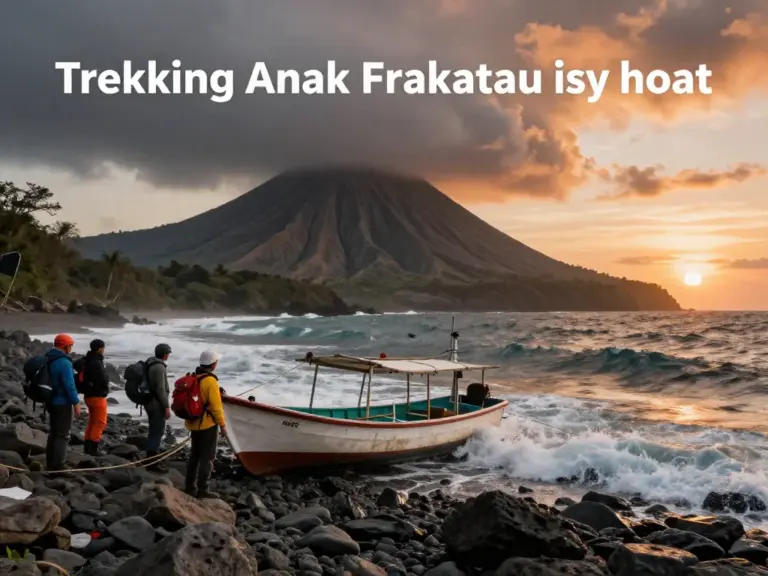
Trekking the Anak Krakatau Islands: Essential Boat Logistics, Safety Risks, and Planning Tips for Adventurers
Trekking the Anak Krakatau Islands is a bucket-list experience for many thrill-seekers visiting Indonesia. Born from the cataclysmic eruption of Krakatoa in 1883, ‘Child of Krakatoa’ remains one of the world’s most active and fascinating volcanic sites. For adventurers, the journey offers a raw look at nature’s power, but it requires meticulous planning, an understanding of complex boat logistics, and a healthy respect for the inherent geological risks involved.
Understanding the Logistics: How to Get There
The Anak Krakatau archipelago is located in the Sunda Strait, between the islands of Java and Sumatra. Accessing this remote volcanic site involves a multi-stage journey. Most travelers begin their expedition from either Carita Beach in Banten (West Java) or Kalianda in South Lampung (Sumatra). Choosing your starting point significantly impacts your boat logistics and travel time.
Boat Logistics and Chartering
There are no public ferries to Anak Krakatau. You must charter a private speedboat or join a guided tour group. From Carita, a speedboat takes approximately 1.5 to 2 hours depending on sea conditions. From Kalianda, the journey is slightly shorter but may involve more rustic wooden ‘klotok’ boats if speedboats are unavailable. It is essential to ensure your boat is equipped with life jackets, GPS, and a reliable radio system.
Safety Risks: Respecting the Volcano
Trekking the Anak Krakatau Islands is not a standard hike. The primary risk is the volcano’s unpredictable eruptive behavior. Following the 2018 flank collapse and subsequent tsunami, the island’s morphology changed drastically. Adventurers must be aware of poisonous gases (sulfur dioxide), falling tephra, and the physical instability of the volcanic slopes.
| Risk Factor | Description | Mitigation Strategy |
|---|---|---|
| Volcanic Eruption | Sudden ash or lava discharge | Check PVMBG alerts; hire a local guide |
| Sea Conditions | Rough waves in the Sunda Strait | Travel during the dry season (May–Sept) |
| Heat Exhaustion | Extreme sun exposure on dark sand | Hydrate and wear UV-protective gear |
Planning Tips for Adventurers
Success in trekking the Anak Krakatau Islands lies in the details. First, timing is everything. The best window for visiting is during the dry season, from May to September, when the seas are calmer and the skies clearer. During the monsoon season, the Sunda Strait can be treacherous, often leading to canceled boat trips.
Secondly, gear up appropriately. You will need sturdy trekking boots with good grip, as the volcanic ash and scree are slippery. Bring plenty of water—at least 3 liters—as the heat radiating from the black volcanic soil is intense. A face mask or buff is also recommended to protect against wind-blown ash and sulfur fumes.
คำถามที่พบบ่อย (FAQ)
Is it safe to trek Anak Krakatau right now?
Safety depends on the current alert level issued by Indonesian authorities. Usually, a 2km to 5km exclusion zone is maintained. Always consult with local rangers and official geological reports before attempting a trek.
How much does a boat charter cost?
Prices vary based on the port of origin and boat type. A private speedboat from Carita can range from 4,000,000 to 7,000,000 IDR, while group tours are significantly more affordable.
Do I need a permit to visit the islands?
Yes, Anak Krakatau is part of a nature reserve. Permits (Simaksi) are required and are usually handled by your tour operator or can be obtained at the local conservation office.
Can I camp on the island?
Camping on Anak Krakatau itself is generally prohibited due to safety risks. However, camping is often allowed on the surrounding older islands like Rakata or Sertung, providing a spectacular view of the volcano at night.
References
MAGMA Indonesia – PVMBG Official Reports
Wonderful Indonesia – Official Tourism Website
- Preparing Your Trip: Permits, Best Seasons, and Reliable Tour Operators for Anak Krakatau Excursions
- Boat Options and Routing: Types of Vessels, Departure Points, Travel Times, and Navigational Considerations
- On-Board Safety and Emergency Preparedness: Life Jackets, Communication Equipment, Evacuation Plans, and Crew Qualifications