Ternate and Tidore Heritage Weekend: Exploring Clove History, Colonial Forts, and Cultural Traditions of the Moluccas
The legendary Spice Islands, once the only source of cloves in the world, beckon travelers to a journey through time. A Ternate and Tidore Heritage Weekend offers more than just a tropical getaway; it is an immersion into a world where empires clashed for the ‘black gold’ of the Moluccas. These twin volcanic islands, rising dramatically from the Maluku Sea, hold the secrets of centuries-old maritime trade, colonial architecture, and deeply rooted Islamic traditions that continue to thrive today.
The Fragrant Legacy: Clove History in North Maluku
For centuries, Ternate and Tidore were the geopolitical centers of the spice trade. Cloves (Syzygium aromaticum) were once worth their weight in gold in European markets. During your heritage weekend, a visit to the slopes of Mount Gamalama is essential to see the ‘Afo’ clove tree—reputedly the oldest clove tree in the world. Walking through these aromatic groves, you can almost hear the echoes of the ancient traders who navigated the Silk Road of the Sea to reach these shores.
Guardians of the Coast: Colonial Forts of Ternate
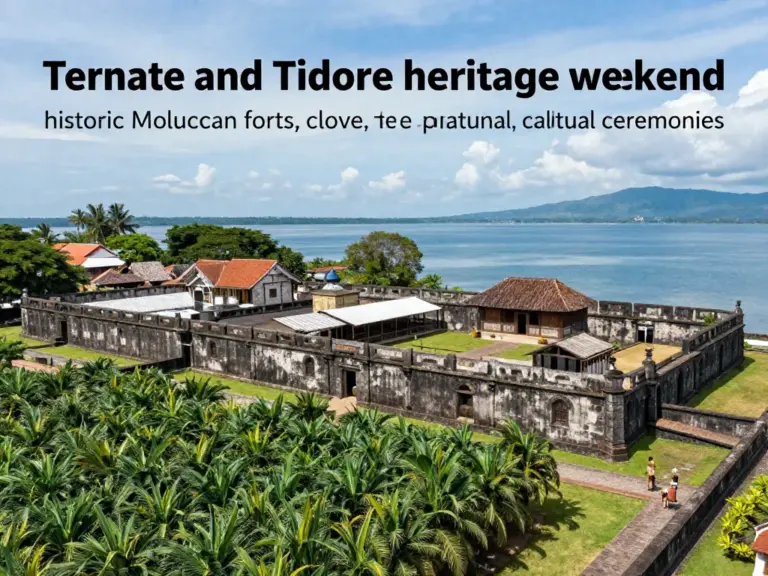
Ternate is dotted with silent stone sentinels that tell stories of Portuguese, Spanish, and Dutch rivalry. Fort Tolukko, built by the Portuguese in 1540, offers a commanding view of the sea and the neighboring island of Tidore. Its unique phallic-shaped layout is a marvel of colonial military engineering. Not far away lies Fort Oranje, the first headquarters of the Dutch East India Company (VOC) in Indonesia before they moved to Batavia. Wandering through these ruins, visitors can see the fusion of European military architecture and local basalt stone.
| Fort Name | Original Builder | Key Feature |
|---|---|---|
| Fort Tolukko | Portuguese | Panoramic views of Tidore |
| Fort Oranje | Dutch (VOC) | Historic administrative hub |
| Fort Kalamata | Portuguese | Star-shaped coastal defense |
Crossing to Tidore: Spiritual and Royal Traditions
A short speedboat ride across the narrow strait brings you to Tidore, an island known for its serene atmosphere and spiritual heritage. The Kedaton Kie (The Sultan’s Palace) is the heart of Tidore’s culture. Unlike many modern palaces, the Kedaton in Tidore maintains a sacred aura, housing royal regalia and serving as the residence of the Sultan. The island is also famous for its traditional weaving and the production of ‘Kopi Rempah’ (spiced coffee), a delicious beverage infused with the very cloves and nutmeg that made the island famous.
Cultural Traditions and Gastronomy
No Ternate and Tidore Heritage Weekend is complete without indulging in the local culinary delights. Moluccan cuisine is a vibrant blend of seafood and sago. Try the Papeda (sago congee) served with Ikan Kuah Kuning (turmeric fish soup). For a snack, look for Bagea cookies, made from sago and spiced with cinnamon and cloves. These flavors are a direct reflection of the islands’ biodiversity and history.
คำถามที่พ่อยบ่อย (FAQ)
Q1: How do I get to Ternate?
A1: You can fly into Sultan Babullah Airport (TTE) in Ternate from major Indonesian cities like Jakarta, Makassar, or Manado.
Q2: Is it easy to travel between Ternate and Tidore?
A2: Yes, there are frequent speedboats and public ferries running between Bastiong Port in Ternate and Rum Port in Tidore. The trip takes about 10-15 minutes.
Q3: What should I wear when visiting the Sultan’s Palace?
A3: Visitors are expected to dress modestly. Long pants or skirts and shirts that cover the shoulders are required to show respect for local customs.
Q4: Are the forts open to the public?
A4: Most colonial forts like Fort Tolukko and Fort Oranje are open to tourists, though some may require a small entrance fee or a donation for maintenance.
References
Official Indonesia Tourism – Ternate Guide
UNESCO Tentative List: The Historic and Marine Landscape of the Banda Islands (Spice Islands)
- Why Ternate and Tidore Are the Heart of the Clove Trade: Historical Overview and Searcher Intent Insights
- Key Colonial Forts and Historical Sites to Visit: Sultanates, Fort Oranje, and Forts’ Roles in Spice Conflicts
- Clove History and Cultural Practices: From Cultivation to Ceremonies, Local Stories, and Living Heritage