Clove History and Cultural Practices: From Cultivation to Ceremonies, Local Stories, and Living Heritage
The story of cloves is not merely a tale of a spice; it is the chronicle of empires, the heartbeat of the Maluku Islands, and a living legacy that continues to shape Indonesian identity. For centuries, the aromatic flower buds of the Syzygium aromaticum tree have been among the most coveted treasures on Earth. In Indonesia, the birthplace of this precious spice, clove history and cultural practices are deeply intertwined with the soul of the people, bridging the gap between ancient traditions and modern tourism.
The Roots of Clove History and Cultural Practices
The origin of cloves is concentrated in a small cluster of volcanic islands in North Maluku—Ternate, Tidore, Motir, Machian, and Bacan. Long before European explorers set sail, local communities had already established sophisticated systems of cultivation. To the people of Maluku, the clove tree was more than a commodity; it was a member of the family. Traditionally, when a child was born, a clove tree was planted. The health of the tree was believed to be linked to the fate of the child, a practice that highlights the spiritual connection between the land and its inhabitants.
During the colonial era, the Portuguese, Spanish, and eventually the Dutch fought bitterly for control over these ‘Spice Islands.’ The Dutch East India Company (VOC) even implemented the extirpate policy, destroying clove trees outside of their controlled areas to maintain a global monopoly. However, the resilience of the local farmers ensured that the heritage survived, hidden in the mountain folds of the archipelago.
Traditional Cultivation and Harvesting Rituals
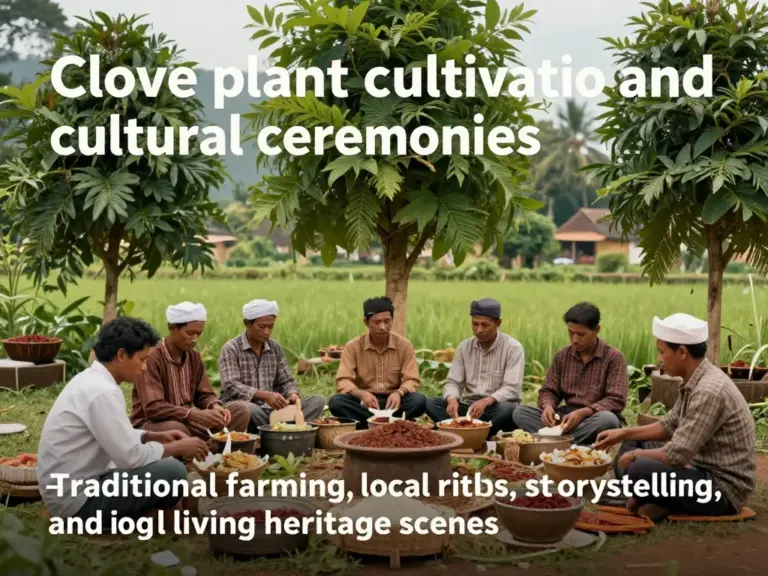
The process of harvesting cloves remains a labor-intensive art form that has changed little over the centuries. In places like Ambon and the Banda Islands, the harvest season (typically between July and December) is a community event. Men climb tall, precarious bamboo ladders to reach the clusters of green-turning-pink buds, while women and children gather the fallen spices below.
- Sun Drying: The buds are spread on large mats to dry in the tropical sun for several days until they turn dark brown.
- Sorting: Quality control is done by hand, ensuring only the best cloves reach the market.
- Sustainable Farming: Many local farmers still use organic methods passed down through generations.
Cloves in Ceremonies and Local Stories
In the realm of clove history and cultural practices, the spice serves as a bridge to the divine. In many parts of Indonesia, cloves are used in traditional medicine (Jamu) and spiritual offerings. The scent of burning cloves is often associated with purification and protection against negative energy. In the Ternate Sultanate, cloves play a role in royal ceremonies, symbolizing the prosperity and endurance of the kingdom.
Local folklore is rich with stories of ‘Afo,’ the oldest clove tree in the world located on the slopes of Mount Gamalama. Legend has it that Afo survived the Dutch attempts at destruction, standing as a silent witness to the centuries of struggle and triumph. Visiting Afo has become a pilgrimage for those wishing to connect with the living heritage of the spice trade.
Living Heritage: The Kretek Connection
One cannot discuss cloves in Indonesia without mentioning Kretek—the iconic clove cigarettes. Invented in the late 19th century in Kudus, Central Java, Kretek was originally developed as a medicinal remedy for asthma. Today, the industry is a massive part of the Indonesian economy and culture. The distinct crackling sound of burning cloves (from which the name ‘Kretek’ is derived) is a ubiquitous sensory experience across the islands, representing a unique evolution of clove usage.
Tourism and the Spice Trail Today
For modern travelers, the ‘Spice Trail’ offers a chance to immerse themselves in history. Destinations like Ternate, Tidore, and the Banda Islands provide guided tours of ancient fortresses, colonial warehouses, and lush clove plantations. Engaging with local communities allows tourists to participate in the harvest and learn about the intricate social structures that revolve around this spice.
| Key Destination | Historical Significance | Must-See Attraction |
|---|---|---|
| Ternate | Original home of cloves | Fort Oranje & Afo Clove Tree |
| Banda Neira | Center of the Dutch Spice Trade | Fort Belgica |
| Kudus | Birthplace of Kretek culture | Museum Kretek |
คำถามที่พบบ่อย (FAQ)
References
- Official Indonesia Tourism: Exploring Ternate and the Spice Islands
- UNESCO: The Historical City Centre of Ternate and the Spice Route
- Ternate and Tidore Heritage Weekend: Exploring Clove History, Colonial Forts, and Cultural Traditions of the Moluccas
- Why Ternate and Tidore Are the Heart of the Clove Trade: Historical Overview and Searcher Intent Insights
- Key Colonial Forts and Historical Sites to Visit: Sultanates, Fort Oranje, and Forts’ Roles in Spice Conflicts