What makes Toraja beans unique in Makassar — origin, flavor profile, and traditional processing methods
Toraja coffee is not merely a beverage; it is a cultural treasure that has traveled from the misty highlands of Tana Toraja to the bustling coffee shops of Makassar. For travelers visiting South Sulawesi, the aromatic allure of Toraja beans unique in Makassar serves as a gateway to understanding the rich heritage of the region. This Arabica coffee, often referred to as ‘Celebes Kalossi’, stands as one of the world’s most distinguished specialty coffees, celebrated for its complex character and ancient cultivation techniques.
The Highland Origins: Tana Toraja to Makassar
The journey of these beans begins in the mountainous region of Tana Toraja, situated at altitudes ranging from 1,400 to 1,900 meters above sea level. The volcanic soil, combined with the cool, humid climate and high rainfall, creates the perfect terroir for Arabica trees. While the beans are grown in the highlands, Makassar serves as the historical and modern-day hub for its trade and consumption. For centuries, Makassar has been the primary port through which these precious beans are exported to the world, making the city synonymous with the Toraja coffee experience.
A Flavor Profile Like No Other
What truly makes Toraja beans unique in Makassar is their distinct sensory profile. Unlike the earthy and heavy notes often associated with Sumatran coffees, Toraja beans offer a more refined and multi-layered experience. Connoisseurs often describe the flavor as deep and brooding, yet remarkably clean. The primary characteristics include:
- Low Acidity: A smooth, vibrant acidity that is gentle on the palate.
- Heavy Body: A rich, syrupy mouthfeel that lingers long after the first sip.
- Aromatic Notes: Distinct hints of dark chocolate, ripe berries, and rustic spices like cinnamon and cardamom.
- Earthiness: A subtle woodsy undertone that reflects the highland forests.
In the cafes of Makassar, you will find this coffee prepared in various ways, from traditional charcoal-roasted brews to modern espresso-based drinks, each highlighting a different facet of its complex profile.
Traditional Processing: The Giling Basah Method
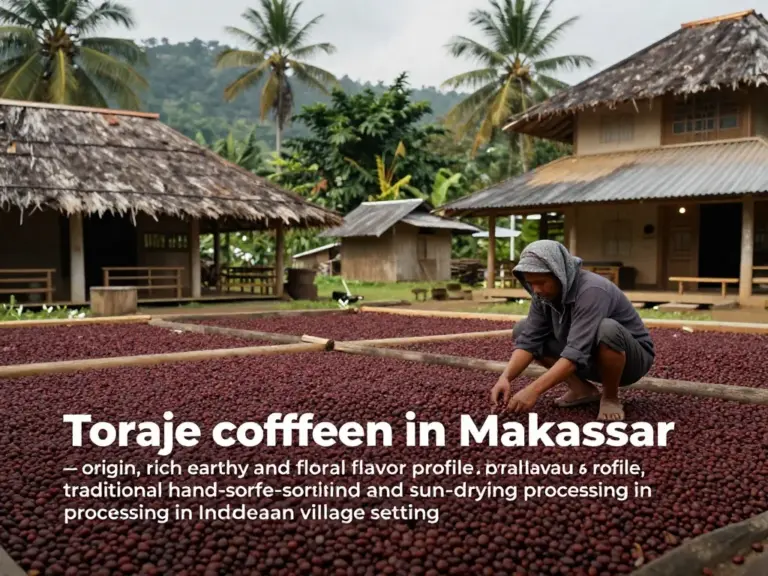
The secret behind the unique body and muted acidity of Toraja beans lies in a traditional Indonesian processing method known as Giling Basah (Wet-Hulling). Unlike the fully washed process used in Central America, Giling Basah involves removing the parchment from the bean while the moisture content is still as high as 30-35%.
| Step | Process Description |
|---|---|
| Harvesting | Only the ripest red cherries are hand-picked by local farmers. |
| Pulping | The skin is removed locally using rustic hand-cranked machines. |
| Fermentation | Beans are fermented overnight in bags to break down the mucilage. |
| Wet-Hulling | The parchment is removed while the bean is still soft and moist. |
| Sun Drying | The ‘green’ beans are dried on patios until they reach 12% moisture. |
This unique method speeds up the drying process in the humid Sulawesi climate and imparts the characteristic bluish-green color to the raw beans, contributing significantly to the heavy body that makes Toraja beans unique in Makassar.
Where to Experience Toraja Coffee in Makassar
When visiting Makassar, the ‘Gateway to Eastern Indonesia,’ you must visit the local ‘Warkop’ (Coffee Shops) or specialty cafes. Places like Jalan Nusantara or the area around Losari Beach are dotted with establishments that pride themselves on serving authentic Toraja Arabica. For an immersive experience, many travelers also use Makassar as a starting point for a journey into the Tana Toraja highlands themselves.
คำถามที่พบบ่อย (FAQ)
What is the difference between Toraja and Kalossi coffee?
They are essentially the same. ‘Kalossi’ was the name used during the colonial era, referring to the market town in South Sulawesi where the coffee was traded. Today, ‘Toraja’ is the more common name, referring to the specific ethnic region where it is grown.
Why is Toraja coffee so expensive?
Toraja beans are rare because they are grown on small family plots in remote, high-altitude areas. The labor-intensive hand-picking and the unique Giling Basah process, combined with high global demand, contribute to its premium price.
Is Toraja coffee acidic?
No, Toraja coffee is known for its low to medium acidity. This makes it an excellent choice for coffee drinkers who prefer a smooth, rich flavor without the sharp ‘bite’ found in some other Arabica varieties.
How should I drink Toraja coffee to best taste its profile?
To fully appreciate the nuances of Toraja beans unique in Makassar, it is recommended to try it as a pour-over (V60) or a traditional French Press. These methods allow the oils and complex aromatics to shine through.
References
- Official Indonesia Tourism – Tana Toraja Guide
- International Coffee Organization – Indonesian Coffee Profiles
- Makassar Coffee Culture: Exploring Toraja Beans, Local Café Etiquette, and Where to Experience It
- How Makassar’s café scene blends local traditions with modern trends — popular neighborhoods, signature drinks, and must-visit cafés
- Local café etiquette in Makassar — ordering customs, social norms, tipping, and respectful behavior in Toraja-serving venues