Historical and cultural significance of the keris in Solo: origins, meanings of motifs and symbolism, and how museums present keris heritage
The keris is far more than a mere weapon; it is a profound spiritual symbol and a masterpiece of Javanese craftsmanship. In the heart of Central Java, the city of Solo (Surakarta) stands as a primary custodian of this ancient tradition. Recognized by UNESCO as a Masterpiece of the Oral and Intangible Heritage of Humanity, the keris in Solo embodies the philosophical depth, social hierarchy, and mystical beliefs of the Javanese people.
The Origins of the Keris in Solo
The history of the keris in Solo is inextricably linked to the Mataram Sultanate. When the kingdom split in 1755, the Kasunanan Surakarta (Solo) inherited not only the land but also the esoteric knowledge of the Empu—the master bladesmiths. These artisans were considered spiritual mediators who infused the blade with ‘force’ or ‘spirit’ through prayer and asceticism. The Solo style, known for its elegance and refined aesthetics, differs from its counterparts in Yogyakarta or Bali, emphasizing a more slender and sophisticated ‘dhapur’ (shape).
Meanings of Motifs and Symbolism
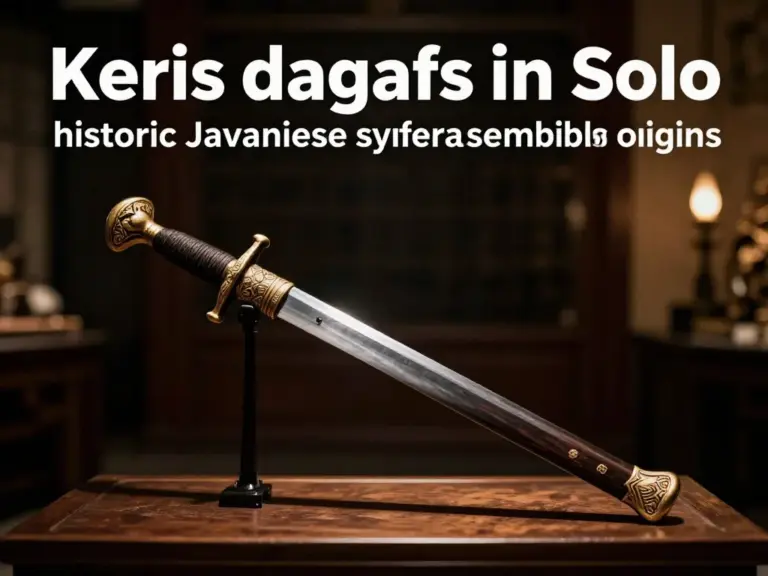
The anatomy of a keris is a language of its own. The ‘Pamor’—the distinctive patterns formed by layering nickel and iron—is the most significant aspect of its symbolism. These motifs are not merely decorative; they are believed to hold specific powers. For instance, the ‘Beras Wutah’ (Spilled Rice) pattern symbolizes prosperity and abundance, while the ‘Udan Mas’ (Golden Rain) is thought to bring wealth to the bearer.
| Motif Name | Symbolic Meaning | Intended User |
|---|---|---|
| Beras Wutah | Prosperity and peaceful life | General Public |
| Udan Mas | Attracting fortune and wealth | Merchants/Traders |
| Sekar Kopi | Harmony and social influence | Community Leaders |
| Naga Sasra | Power, authority, and protection | Royalty/Nobility |
Beyond the pamor, the ‘Luk’ (the curves of the blade) also carries meaning. A straight keris represents steadfastness and focus on the Divine, while a curved blade (usually in odd numbers like 3, 5, or 7) represents the dynamic flow of life and ambition. In Solo culture, the keris is often worn at the back, tucked into the ‘stagen’ (sash), signifying that power should be wielded with humility and restraint.
How Solo Museums Present Keris Heritage
Solo offers a unique window into the world of the keris through its dedicated institutions. The Museum Keris Nusantara is a modern four-story facility that houses thousands of blades from across the Indonesian archipelago. It provides an educational journey, explaining the forging process, the spiritual rituals involved, and the evolution of the blade’s design over centuries.
Additionally, the Radya Pustaka Museum, the oldest museum in Indonesia, contains a rare collection of royal kerises belonging to the Surakarta Sunanate. These museums do not just display the objects; they preserve the ‘keris culture’ by hosting workshops where visitors can see modern Empus at work. They play a vital role in ensuring that the younger generation understands the keris not as an archaic weapon, but as a living piece of Indonesian identity.
Conclusion
The keris in Solo is a bridge between the physical and spiritual worlds. Its intricate motifs and the meticulous craftsmanship of the Empu reflect a culture that values harmony, spirituality, and artistic excellence. By visiting the museums in Solo, travelers gain a deeper appreciation for this UNESCO-recognized treasure, ensuring that the legacy of the keris continues to shine in the modern world.
คำถามที่พบบ่อย (FAQ)
What is the spiritual significance of the keris in Solo?
In Solo, the keris is considered a spiritual ‘tangguh’ or heirloom that protects its owner and represents their social status and personal philosophy. It is believed to possess a soul or ‘khodam’ infused during its creation.
Why are there different numbers of curves (Luk) on a keris?
The number of curves is almost always odd. Each number has a specific meaning; for example, three curves symbolize success in worldly affairs, while higher numbers often relate to spiritual height and power.
Can tourists buy a keris in Solo?
Yes, tourists can purchase kerises at the Triwindu Antique Market or directly from artisan workshops. However, it is important to distinguish between souvenir kerises and authentic, hand-forged ritual blades.
Which museum in Solo is best for seeing keris?
The Museum Keris Nusantara is the most comprehensive, as it is specifically dedicated to the history and variety of keris from all over Indonesia, with a strong focus on the Solo style.
References
UNESCO: Indonesian Kris Heritage
Official Portal of Surakarta City
Wonderful Indonesia Tourism Portal
- Javanese Keris Makers in Solo Workshops Museum and Meanings
- What searchers want to know about who makes Javanese keris in Solo: profiles of traditional makers, workshop locations, and how to visit them (workshops, tour tips, opening hours)
- How keris are made today in Solo workshops: step-by-step craft process, materials, forge techniques, pamor patterns, and modern adaptations