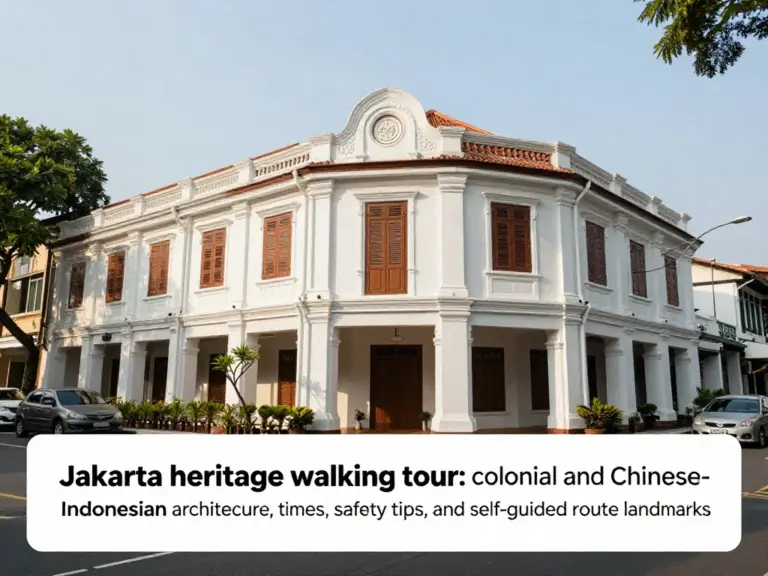
Why this walk matters: overview of colonial and Chinese-Indonesian heritage, best times, safety, and what to expect on a self-guided route in Jakarta
Jakarta is a city of layers, where the ultra-modern skyline sits atop centuries of complex history. To truly understand the soul of Indonesia’s capital, one must step off the main roads and into the historic corridors where colonial and Chinese-Indonesian heritage intertwine. This self-guided walking route isn’t just a physical journey; it is a walk through time, charting the evolution of a port town into a global megacity.
The Significance of Colonial and Chinese-Indonesian Heritage
The narrative of Jakarta is inseparable from the Dutch East India Company (VOC) and the vibrant Chinese diaspora. In the Old Town (Kota Tua), the grand neo-classical architecture serves as a reminder of ‘Batavia,’ the center of the Dutch colonial empire in Asia. Meanwhile, just a short walk away, Glodok—the city’s Chinatown—represents the resilience and cultural depth of the Chinese-Indonesian community. Understanding this colonial and Chinese-Indonesian heritage is vital because it explains the social fabric, the architecture, and even the culinary diversity of modern Indonesia.
What to Expect on Your Self-Guided Route
Starting at Fatahillah Square, you will encounter street performers, colorful ‘Onthel’ bicycles, and preserved administrative buildings like the Jakarta History Museum. As you transition toward Glodok, the atmosphere shifts from open squares to narrow, bustling alleys filled with the scent of incense and traditional herbs. Expect a sensory overload: the sight of red-roofed temples like Jin De Yuan, the sound of merchants haggling, and the taste of authentic street food that blends local and Chinese flavors.
Best Times to Visit and Planning Your Day
Timing is everything in Jakarta. To avoid the sweltering tropical heat and the heaviest traffic, start your walk early in the morning, around 7:30 AM or 8:00 AM. Weekdays are generally quieter, offering a more authentic look at daily life, while weekends bring a festive, crowded energy to Fatahillah Square. If you visit during Chinese New Year (Imlek), Glodok becomes a vibrant sea of red and gold, though it will be significantly more crowded.
| Time Period | Pros | Cons |
|---|---|---|
| Early Morning (7am-10am) | Cooler weather, less traffic | Some museums might not be open yet |
| Late Afternoon (4pm-6pm) | Golden hour for photos | Peak humidity and traffic |
| Weekends | Lively atmosphere, street food | Very crowded, noisy |
Safety and Practical Tips for Walkers
Jakarta’s historic areas are generally safe for tourists, but standard urban precautions apply. Pedestrian infrastructure can be inconsistent, so watch your step on uneven sidewalks. Keep your belongings secure in crowded markets, and stay hydrated by carrying a reusable water bottle. For transportation to the starting point, using ride-hailing apps like Grab or Gojek is highly recommended for reliability and transparent pricing.
คำถามที่พบบ่อย (FAQ)
Q: How long does the walking route take?
A: A thorough walk covering both Kota Tua and Glodok usually takes 3 to 5 hours, depending on how long you spend in museums and temples.
Q: Is there an entrance fee for these areas?
A: Walking through the districts is free, but individual museums (like the Jakarta History Museum) and some temples may charge a small entry or donation fee.
Q: What should I wear?
A: Wear lightweight, breathable clothing and comfortable walking shoes. If visiting temples, ensure your shoulders and knees are covered out of respect.
References
- Colonial and Chinatown Heritage Walks in Jakarta: A Self-Guided Route with Food Stops for History and Street Food Lovers
- Planning your route: step-by-step itinerary from Kota Tua to Glodok, map tips, transportation between stops, walking times, and accessibility considerations
- Top historical sites and stories en route: must-see colonial landmarks, temples, museums, and the cultural significance of each stop with suggested visit durations