Community-Based Tourism in Flores: Homestays, Weaving Villages, and Local Food Experiences
Flores, a stunning island in Indonesia’s East Nusa Tenggara province, is rapidly becoming a premier destination for travelers seeking more than just beautiful landscapes. While the Komodo National Park often steals the spotlight, the heart of the island lies in its people. Community-Based Tourism in Flores offers a unique opportunity to step off the beaten path and engage directly with local cultures, supporting sustainable development while creating lifelong memories.
The Authentic Charm of Flores Homestays
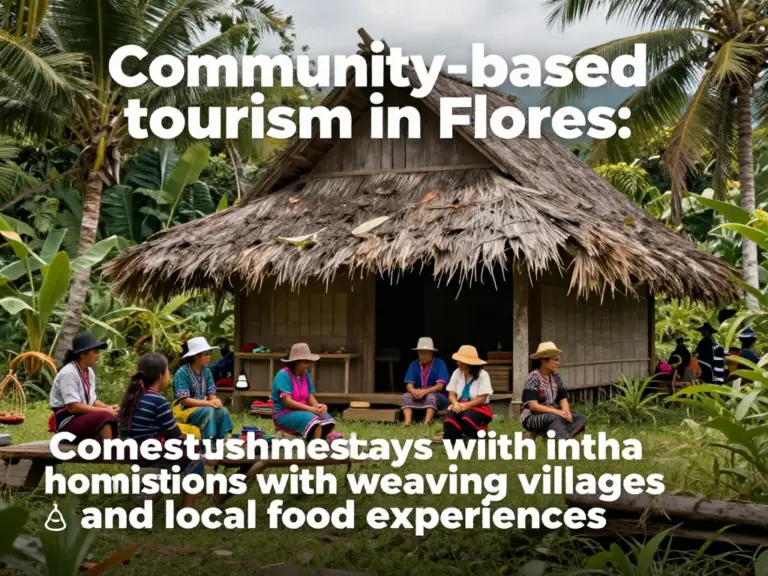
One of the best ways to experience Community-Based Tourism in Flores is by staying in a local homestay. Unlike generic hotels, homestays allow you to live alongside Manggarai or Ngada families. The most iconic example is the remote village of Wae Rebo. Nestled high in the mountains, this UNESCO-recognized village features traditional ‘Mbaru Niang’ cone-shaped houses. Visitors sleep on woven mats, share communal meals, and wake up to the sound of the mist rolling over the hills.
Beyond Wae Rebo, many villages near Bajawa and Moni offer homestay programs where you can learn about daily agricultural life, from harvesting coffee to tending to livestock. These interactions foster a deep sense of connection and mutual respect between hosts and guests.
Preserving Heritage in Weaving Villages
Flores is world-renowned for its intricate Ikat weaving. In villages like Bena and Sikka, weaving is not just a craft; it is a spiritual practice and a primary source of income for women. When you visit these weaving villages, you aren’t just a spectator. Many communities offer workshops where you can see the natural dyeing process using indigo and morinda roots.
- Bena Village: Famous for its megalithic formations and high-quality textiles.
- Watublapi: Known for using 100% natural dyes and traditional motifs.
- Lepolorum: A cooperative in Maumere that empowers local women through weaving.
A Culinary Journey: Local Food Experiences
No exploration of Community-Based Tourism in Flores is complete without diving into the local flavors. The food in Flores is deeply tied to the land. In the highlands, you will find Kolo (bamboo-cooked rice) and Ubi Nuabosi (highly prized cassava). Seafood dominates the coastal areas, often served with Moke, a traditional spirit fermented from palm trees.
Participating in a local cooking class or a communal feast (Pesta Adat) provides insight into the island’s social fabric. You’ll learn that every ingredient has a story, from the hand-picked bird’s eye chilies to the locally grown organic coffee that is famous worldwide.
Why Choose Community-Based Tourism?
By choosing Community-Based Tourism in Flores, you contribute directly to the conservation of cultural heritage. Your travel funds help maintain traditional architecture, support education for village children, and provide an alternative to exploitative tourism models. It is a win-win for both the traveler seeking authenticity and the community seeking sustainable growth.
คำถามที่พบบ่อย (FAQ)
References
- Official Indonesia Tourism – Flores Guide
- UNESCO – Wae Rebo Village Heritage
- Flores Destination Management Organization
- Why community-based tourism matters in Flores: sustainable benefits for locals and authentic experiences for travelers
- How to choose the best homestays in Flores: safety, cultural immersion, and booking tips for responsible travelers
- Exploring weaving villages: traditional techniques, artisans’ stories, and where to buy authentic ikat textiles