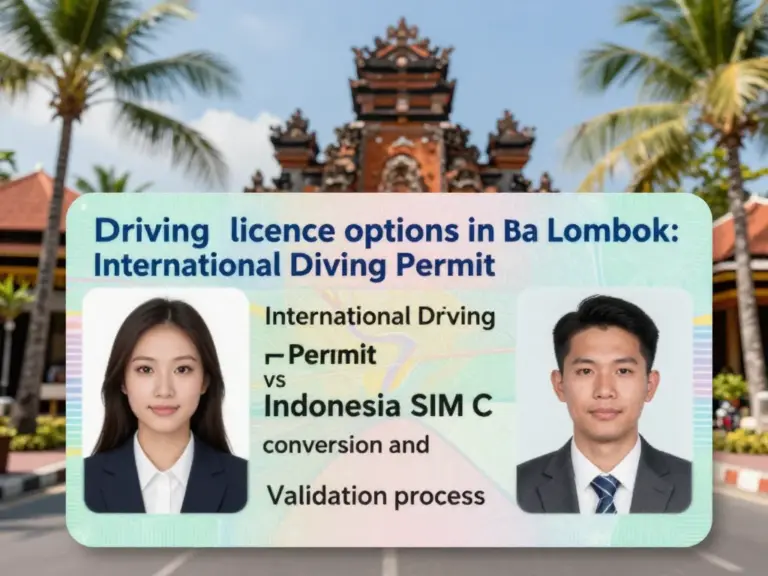
What type of driving license do you need in Bali and Lombok? (International Driving Permit, Indonesian SIM C, and how to convert/validate)
- What type of driving license do you need in Bali and Lombok? (International Driving Permit, Indonesian SIM C, and how to convert/validate)
Exploring the lush landscapes of Bali and the rugged coastlines of Lombok on two wheels or four is a dream for many travelers. However, navigating the legal requirements for a driving license in Bali and Lombok is crucial to ensure your tropical getaway doesn’t turn into a legal headache. Whether you are planning to rent a nimble scooter in Canggu or a rugged SUV for the hills of Kuta Lombok, understanding the specific permits required by Indonesian law is the first step toward a safe journey.
The Essential Requirement: International Driving Permit (IDP)
For the vast majority of tourists visiting Indonesia, the most important document you need is the International Driving Permit (IDP). It is a common misconception that your home country’s license alone is sufficient. Under Indonesian law (specifically Law No. 22 of 2009), foreign drivers must possess an IDP issued in their home country that corresponds to the vehicle type they are operating.
There are two main types of IDPs based on international conventions: the 1949 Convention and the 1968 Convention. While Indonesia officially recognizes the 1968 Convention, in practice, most IDPs are accepted by local police as long as they are valid and clearly state the vehicle class (Class A for motorcycles, Class B for cars). Always carry your original domestic license alongside your IDP, as the permit is technically a translation and is not valid on its own.
Understanding the Indonesian SIM C (Motorcycle License)
If you are staying in Bali or Lombok long-term (usually on a KITAS or KITAP residency permit), you may want to obtain a local license, known as a SIM (Surat Izin Mengemudi). For motorcycles, which are the primary mode of transport in Bali, you need a SIM C. For cars, you require a SIM A.
In the past, tourists could obtain a temporary “Tourist SIM” valid for one month. However, this practice has become increasingly rare and is often unavailable at most police stations (Polresta). Today, the police typically direct tourists to use an IDP. If you are an expat, the process involves a theory test, a practical driving test, and a health check at the local Polresta (Police Headquarters) in Denpasar (Bali) or Mataram (Lombok).
Comparison of Licensing Options
Choosing the right path depends on your length of stay and your residency status. Below is a breakdown of the typical requirements for different types of visitors.
| Visitor Type | Requirement | Validity |
|---|---|---|
| Short-term Tourist | IDP + Home License | Duration of IDP |
| ASEAN Citizen | Domestic License* | Varies by agreement |
| Long-term Expat | Indonesian SIM A/C | 5 Years |
*Note: While some ASEAN countries have mutual recognition agreements, it is still highly recommended to carry an IDP to avoid confusion during roadside police checks, which are frequent in areas like Seminyak, Ubud, and Kuta.
How to Convert or Validate Your License
If you hold a KITAS (Limited Stay Permit), you can “convert” your home license into an Indonesian SIM. This isn’t a direct swap but rather an expedited application process. You will need to visit the Satpas (Satuan Penyelenggara Administrasi SIM) office.
- Step 1: Prepare documents (Passport, KITAS, original license, and copies).
- Step 2: Obtain a health certificate (Surat Keterangan Sehat) from a designated clinic near the police station.
- Step 3: Pass the psychological test (Tes Psikologi), which is now a mandatory requirement.
- Step 4: Submit your application and pay the official fee (typically around 100,000 – 120,000 IDR plus admin fees).
- Step 5: Photo and Fingerprint session.
Renting Responsibly in Bali and Lombok
When renting a vehicle, rental agencies might not always ask for your IDP. However, this does not mean it isn’t required by law. In the event of a razzia (police roadblock), you will be asked for your ‘STNK’ (vehicle registration papers) and your license. If you cannot produce a valid IDP or SIM, you will likely be issued a ticket and a court date, or be expected to pay a fine on the spot.
Conclusion
The legalities of a driving license in Bali and Lombok are straightforward: if you are a tourist, get an International Driving Permit before you leave home. If you are a resident, invest the time to get your local SIM C or SIM A. Driving in Indonesia is an incredible experience, but it requires respect for local laws and safety standards. Always wear a helmet, drive defensively, and ensure your paperwork is in order before hitting the road.
คำถามที่พบบ่อย (FAQ)
1. Can I drive in Bali with just my US or Australian license?
No. You must have an International Driving Permit (IDP) accompanying your domestic license to drive legally in Bali and the rest of Indonesia.
2. What happens if I get caught without an IDP?
You will likely face a fine (officially up to 1,000,000 IDR) and your vehicle could be impounded. Furthermore, your travel insurance will not cover any medical expenses or damages if you are involved in an accident while unlicensed.
3. Do I need a separate license for a scooter?
Yes, your IDP must have the ‘A’ category (motorcycles) stamped. If your home license only covers cars, your IDP will only cover cars, making you unlicensed on a scooter.
4. Where can I get an IDP?
You must obtain it in your home country before arriving in Indonesia. It is usually issued by national automobile associations (like AAA in the US, RAC/AA in the UK, or NRMA in Australia).
References
- Official Indonesia Tourism Portal
- Korlantas Polri (Indonesian Traffic Police)
- United Nations Road Transport Conventions
- Renting and Riding a Scooter in Bali and Lombok: Licenses, Insurance, Fines, and Safety Tips for Tourists
- How to rent a scooter safely and what to check in the rental agreement? (documents, helmet quality, rental scams, deposit and photo evidence)
- Insurance options for scooter riders in Indonesia and what they actually cover? (local insurance, travel insurance, medical evacuation, liability coverage)