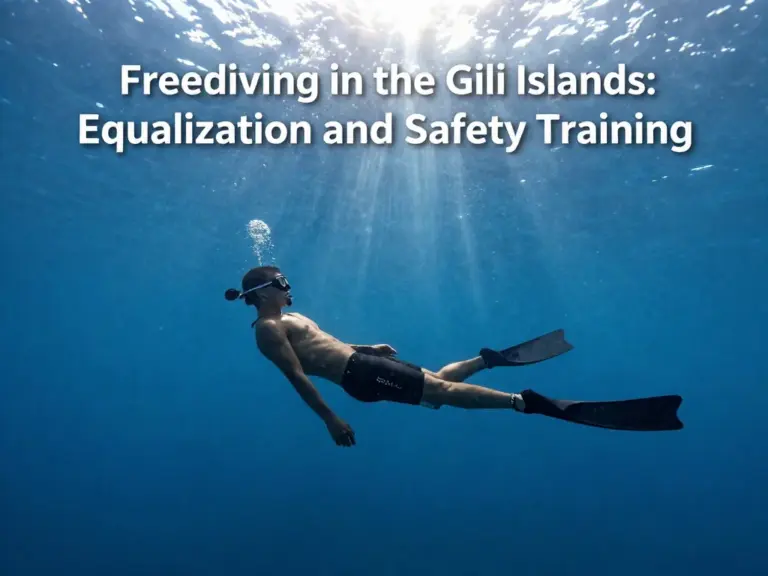
Freediving the Gilis Courses: Equalization and Safety Protocols
The Gili Islands, located just off the coast of Lombok, offer some of the most spectacular underwater landscapes in Indonesia. For adventure seekers, Freediving the Gilis courses are not just about exploring vibrant coral reefs; they are about mastering the art of breath-hold diving with precision and care. Whether you are a beginner looking to take your first breath-hold or an intermediate diver aiming to descend deeper, understanding the fundamentals of equalization and rigid safety protocols is paramount for a successful underwater journey.
Why Freediving the Gilis Courses Are Essential
Many travelers visit the Gilis for snorkeling, but true exploration requires the skills taught in specialized freediving courses. Professional instructors in the region emphasize that freediving is a mental game as much as a physical one. When you enroll in Freediving the Gilis courses, you are learning how to manage your oxygen consumption, relax your nervous system, and move through the water with maximum efficiency. These courses provide the structured environment necessary to learn complex equalization techniques that prevent ear injuries and allow for comfortable descents.
Mastering Equalization Techniques
Equalization is the most common hurdle for new freedivers. Without proper technique, the pressure changes as you descend can cause discomfort or even damage to your eardrums. Most courses in the Gilis focus on the Frenzel maneuver, which is significantly more efficient than the Valsalva maneuver used by many scuba divers. By utilizing the back of your tongue as a piston to compress air into your Eustachian tubes, you can equalize more gently and deeper, preserving energy for the dive itself.
Core Safety Protocols
Safety is the bedrock of any reputable freediving center in the Gili Islands. Never dive alone is the golden rule of the sport. During your training, you will be taught the importance of the buddy system, where one person acts as the safety diver while the other performs the dive. This protocol ensures that if a blackout or loss of motor control occurs, a trained partner is immediately available to assist. Furthermore, understanding the signs of hypoxia and how to perform a rescue are integral parts of the curriculum.
| Safety Protocol | Description |
|---|---|
| Buddy System | Always dive with a trained partner who watches you. |
| Surface Interval | Double the time of your dive for recovery. |
| Weighting | Ensure you are correctly weighted for neutral buoyancy. |
คำถามที่พบบ่อย (FAQ)
What is the best time of year to take a freediving course in the Gilis?
The best time to visit is during the dry season, from April to October, when water visibility is at its peak and the currents are generally more manageable.
Do I need to be an expert swimmer to start freediving?
You do not need to be an Olympic swimmer, but you must be comfortable in the water and able to swim 200 meters comfortably without fins.
Are the Gili Islands safe for beginner freedivers?
Yes, the Gilis are highly regarded for their calm waters and numerous professional schools that cater specifically to beginners with safety-first curriculums.
What equipment do I need to bring?
Most schools provide all necessary equipment, including masks, snorkels, fins, and wetsuits, though bringing your own mask can ensure a better fit.