The Balinese Melasti and Nyepi Ceremonies: A Respectful Guide to Traditions, Etiquette, and What to Expect
Visiting Bali during the turn of the Saka calendar is a transformative experience, yet it requires deep cultural sensitivity. The Balinese Melasti and Nyepi ceremonies represent the pinnacle of Balinese spiritual life, marking a period of intense purification and absolute silence. For travelers, understanding these traditions is not just about logistics; it is about respecting a centuries-old belief system that governs life on the Island of the Gods.
Understanding Melasti: The Purification Ritual
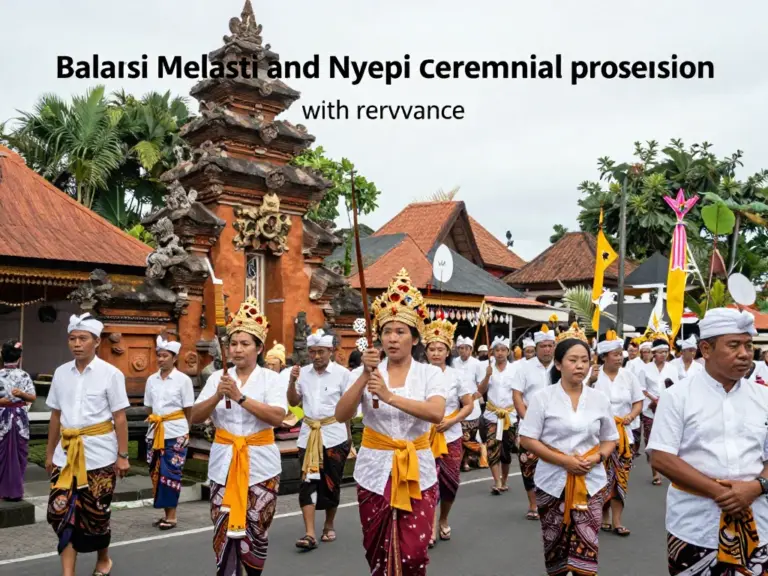
Melasti is the grand purification ceremony held a few days before Nyepi. During this time, the Balinese Hindu community gathers in colorful, solemn processions to travel from their village temples to the nearest bodies of water—be it the ocean, a lake, or a holy spring. The belief is that water is the source of life and the ultimate purifier of the universe.
Villagers carry heirlooms, sacred statues (Pratima), and ritual objects from their temples, walking in long lines adorned in traditional attire. If you are in Bali during this time, you will likely see road closures and bustling processions. It is a stunning visual display of devotion. As a visitor, you are welcome to observe from a respectful distance, but always ensure you are not blocking the path of the procession or photographing sacred rituals inappropriately.
Nyepi: The Day of Silence
Nyepi, or the Balinese Day of Silence, is unlike any other holiday on Earth. It is a day dedicated to self-reflection, meditation, and spiritual cleansing. On this day, the entire island shuts down completely to trick the evil spirits (Buta Kala) into believing that Bali is uninhabited, encouraging them to leave the island. The silence is absolute, creating a unique atmosphere of peace that is profound and palpable.
The Four Brata Penyepian (Rules of Nyepi)
To honor the sanctity of the day, these four rules must be observed by everyone on the island, including tourists:
- Amati Geni: No fire or light (including electronic devices or outdoor lights).
- Amati Karya: No work or productive activity.
- Amati Lelungan: No traveling or leaving your accommodation.
- Amati Lelanguan: No entertainment or merrymaking.
Essential Etiquette for Travelers
If your travel dates coincide with Nyepi, you must prepare accordingly. The island’s airport, Ngurah Rai International Airport, closes completely for 24 hours. No flights arrive or depart, and no sea transport operates. You are expected to stay within the confines of your hotel or villa. While hotels offer food and services, you should not venture out onto the streets, as Pecalang (traditional Balinese security officers) patrol the roads to ensure compliance.
At night, keep your curtains drawn and lights dimmed. Light pollution is considered a disruption to the meditative state of the island. This is a perfect opportunity to disconnect from the digital world, read a book, or simply enjoy the rare silence that blankets the island under a tapestry of stars.
คำถามที่พบบ่อย (FAQ)
No. The rules of Nyepi strictly prohibit leaving your accommodation. Walking on the beach or streets is not permitted and is considered disrespectful to the local community.
Emergency services, such as ambulances, remain operational. If you have a legitimate medical emergency, please contact your hotel reception immediately, as they have protocols in place to coordinate with local authorities.
In recent years, mobile data and internet services have been turned off across the island during Nyepi to further promote the atmosphere of silence. Plan to be offline for 24 hours.
The night before Nyepi, you will witness the Ogoh-Ogoh parade. These are giant, monstrous papier-mâché effigies representing evil spirits, which are paraded through the streets to be symbolically exorcised before the silence begins.