Understanding Balinese Ceremonies and Why Respectful Behavior Matters
Bali is often called the ‘Island of the Gods,’ a name that becomes self-explanatory the moment you witness the vibrant tapestry of Balinese ceremonies that dictate the rhythm of daily life. For the Balinese people, spirituality is not a Sunday activity; it is a constant, living breath that maintains the balance between the human world, the natural world, and the divine. As tourism continues to grow, understanding these rituals and practicing respectful behavior is not just a courtesy—it is a fundamental requirement for preserving the sanctity of this unique culture.
The Essence of Balinese Ceremonies
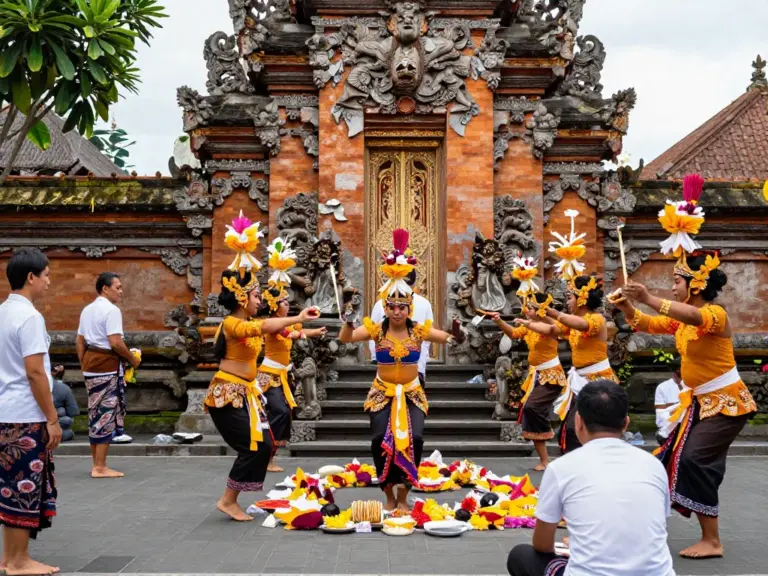
At the heart of Balinese Hinduism is the philosophy of Tri Hita Karana, which emphasizes harmony among humans, harmony with nature, and harmony with God. Balinese ceremonies are the primary vehicles used to achieve and maintain this harmony. From the smallest daily offering (Canang Sari) placed on the sidewalk to the massive, multi-day temple festivals (Odalan), every ritual serves a specific purpose in the cosmic order.
Canang Sari: The Daily Ritual
You will see these small palm-leaf baskets everywhere—on shrines, at the entrances of shops, and even on the dashboards of taxis. Filled with colorful flowers, a bit of food, and burning incense, they are symbols of gratitude and self-sacrifice. Stepping on one intentionally is considered highly disrespectful, as it is a direct offering to the spirits.
Why Respectful Behavior Matters for Tourists
When travelers witness Balinese ceremonies, they are not looking at a performance staged for entertainment; they are observing a sacred conversation between a community and its deities. Respectful behavior ensures that these traditions remain authentic and that the local community continues to feel comfortable sharing their space with outsiders. Disrespectful actions—such as inappropriate dress or interrupting a priest—can cause deep offense and may even lead to spiritual ‘pollution’ of a site, requiring expensive purification rituals.
Key Rules of Etiquette During Ceremonies
To navigate the cultural landscape of Bali with grace, follow these essential guidelines:
- Dress Appropriately: Both men and women must wear a sarong and a waist sash when entering temples or attending ceremonies. Shoulders should be covered.
- Mind Your Height: Never stand higher than the priest or the offerings. If people are sitting on the ground to pray, you should find a place to sit or crouch as well.
- Photography Etiquette: Avoid using flash during prayers and do not stand directly in front of worshippers. Always ask permission before taking close-up portraits of participants.
- Menstruation: According to local custom, women who are menstruating are asked to refrain from entering temple grounds as they are considered ‘unclean’ for sacred spaces.
Major Ceremonies You Might Encounter
Depending on the timing of your visit, you may encounter several types of Balinese ceremonies:
| Ceremony | Description |
|---|---|
| Galungan | Celebrates the victory of Dharma (good) over Adharma (evil). |
| Kuningan | The day when ancestors return to the heavens after Galungan. |
| Melasti | A purification ritual involving a procession to the sea. |
| Ngaben | The elaborate Balinese cremation ceremony, celebrating the soul’s release. |
Conclusion
Witnessing Balinese ceremonies is a privilege that offers a window into the soul of Indonesia. By approaching these events with humility, dressing appropriately, and following local customs, you contribute to the preservation of Bali’s cultural heritage. Remember, you are a guest in a sacred space; your respect is the best offering you can give.
คำถามที่พบบ่อย (FAQ)
What should I do if I accidentally step on a Canang Sari?
If it was a genuine accident, don’t panic. Simply say ‘sorry’ or ‘maaf’ to anyone nearby who might have seen it. The Balinese are generally forgiving of accidental mistakes, but showing immediate regret is appreciated.
Can I join in the prayers during a ceremony?
While most ceremonies are public, the actual act of prayer is deeply personal. It is best to observe quietly from the perimeter unless you are specifically invited by a local family to participate.
Is there a fee to watch Balinese ceremonies?
Most communal ceremonies are free to observe, though temple entry fees usually apply. If you are attending a private ceremony like a wedding or cremation, a small donation or a gift of fruit/incense is a polite gesture.
What is the best way to find out when ceremonies are happening?
Ceremonies follow the Pawukon and Saka calendars. You can check with your hotel concierge or local tourism boards for a schedule of major festivals during your stay.
References
Official Indonesia Tourism – Bali Guide
Bali Culture and Religion Overview