How to join batik workshops near the Kraton: techniques, materials, and choosing authentic hands-on experiences
Yogyakarta, the soul of Javanese culture, offers an immersive journey into the world of textile art. For travelers seeking more than just a souvenir, participating in batik workshops near the Kraton (the Sultan’s Palace) provides a profound connection to Indonesian heritage. These workshops are not merely art classes; they are a window into a philosophy where every stroke of wax tells a story of patience and tradition.
Understanding the Traditional Batik Techniques
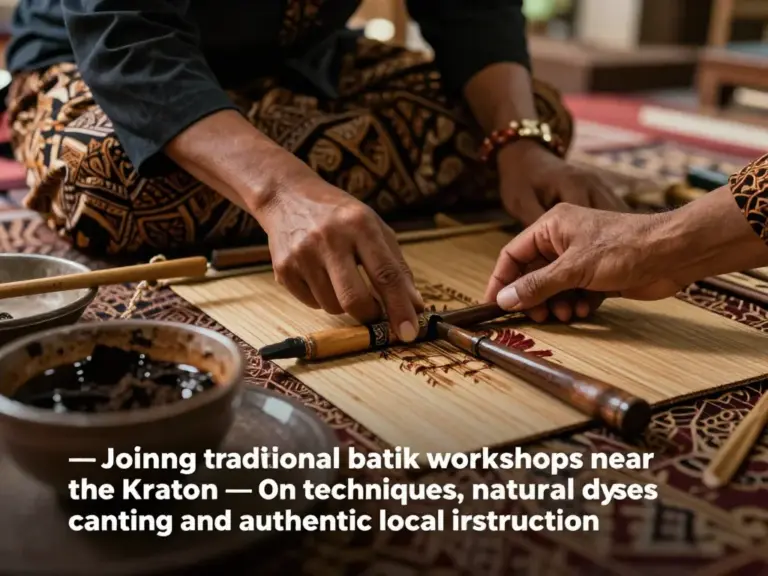
When you join batik workshops near the Kraton, you will primarily encounter two methods: Batik Tulis (hand-drawn) and Batik Cap (stamped). Batik Tulis is the most prestigious form, requiring the artist to draw intricate patterns using a canting—a small copper tool filled with hot liquid wax. This method demands immense focus and a steady hand, as errors are difficult to correct once the wax hits the fabric.
Batik Cap, on the other hand, utilizes copper stamps to create repetitive patterns. While faster, it still requires significant skill to ensure the wax penetrates the fabric evenly. Many workshops near the Kraton allow participants to try both, giving a comprehensive understanding of the labor involved in creating these masterpieces.
Essential Materials in a Batik Workshop
An authentic workshop will introduce you to the specific materials that define Javanese Batik. The process begins with high-quality cotton or silk (mori). The ‘resist’ material is a mixture of paraffin and beeswax, heated to a precise temperature. You will also use Indonesian dyes, which were traditionally derived from plants like the Indigofera for blue and the Soga tree for the iconic Javanese brown.
| Material | Purpose | Description |
|---|---|---|
| Canting | Drawing Tool | A copper reservoir with a spout for liquid wax. |
| Malam | Resist Agent | A specific blend of waxes used to block dye. |
| Wajan | Heating Pot | A small wok used to melt the wax over a stove. |
| Gawangan | Frame | A wooden rack used to hang the fabric while drawing. |
Choosing Authentic Hands-on Experiences
With so many options available, finding the right batik workshops near the Kraton can be overwhelming. To ensure an authentic experience, look for studios that are family-owned and have been operating for generations. These ‘batik houses’ often maintain the traditional Pakem (standard) designs that carry deep philosophical meanings, such as the Parang or Kawung patterns.
Avoid ‘tourist traps’ that only offer a 15-minute session. A true workshop should last at least 2 to 4 hours, covering the drawing, waxing, dyeing, and the final lorod (wax removal) process. Engaging with local artisans in the Kampung Taman or Ngadinegaran areas—both walking distance from the Kraton—is highly recommended.
What to Expect During Your Workshop
Upon arrival, you will typically be greeted with a cup of Javanese tea. Your instructor will explain the symbolism of different patterns. You will then sketch your design, apply the wax using the canting, and participate in the dyeing process. The most magical moment is the lorod, where the fabric is dipped in boiling water to reveal the vibrant colors hidden beneath the wax.
คำถามที่พบบ่อย (FAQ)
Q: Do I need to book batik workshops near the Kraton in advance?
A: While some small studios accept walk-ins, it is highly recommended to book 24 hours in advance, especially for groups or during the peak tourist season (July–August).
Q: Is the workshop suitable for children?
A: Yes, but with supervision. Handling hot wax and the canting requires focus, so it is generally best for children aged 7 and up.
Q: Can I take my creation home on the same day?
A: Yes! Most workshops are designed so that you can finish the entire process and take your handmade batik home as a unique souvenir.
Q: What should I wear to a batik workshop?
A: Wear comfortable clothes that you don’t mind getting a bit of wax or dye on. Most studios provide aprons, but accidents can happen!
References
Wonderful Indonesia: Yogyakarta Travel Guide
UNESCO: Indonesian Batik Cultural Heritage
- Inside Javanese Court Culture: Experiencing Kraton Yogyakarta, Batik Crafting, and Gamelan Workshops for Authentic Cultural Immersion
- What is the Kraton of Yogyakarta? History, architecture, and the court traditions that shape Javanese identity
- Understanding gamelan music: instruments, rhythms, and what to expect from beginner-friendly workshops at cultural centers