Essential Indonesian Phrases for Travelers: Greetings, Asking Directions, Transport, Ordering Food, and Polite Expressions (with Long-tail Examples)
- Essential Indonesian Phrases for Travelers: Greetings, Asking Directions, Transport, Ordering Food, and Polite Expressions (with Long-tail Examples)
Embarking on a journey through the Indonesian archipelago is an adventure for the senses. From the bustling streets of Jakarta to the serene beaches of Bali, the warmth of the local people is legendary. While English is widely understood in tourist hubs, making an effort to speak ‘Bahasa Indonesia’—the national language—can transform your travel experience. This guide provides the Essential Indonesian Phrases for Travelers, designed to help you navigate social interactions, logistics, and culinary delights with confidence and respect.
The Foundation of Respect: Polite Expressions and Greetings
Indonesian culture places a high value on politeness and social harmony. Starting a conversation with the correct greeting sets a positive tone for any interaction. Unlike English, greetings in Indonesia change based on the time of day.
| English | Indonesian | Context |
|---|---|---|
| Good Morning | Selamat Pagi | Dawn until 11:00 AM |
| Good Day | Selamat Siang | 11:00 AM until 3:00 PM |
| Good Afternoon | Selamat Sore | 3:00 PM until Sunset |
| Good Evening/Night | Selamat Malam | After Dark |
| Thank You | Terima Kasih | Essential everywhere |
| You’re Welcome | Sama-sama | Response to gratitude |
| Please (Asking) | Tolong | When requesting help |
| Excuse Me / Sorry | Permisi / Maaf | Polite interruption or apology |
Long-tail Example: “Permisi, di mana toilet yang paling dekat?” (Excuse me, where is the nearest toilet?) Using ‘Permisi’ before asking a question is considered very polite and will likely result in a friendlier response.
Whether you are hailing a Blue Bird taxi, hopping on a ‘Gojek’ motorbike, or catching a ferry between islands, communication is key. Knowing how to direct your driver or find the station ensures you reach your destination without unnecessary stress.
- Dimana…? – Where is…?
- Saya mau ke… – I want to go to…
- Belok kiri / Belok kanan – Turn left / Turn right
- Lurus saja – Just go straight
- Berhenti di sini – Stop here
- Berapa harganya? – How much is the price?
Long-tail Example: “Berapa harga tiket bus ke Yogyakarta untuk dua orang?” (How much is the bus ticket to Yogyakarta for two people?) This specific phrasing helps avoid confusion at busy terminals.
A Culinary Journey: Ordering Food and Drink
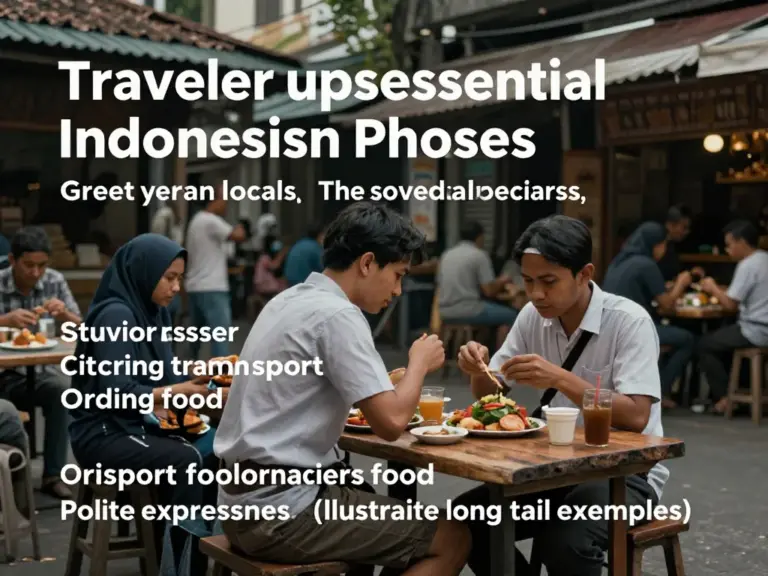
Indonesian cuisine is a highlight for any traveler. From the smoky aroma of Satay to the complex spices of Rendang, your palate is in for a treat. Ordering in the local tongue at a ‘Warung’ (small family-run eatery) is a great way to build rapport with locals.
| English | Indonesian |
|---|---|
| I would like to order… | Saya mau pesan… |
| Not spicy | Tidak pedas |
| A little spicy | Sedikit pedas |
| The bill, please | Minta bon / Minta tagihan |
| Delicious! | Enak sekali! |
| Drinking water | Air putih |
Long-tail Example: “Saya mau pesan satu Nasi Goreng tanpa telur, tolong.” (I want to order one Fried Rice without egg, please.) This is particularly useful for travelers with dietary preferences or allergies.
Social Etiquette and Useful Tips
Beyond the words themselves, non-verbal communication is vital. Always use your right hand when giving or receiving items, as the left hand is traditionally considered unclean. A gentle nod and a smile go a long way. If someone asks “Mau ke mana?” (Where are you going?), it is often a friendly greeting rather than an invasive question; a simple “Jalan-jalan” (Just walking around) is a perfectly acceptable answer.
คำถามที่พบบ่อย (FAQ)
Is it difficult to learn Indonesian?
No, Indonesian is considered one of the easiest languages for English speakers because it uses the Latin alphabet, has no grammatical genders, and no complex verb conjugations.
What is the most important phrase to know?
‘Terima kasih’ (Thank you) is the most important phrase. Indonesians are very appreciative when visitors show gratitude and respect for their culture.
How do I say ‘No’ politely?
Instead of just saying ‘Tidak’ (No), it is more polite to say ‘Tidak, terima kasih’ (No, thank you) or ‘Belum’ (Not yet) if someone offers you food or a service.
Do I need to tip in Indonesia?
Tipping is not mandatory but widely appreciated. In small local eateries, it isn’t expected, but in tourist areas and for guides or drivers, a small tip is a kind gesture.
References
Official Indonesia Tourism – Language Guide
Lonely Planet: Essential Phrases for Indonesia
- Learning Basic Indonesian Phrases: A Traveler’s Cheat Sheet — Quick Guide for Polite Greetings, Directions, Dining, Emergencies, and Pronunciation Tips
- Why Learn Indonesian for Travel? Understanding Search Intent, Common Situations, and What Travelers Actually Need
- Handling Emergencies and Health Situations in Indonesian: Key Phrases, Phone Calls, and How to Ask for Help Locally