What is the Ijen Crater and Blue Fire? — Origins, geology, and why the phenomenon is unique to Ijen (blue flames, sulfuric glow, and volcanic gases)
- What is the Ijen Crater and Blue Fire? — Origins, geology, and why the phenomenon is unique to Ijen (blue flames, sulfuric glow, and volcanic gases)
- The Majesty of Mount Ijen: An Overview for Tourists
- Unraveling the Science: What is the Ijen Crater and Blue Fire?
- Why is the Blue Fire Phenomenon Unique to Ijen?
- Experiencing Ijen Safely: Practical Advice for Travelers
- The Human Element: Sulfur Miners of Ijen
- Conclusion: The Enduring Appeal of Kawah Ijen
- คำถามที่พบบ่อย (FAQ)
For travelers seeking the truly extraordinary within Indonesia, few sights rival the spectacle of Mount Ijen. If you are planning an adventure through East Java, understanding What is the Ijen Crater and Blue Fire? is essential. This active stratovolcano complex is renowned globally not just for its vast turquoise acidic lake, but for the ethereal, mesmerizing blue flames that dance across its landscape after dark. This guide dives deep into the science, geology, and the unique conditions that make the Ijen blue fire a rare natural wonder, perfectly tailored for the discerning Indonesia tourism enthusiast.
The Majesty of Mount Ijen: An Overview for Tourists
Mount Ijen, or Kawah Ijen in Indonesian, is part of the Ijen Volcanic Complex located on the border between Banyuwangi Regency and Bondowoso Regency in East Java. It is perhaps most famous for housing the largest highly acidic crater lake in the world. However, the primary draw for international visitors is the nocturnal trek to witness the electric blue luminescence that spills from the crater floor.
The Hike and the Lake
The journey typically begins in the dead of night from the Paltuding post. The trek to the rim takes approximately 90 minutes to two hours, depending on fitness. Upon reaching the crater rim, visitors are greeted by the stunning, milky-turquoise crater lake, which is highly acidic (pH close to 0.5). This lake is fed primarily by rainwater, making its composition volatile and its environment hostile to most life.
Unraveling the Science: What is the Ijen Crater and Blue Fire?
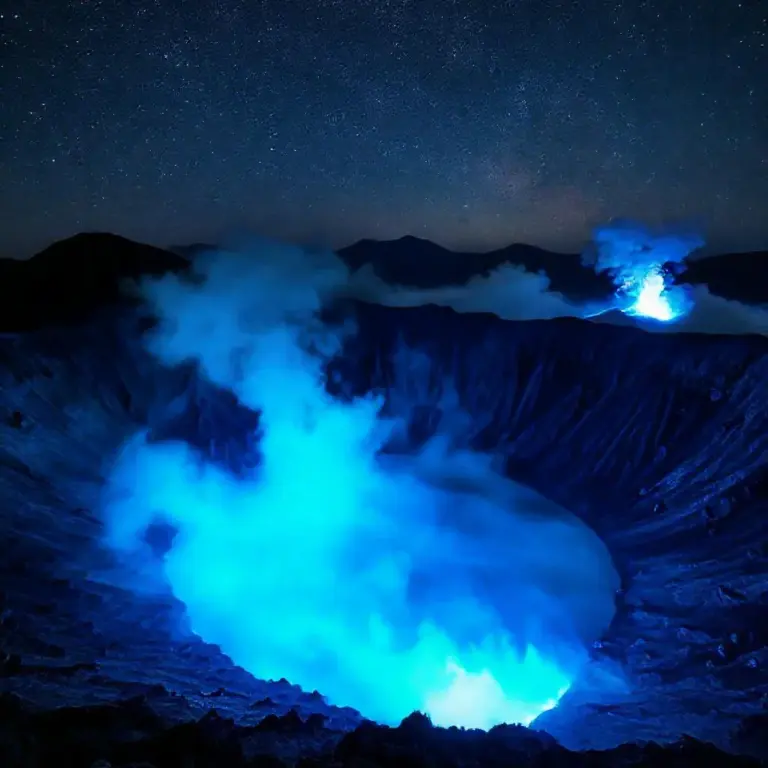
The ethereal blue glow is one of nature’s most captivating chemical reactions. It is not lava, as many mistakenly believe, but rather the combustion of sulfuric gases escaping from high-pressure fissures in the crater floor. This phenomenon is the direct result of Ijen’s intense hydrothermal and volcanic activity.
The Role of Sulfur Dioxide and Combustion
Deep within the volcano, magma heats groundwater, creating superheated steam and highly pressurized volcanic gases. These gases, rich in sulfur dioxide ($\text{SO}_2$), find pathways to the surface through cracks in the rock near the lake shore. When these gases emerge and come into contact with the cooler night air, they ignite.
The blue flame is the visible manifestation of this combustion. The temperature required for the sulfur to burn is surprisingly low—around 600°C (1,112°F). This heat causes the gaseous sulfur to oxidize, emitting light in the blue spectrum. The flames can reach heights of up to five meters, creating a truly otherworldly scene. Once the sulfur cools slightly, it condenses into bright yellow, solid sulfur deposits.
| Feature | Description | Significance |
|---|---|---|
| Crater Lake | World’s largest highly acidic lake (pH ~0.5) | Source of extreme chemical environment. |
| Blue Fire | Combustion of sulfuric gases (SO2) | Visible only at night; requires specific gas concentration. |
| Sulfur Mining | Local miners collect solidified sulfur deposits | Crucial economic activity for local communities. |
Why is the Blue Fire Phenomenon Unique to Ijen?
While volcanic activity is common across the Ring of Fire, the visibility and consistency of the blue fire at Kawah Ijen are unique due to a confluence of geological and atmospheric factors. Geological assessments confirm that Ijen possesses the perfect conditions for this sustained, visible combustion.
1. High Concentration of Pressurized Sulfur Gas
The concentration of sulfur dioxide escaping through the vents must be precisely high enough to ignite spontaneously upon contact with air, yet the vents must also be accessible enough for tourists to observe the flames safely (with protective gear). Other volcanoes may release sulfur, but rarely in this specific, pressurized, and concentrated manner near accessible viewing points.
2. Atmospheric Conditions
The phenomenon is best viewed on clear, dark nights. The high altitude (around 2,386 meters) and the relatively stable climate of East Java often provide the necessary cool, calm air required for the low-temperature combustion to sustain itself long enough to be visible as a continuous flame rather than just a puff of gas.
3. The Sulfuric Glow vs. True Fire
It is crucial to distinguish the blue fire from the general sulfuric glow. The bright yellow-orange glow seen during the day, or the residual light near the vents, is often the solid sulfur deposits cooling or minor smoldering. The true Blue Fire phenomenon is the flame itself, which is visible only when darkness allows the blue light spectrum to dominate.
Experiencing Ijen Safely: Practical Advice for Travelers
While witnessing the blue fire is unforgettable, the environment is hazardous due to volcanic gases, primarily sulfur dioxide. Safety must be the top priority for any visitor interested in Indonesia tourism to this site.
- Gas Masks are Mandatory: Always rent or bring a high-quality industrial-grade gas mask (not a simple dust mask) before descending into the crater. Guides will enforce this.
- Stay Upwind: If possible, position yourself so the wind blows the gases away from you. Guides are experienced in judging wind direction.
- Timing: The best time to see the blue flames is between 2:00 AM and 4:00 AM, before the sun rises and the flames become obscured by daylight.
- Physical Preparedness: The hike is challenging. Ensure you are adequately hydrated and wear sturdy hiking boots.
The Human Element: Sulfur Miners of Ijen
Beyond the natural science, Ijen holds significant cultural weight due to the tireless work of the local sulfur miners. These brave individuals manually carry baskets laden with solidified sulfur from the crater floor up to the rim, often carrying loads exceeding 70-90 kilograms. This incredibly difficult labor is their primary source of income.
Observing their resilience while you witness the blue fire is a profound experience, grounding the natural wonder in human reality. Visitors should treat the miners with respect and consider purchasing small souvenirs, which directly supports their economy.
Conclusion: The Enduring Appeal of Kawah Ijen
What is the Ijen Crater and Blue Fire? It is a dynamic geological laboratory where chemistry and darkness conspire to create one of Earth’s most spectacular light shows. From the acidic turquoise lake to the dancing blue flames, Ijen offers a raw, powerful encounter with nature that solidifies its place as an essential stop on any serious Indonesia tourism itinerary. Plan carefully, respect the environment, and prepare to be amazed.
คำถามที่พบบ่อย (FAQ)
References
- The Ijen Crater and Blue Fire: Ultimate Guide to Witnessing the Volcano’s Fiery Spectacle
- How to plan your Ijen Blue Fire adventure — best times to visit, permits, guided tours, safety considerations, and eco-friendly practices
- Hiking the Ijen Crater: routes, difficulty, equipment, and tips for sunrise treks and night photography of the blue fire