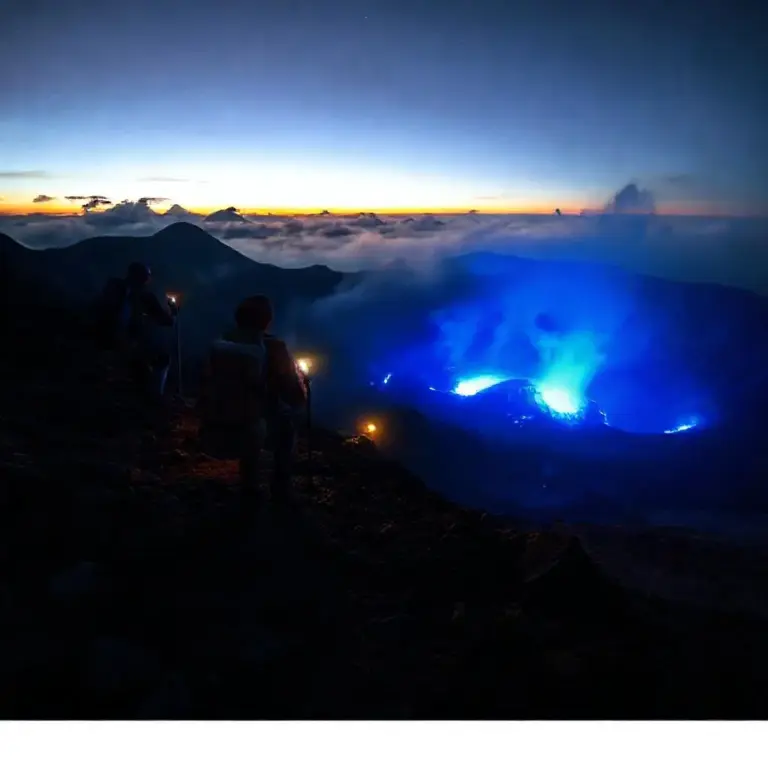
Hiking the Ijen Crater: routes, difficulty, equipment, and tips for sunrise treks and night photography of the blue fire
- Hiking the Ijen Crater: routes, difficulty, equipment, and tips for sunrise treks and night photography of the blue fire
Welcome to East Java, Indonesia, home to one of the world’s most ethereal natural phenomena: the electric blue flames of Kawah Ijen. For intrepid travelers seeking a truly unforgettable experience, Hiking the Ijen Crater is a non-negotiable item on the Indonesian adventure checklist. This guide provides you with all the necessary expertise, routes, and practical tips to conquer the trek, witness the mesmerizing blue fire, and capture stunning sunrise photographs atop this active stratovolcano.
Understanding the Ijen Crater Experience
The Ijen volcano complex, located on the border between Banyuwangi Regency in East Java and the Bali Strait, is famous not just for its stunning turquoise crater lake—the largest highly acidic crater lake in the world—but for the rare sight of volcanic gases igniting upon contact with the air at night. This phenomenon, known as the ‘Blue Fire,’ is the primary draw for those undertaking the challenging overnight ascent.
The Blue Fire Phenomenon: What Makes It Blue?
The blue glow is not lava; it is the combustion of sulfuric gases emanating from fissures in the crater walls. These gases ignite when exposed to oxygen at high temperatures. To see this spectacle, you must descend into the crater bowl after reaching the rim, usually between 1:00 AM and 3:00 AM. Remember, visibility is highly dependent on weather conditions and active volcanic gas output.
Ijen Crater Routes and Difficulty Assessment
The standard and only publicly accessible route for Hiking the Ijen Crater begins at the Paltuding post (the final ticket checkpoint). The overall difficulty is generally rated as moderate to strenuous, primarily due to the steep incline and the necessity of hiking in the dark.
The Paltuding Ascent Route
This is the essential pathway for nearly all visitors:
- Paltuding Post (Start): Altitude approx. 1,850 meters. This is where you register and hire porters if needed.
- The Main Trail: The initial 1.5 to 2 kilometers are the steepest, often muddy, and require good footing. Expect inclines up to 35 degrees.
- The Summit Plateau: After roughly 1.5 to 2 hours of climbing, you reach the rim (approx. 2,700 meters). This is where the view of the crater lake opens up.
- The Descent to Blue Fire: From the rim, a narrow, slippery path leads down to the crater floor. This section is technically challenging and requires extreme caution. Porters often navigate this path with ease, but independent hikers must be slow and deliberate.
Trekking Difficulty: A Practical View
For experienced hikers, the climb is manageable. For beginners, the combination of altitude gain and hiking in pitch darkness (relying solely on headlamps) makes it demanding. Proper preparation is key to enjoying the experience rather than struggling through it. We highly recommend hiring a local guide or porter for safety, especially for the descent to view the blue fire.
Essential Equipment for Ijen Trekking
Packing correctly is crucial for safety and comfort when Hiking the Ijen Crater, particularly because of the sulfurous gases.
| Item | Importance | Notes |
|---|---|---|
| Gas Mask (with Sulfur Filters) | Critical | Do not rely on simple cloth masks. Hire or buy a proper industrial-grade mask at the base camp. |
| Headlamp/Torch | Essential | Must have fresh batteries; hands-free operation is mandatory. |
| Sturdy Hiking Boots | High | The path is rocky, uneven, and often slippery with mud or loose scree. |
| Warm Layers | Essential | Temperatures at the summit can drop near freezing before sunrise. Bring thermals, a fleece, and a windproof jacket. |
| Water & Snacks | High | Electrolytes are recommended. Food stalls are only available at the start/end point. |
Photography Gear for Blue Fire and Sunrise
Capturing the blue fire requires specific settings, as it is a low-light, fast-moving subject. For night photography of the blue fire:
- Tripod: Absolutely necessary for long exposures.
- Camera: Manual mode required.
- Lens: A wide-angle lens is best for capturing the scale of the crater rim and the lake.
For the sunrise, ensure you are back on the rim around 5:30 AM to catch the spectacular light show over the acidic lake as the sun hits the horizon. This is arguably the most rewarding part of the entire trek.
Expert Tips for a Successful Ijen Sunrise Trek
Maximize your experience by following these proven tips from seasoned travelers who have conquered Hiking the Ijen Crater.
Logistics & Timing
- Start Time: Aim to arrive at Paltuding between 12:30 AM and 1:30 AM.
- Base Town: Most visitors stay in Banyuwangi or Ketapang for easy access.
- Sleep: Try to get a few hours of rest before the 1:00 AM departure; you will be exhausted otherwise.
Safety & Etiquette
- Guides/Porters: While optional, they are invaluable for navigation and safety, especially on the dangerous descent.
- Leave No Trace: Pack out absolutely everything you bring in. Keep the area pristine.
- Gas Exposure: If the sulfur smell becomes overwhelming even with a mask, immediately ascend out of the crater floor. Your health comes first.
The trek is physically demanding, but the reward—watching the sunrise paint the crater rim gold while gazing down at the world’s most vivid natural light show—is unparalleled. Consider this journey a rite of passage for any serious tourist exploring East Java.
Experiencing the View from the Rim
Once you reach the crater rim, take time to acclimatize and enjoy the views before deciding on the descent. The view of the vast, turquoise Kawah Ijen lake, framed by rugged volcanic peaks, is breathtaking even without the blue fire. The contrast between the brilliant blue water and the surrounding grey volcanic rock makes for incredible daytime photography.
Video Guide to the Trek
To visualize the terrain and the conditions you will face, watch this detailed guide on the journey to the blue fire:
Location Overview
For context on where you are heading, here is the general location of the starting point:
คำถามที่พบบ่อย (FAQ)
References
Successful Hiking the Ijen Crater is a challenging but immensely rewarding venture into Indonesia’s volcanic heartland. Prepare well, respect the environment, and prepare for a truly magical sunrise.
- The Ijen Crater and Blue Fire: Ultimate Guide to Witnessing the Volcano’s Fiery Spectacle
- What is the Ijen Crater and Blue Fire? — Origins, geology, and why the phenomenon is unique to Ijen (blue flames, sulfuric glow, and volcanic gases)
- How to plan your Ijen Blue Fire adventure — best times to visit, permits, guided tours, safety considerations, and eco-friendly practices