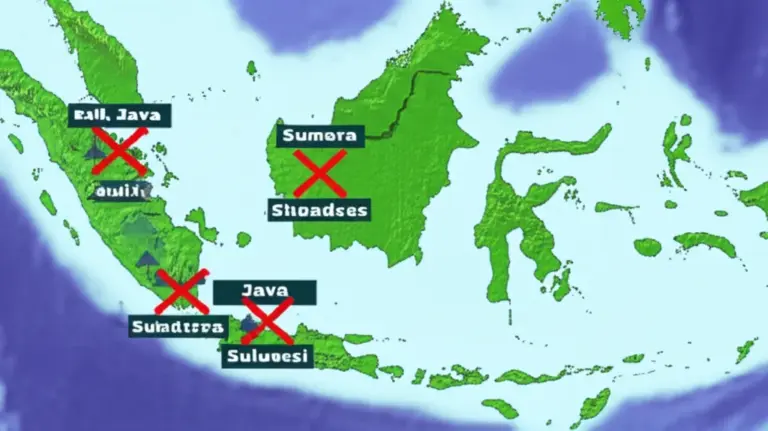
Peak and Shoulder Seasons: Avoiding Crowds and Finding the Best Weather for Bali, Java, Sumatra, and Sulawesi
- Peak and Shoulder Seasons: Avoiding Crowds and Finding the Best Weather for Bali, Java, Sumatra, and Sulawesi
- Understanding Indonesia’s Climate: Wet vs. Dry Seasons
- Bali: The Tourist Hub (When to Visit)
- Java: Historical Sites and Volcanic Landscapes
- Sumatra: Wildlife Encounters and Rainforest Trekking
- Sulawesi: Diving Paradise and Cultural Gems
- Strategic Travel Planning: Maximizing Value in Shoulder Season
- คำถามที่พบบ่อย (FAQ)
Planning a trip to the vast archipelago of Indonesia requires more than just booking flights; it demands strategic timing. To truly enjoy the diverse landscapes, from Bali’s beaches to Java’s volcanoes, understanding the climate cycle is crucial. This guide focuses on identifying the Peak and Shoulder Seasons Indonesia for four major islands—Bali, Java, Sumatra, and Sulawesi—helping you avoid the heaviest rains and the largest crowds, ensuring a perfect, tailored travel experience.
Understanding Indonesia’s Climate: Wet vs. Dry Seasons
Indonesia, straddling the equator, experiences a tropical monsoon climate. While the entire country is warm and humid, the dry season (generally April to October) and the wet season (November to March) are dictated by wind patterns. However, due to the sheer size of the country, these patterns are not uniform across all islands, especially when comparing western islands (Sumatra) to central and eastern islands (Bali, Sulawesi).
The Two Primary Seasons and Their Impact
| Season | Typical Months | Travel Impact |
|---|---|---|
| Dry Season (Peak) | June – September | Best weather, low humidity, high prices, maximum crowds. |
| Wet Season (Low) | November – March | Heavy, short rainfall, high humidity, lowest prices, fewer tourists. |
| Shoulder Season | April, May, October | Good weather balance, moderate crowds, better deals, ideal for strategic travelers. |
Bali: The Tourist Hub (When to Visit)
Bali operates on the most predictable tourist cycle among the major islands. The dry season guarantees sunny days, making it perfect for beach activities and volcano hikes, but this popularity comes at a cost, both literally and figuratively, due to the massive influx of international visitors.
Peak Season (June to August)
This period offers the absolute best weather: minimal rain, low humidity, and consistent sunshine. However, expect beaches like Kuta and Seminyak, and cultural centers like Ubud, to be extremely congested. Accommodation prices are at their highest, often requiring bookings months in advance. If avoiding crowds is paramount, this season should be approached with caution.
Shoulder Seasons (April, May, September, October)
For most visitors, the shoulder season is the sweet spot. May and September, in particular, offer weather nearly identical to the peak months but with significantly reduced crowds and slightly lower prices. You still benefit from the dry climate without the intense competition for resources. October sees a slight increase in rainfall, but typically only short afternoon showers, leaving the mornings clear for activities. This is the optimal time to experience the Peak and Shoulder Seasons Indonesia balance.
Java: Historical Sites and Volcanic Landscapes
Java, home to Jakarta, Yogyakarta, and the magnificent Bromo volcano, follows a similar dry/wet cycle to Bali, but with fewer international crowds outside of the main cultural centres. The dry season (May to September) is ideal for trekking and exploring the vast temple complexes.
Best Time for Temple Visits (Borobudur, Prambanan)
The dry months are essential for visiting Borobudur and Prambanan near Yogyakarta. Rain can make the stone steps slippery and obscure the sunrise views, which are a highlight of the Borobudur experience. Furthermore, the shoulder months of April and October are perfect for securing better deals on hotels in major cities like Bandung and Surabaya while still enjoying clear weather for sightseeing.
Sumatra: Wildlife Encounters and Rainforest Trekking
Sumatra presents a slightly different challenge. Being closer to the equator, it receives more consistent rainfall year-round. While it does have a ‘dryer’ period, it rarely experiences the prolonged drought seen in Bali or Java. The prime focus here is on jungle trekking, particularly for orangutan spotting in places like Bukit Lawang.
The driest months are typically June, July, and August. These are the best times for multi-day treks, as trails are less muddy and river crossings are safer. However, Sumatra sees far fewer tourists than Bali, meaning that even the ‘peak’ season here feels like a shoulder season elsewhere. If you travel during the monsoon (November to February), trekking can be severely limited or extremely uncomfortable due to heavy downpours and leeches. Aim for the shoulder months of April/May or September/October for a good balance of manageable weather and low visitor numbers.
Sulawesi: Diving Paradise and Cultural Gems
Sulawesi, renowned for world-class diving in Bunaken and Wakatobi, and the unique cultural practices of Tana Toraja, has a climate that can be highly localized. The best time to visit often depends on whether you prioritize the north or the south of the island.
Targeting the Ideal Diving Months
Best diving conditions: May to October. The peak dry season ensures calm seas and maximum visibility. November to February is the monsoon period, making boat travel challenging.
Best cultural exploration: June to September. While cultural ceremonies happen year-round, road conditions are best during the dry season. The shoulder months (April/May) are excellent for comfortable travel.
Strategic Travel Planning: Maximizing Value in Shoulder Season
The strategic traveler understands that the shoulder season (April, May, September, October) offers the highest value proposition in Indonesia. You get 90% of the weather perfection of the peak season for 70% of the price, and with significantly less hassle.
If your itinerary includes multiple islands, such as flying into Java for historical tours and then ending the trip with diving in Sulawesi, aligning your dates within the May or September windows will yield the most consistent, favorable weather across the entire archipelago. Furthermore, local transportation, like ferries and domestic flights, tends to be more reliable and less impacted by delays compared to the heavy rainfall months of January and February.
In conclusion, while the dry season guarantees sun, the true insider secret to Indonesian travel is leveraging the shoulder months. By choosing April, May, September, or October, you can successfully navigate the complexities of the climate, minimize tourist congestion, and achieve the perfect balance between ideal weather and budget-friendly exploration across Bali, Java, Sumatra, and Sulawesi.
คำถามที่พบบ่อย (FAQ)
A: December falls firmly within the wet season for most of Indonesia, including Bali and Java. While it is characterized by high humidity and frequent heavy downpours, the rain usually comes in short, intense bursts rather than lasting all day. Travel is still possible, but outdoor activities and trekking will be significantly impacted, and visibility for diving may be lower.
A: Sulawesi is often cited as having the most complex and localized weather patterns. Due to its unique K-shape, the monsoon often hits the north (Manado) and the south (Makassar) at different times. For instance, the best diving in the north (May-October) is generally opposite to the best time to visit the southern islands of Wakatobi.
A: The main benefits of choosing the shoulder season are lower prices for accommodation and flights, significantly fewer crowds at major attractions like temples and beaches, and still enjoying excellent weather conditions (especially in May and September) before the heavy monsoon or peak tourist rush sets in. This period offers the best overall value for travelers.
References
Indonesian Meteorological Agency (BMKG) Climate Data |
Travel Guides for Southeast Asia Seasonal Planning |
Bali Tourism Board Official Information