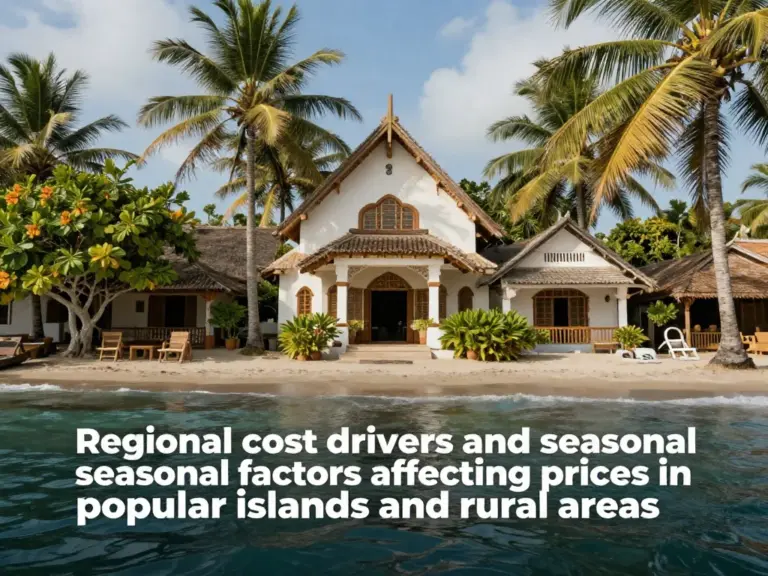
Regional cost drivers and seasonal factors: what raises or lowers prices in popular islands and rural areas
- Regional cost drivers and seasonal factors: what raises or lowers prices in popular islands and rural areas
- Understanding Logistics: Why Remote Means Expensive
- The Impact of Seasonal Factors on Tourism Pricing
- Regional Cost Drivers in Popular Islands vs. Rural Areas
- The Role of Infrastructure and Local Festivals
- How to Navigate High-Cost Periods
- คำถามที่พบบ่อย (FAQ)
- What is the most expensive time to visit Indonesia?
- Why is Raja Ampat so much more expensive than Bali?
- Does the rainy season lower travel costs?
When planning a journey through the vast Indonesian archipelago, travelers often notice a startling disparity in prices. From the bustling streets of Seminyak in Bali to the remote, pristine waters of Raja Ampat, understanding the Regional cost drivers and seasonal factors is essential for any savvy explorer. While Indonesia is generally known for its affordability, specific economic and environmental variables can significantly inflate or deflate your daily expenses. This guide delves into the mechanics of tourism pricing in popular islands and rural areas to help you budget more effectively.
Understanding Logistics: Why Remote Means Expensive
The primary driver of high prices in rural or remote island locations is the complexity of the supply chain. In regions like Papua or the Maluku Islands, almost all consumer goods—from fuel and bottled water to building materials—must be transported via sea or air from major hubs like Surabaya or Jakarta. This logistical hurdle adds a ‘geographic premium’ to every item. Unlike Bali, which has a robust local manufacturing and agricultural base, remote islands rely on expensive imports, making even basic amenities cost twice as much as they would in a city.
The Impact of Seasonal Factors on Tourism Pricing
Seasonal factors play a massive role in price fluctuations across Indonesia. The country typically experiences two main seasons: the dry season (April to October) and the rainy season (November to March). However, tourism seasons follow a different rhythm. Peak seasons usually coincide with Australian school holidays, European summer vacations (July-August), and the year-end festive period. During these times, accommodation prices in popular islands can surge by 50% to 100%.
Regional Cost Drivers in Popular Islands vs. Rural Areas
In popular hubs like Bali or Lombok, the cost driver is often demand-driven. High competition among businesses usually keeps prices for food and transport reasonable, but luxury accommodation prices are pushed up by high demand. Conversely, in rural areas like Flores or Sumba, the cost driver is scarcity. There are fewer hotels and transport providers, meaning they can charge a premium regardless of the season because there are no alternatives for the traveler.
| Factor | Popular Islands (e.g., Bali) | Rural Areas (e.g., Raja Ampat) |
|---|---|---|
| Transport | Competitive (Grab/Gojek available) | Expensive (Private boat/charter only) |
| Accommodation | Wide range (Budget to Ultra-luxury) | Limited (Homestays or high-end eco-resorts) |
| Food & Beverage | Affordable to Expensive | Higher base price due to shipping costs |
| Internet/Data | Cheap and Ubiquitous | Spotty and potentially expensive |
The Role of Infrastructure and Local Festivals
Infrastructure development directly influences regional pricing. Islands with modern airports and paved roads see lower transport costs. Furthermore, local cultural events and religious festivals can cause temporary price spikes. For instance, during Nyepi in Bali or Eid al-Fitr across Indonesia, transport becomes scarce and expensive as locals travel home, and many businesses close, leaving only higher-priced options available to tourists.
To mitigate the effects of Regional cost drivers and seasonal factors, timing and location choice are key. Traveling during the ‘shoulder seasons’ (May, June, and September) offers the best balance of good weather and lower prices. Additionally, exploring the ‘fringe’ of popular areas—staying in North Bali instead of Seminyak, for example—can provide a more authentic experience at a fraction of the cost.
คำถามที่พบบ่อย (FAQ)
References
- Budget Travel in Indonesia: Daily Costs by Region and Smart Saving Tips for Budget-Conscious Travelers
- How much will you spend per day? Average daily budgets for Java, Bali, Sumatra, Kalimantan, and Sulawesi (food, transport, accommodation)
- Practical money-saving strategies: transport hacks, budget stays, eating local, and smart activity choices by region