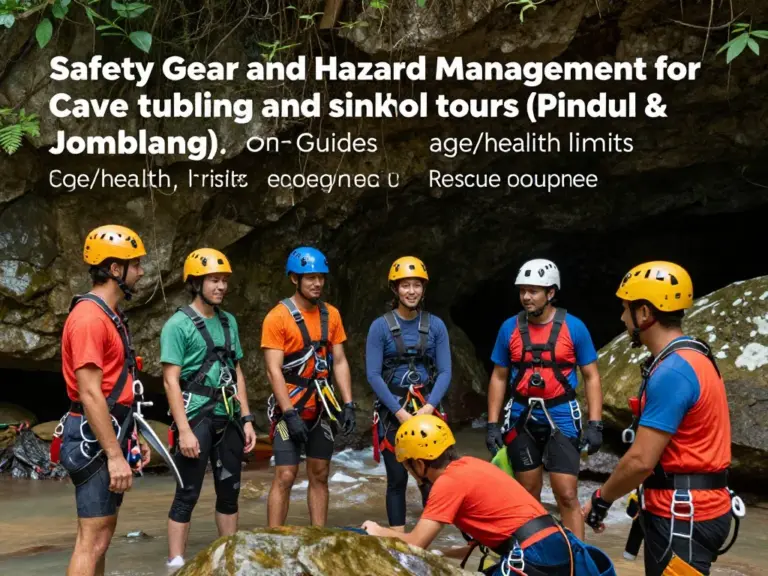
Safety Gear, Risks, and How Guides Manage Hazards in Pindul and Jomblang (including age/health limits and emergency procedures)
- Safety Gear, Risks, and How Guides Manage Hazards in Pindul and Jomblang (including age/health limits and emergency procedures)
Exploring the subterranean wonders of Yogyakarta is a highlight for any traveler, but ensuring safety in Pindul and Jomblang is paramount. Goa Pindul offers a serene yet adventurous cave tubing experience, while Jomblang Cave presents a thrilling vertical descent into a prehistoric forest. Both sites require rigorous safety protocols to manage natural hazards. This guide delves into the essential gear, professional guide roles, and health requirements necessary for a secure journey into the heart of Java’s karst landscapes.
Understanding the Risks: Safety in Pindul and Jomblang
Every adventure carries inherent risks, and caving in Yogyakarta is no exception. In Pindul Cave, the primary concerns are water levels and hidden rock formations. During the rainy season, sudden increases in water volume can occur. In contrast, Jomblang Cave involves a 60-meter vertical rappel, where the risks include equipment failure, falling debris, or slips on muddy surfaces.
To mitigate these, local authorities and tour operators have established strict monitoring systems. Water levels in Pindul are checked hourly, and Jomblang tours are limited to a specific number of participants per day to prevent overcrowding and ensure individual attention during the descent and ascent.
Essential Safety Gear for Cave Exploration
High-quality equipment is the first line of defense against injury. Operators at both Pindul and Jomblang provide standardized gear that is inspected regularly. Below is a breakdown of the equipment you will use:
| Location | Mandatory Gear | Purpose |
|---|---|---|
| Goa Pindul | Life Jacket, Helmet, Rubber Tube | Buoyancy and head protection from low ceilings. |
| Goa Jomblang | Static Ropes, Seat Harness, Helmet, Boots | Vertical safety, fall arrest, and traction on slippery mud. |
For Jomblang, the use of specialized ‘wellies’ (rubber boots) is critical. The cave floor is exceptionally muddy and slippery; standard sneakers often fail to provide enough grip or get ruined in the thick clay.
How Professional Guides Manage Hazards
The guides at Pindul and Jomblang are not just pathfinders; they are trained safety officers. Many belong to local rescue organizations (SAR) and have extensive knowledge of the cave’s topography. Their hazard management strategies include:
- Pre-entry Briefings: Explaining the route, hand signals, and what to do in case of an emergency.
- Continuous Monitoring: Checking weather forecasts and upstream water conditions constantly.
- Mechanical Redundancy: In Jomblang, the hauling system used to pull visitors back up the 60m cliff is operated by a large team of locals, providing a human-powered backup to mechanical pulleys.
These guides act as the ‘eyes and ears’ of the cave, identifying loose rocks or changing currents before they become a threat to the group.
Age, Health Limits, and Physical Requirements
Not everyone is suited for cave exploration. To maintain safety in Pindul and Jomblang, certain health and age restrictions apply:
- Goa Pindul: Generally open to all ages from 5 to 65 years. However, individuals should be comfortable in water and not suffer from severe claustrophobia.
- Goa Jomblang: More physically demanding. The recommended age is 10 to 50 years. It is strictly prohibited for individuals with heart conditions, epilepsy, severe asthma, or high blood pressure due to the physical exertion and adrenaline involved in the rappel.
- Weight Limits: Jomblang has a weight limit (usually around 100-110kg) to ensure the safety of the rope and hauling systems.
If you have any underlying health issues, it is vital to disclose them to your tour operator before arriving at the site.
Emergency Procedures and First Aid
In the unlikely event of an accident, both sites have established Standard Operating Procedures (SOPs). At Pindul, there are multiple exit points along the river where participants can be evacuated to the surface quickly. At Jomblang, the rescue team is equipped with specialized vertical rescue gear.
First aid kits are kept at the base camps and carried by lead guides. Additionally, most reputable tour operators include basic accident insurance in their package price. It is recommended that visitors also carry their own travel insurance that specifically covers ‘adventure activities’ or ‘caving.’
คำถามที่พบบ่อย (FAQ)
Is it safe to visit Pindul Cave during the rainy season?
While tours operate, they may be cancelled at short notice if water levels rise above safety thresholds. Always check with operators on the morning of your trip.
Do I need to know how to swim for Pindul Cave?
No, you do not need to be a swimmer as you will be wearing a high-quality life jacket and sitting in a tube, but you should be comfortable being in the water.
Is Jomblang Cave suitable for someone with a fear of heights?
The descent is 60 meters straight down. If you have severe acrophobia, this may be very challenging. However, you are securely harnessed and controlled by professional guides throughout.
What should I wear for these activities?
Wear quick-dry clothing or swimwear for Pindul. For Jomblang, wear leggings or long pants to protect your legs from rope friction and mud, and bring a change of clothes.
Are there medical facilities nearby?
There are local clinics in the Gunung Kidul area, but major hospitals are located in Yogyakarta city, approximately 1.5 to 2 hours away. Guides are trained in basic first aid for immediate response.
References
- Caving and Tubing in Yogyakarta: Complete Guide to Pindul River and Jomblang Cave — Safety, Booking, and What to Expect
- What are Pindul River Tubing and Jomblang Cave — differences, best seasons, and how to choose the right experience
- How to Book Pindul Tubing and Jomblang Tours: trusted operators, price ranges, what’s included, and peak-time booking tips