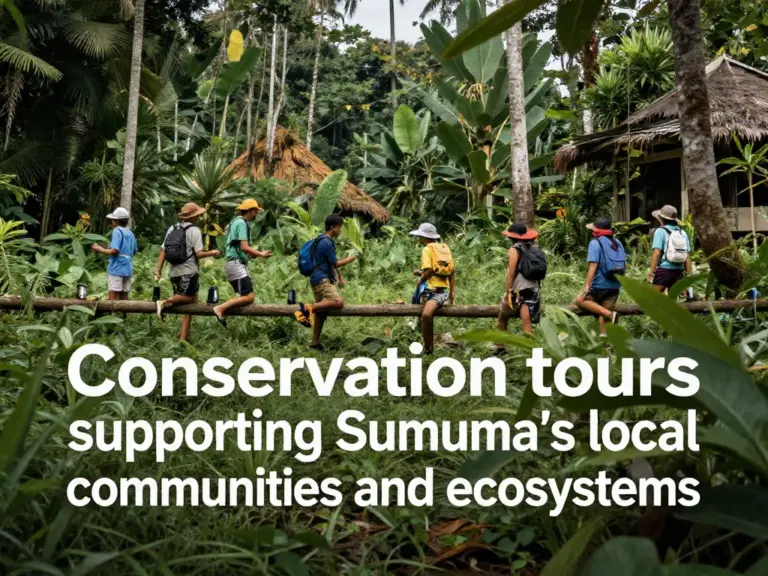
How Conservation Tours in Sumatra Support Local Communities and Ecosystems
Sumatra, the sixth-largest island in the world, is a bastion of biodiversity. From the dense rainforests of Leuser to the rugged landscapes of Bukit Barisan Selatan, the island is home to critically endangered species such as the Sumatran orangutan, tiger, and rhino. However, these natural treasures face constant threats from deforestation and habitat loss. In recent years, a shift toward ethical travel has emerged as a powerful tool for change. By participating in conservation tours in Sumatra, travelers are not just witnessing beauty; they are actively funding the preservation of these vital ecosystems while uplifting the people who call them home.
The Economic Ripple Effect: Empowering Local Communities
One of the most significant benefits of conservation-focused tourism is the creation of sustainable livelihoods. When tourism is managed ethically, it provides an alternative to extractive industries like logging and palm oil cultivation, which often displace local indigenous populations. By hiring local guides, rangers, and homestay operators, conservation tours ensure that the financial benefits of tourism circulate directly within the community. This economic stability encourages local residents to become stewards of the land rather than exploiters of it. When a community sees that a living orangutan or a protected tiger forest brings more long-term value than clearing land, the incentive to protect the ecosystem grows exponentially.
Protecting Endangered Ecosystems Through Direct Funding
Beyond community support, these tours provide critical funding for conservation organizations. Many tour operators in Sumatra work in partnership with NGOs to fund anti-poaching patrols, habitat restoration projects, and wildlife monitoring programs. When you book a reputable conservation tour, a portion of your fee often goes directly toward equipment for rangers, medical care for injured wildlife, or educational workshops for local schools. This financial infusion is often the difference between a protected forest and one that is slowly encroached upon by illegal activity. It turns every visitor into a patron of the environment.
The Power of Responsible Wildlife Observation
Education is a pillar of conservation. Seeing wildlife in its natural habitat fosters a deep sense of empathy and responsibility. Unlike zoos, where animals are confined, conservation tours in Sumatra emphasize ethical observation—keeping a respectful distance, minimizing noise, and ensuring that human presence does not disrupt natural behaviors. This approach teaches travelers the importance of habitat integrity. When visitors return home, they become ambassadors for Sumatra’s wildlife, raising awareness and advocating for global support for these fragile environments.
How to Choose Ethical Conservation Tours
Not all tours that claim to be ‘green’ are truly beneficial. To ensure your trip makes a positive impact, look for operators that demonstrate transparency. Do they have partnerships with local conservation NGOs? Do they employ local indigenous guides? Are they committed to ‘leave no trace’ principles? A high-quality tour operator will be open about where your money goes and how their activities directly support the local community. For more insights on ethical travel in Indonesia, you can explore resources from Wonderful Indonesia.