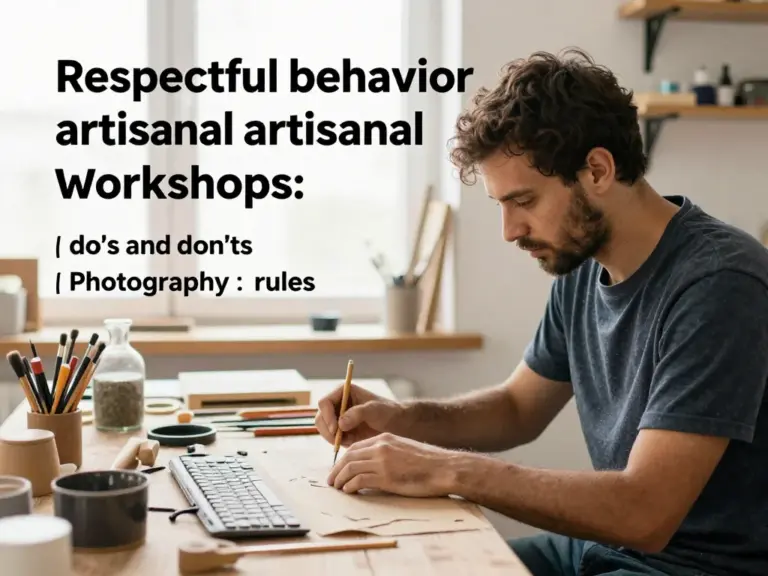
Respectful behavior at the workshops: Do’s and don’ts, photography rules, safety, and how to engage with craftsmen
- Respectful behavior at the workshops: Do’s and don’ts, photography rules, safety, and how to engage with craftsmen
Visiting a traditional workshop in Indonesia is more than just a tourist stop; it is an entry into a sacred space of heritage and meticulous skill. Whether you are watching the intricate wax-dying of Batik in Yogyakarta or woodcarving in Bali, understanding Respectful behavior at the workshops ensures that you honor the artisan’s craft while enriching your own travel experience. This guide provides essential etiquette to help you navigate these creative spaces with grace and mindfulness.
Understanding the Importance of Respectful Behavior at the Workshops
In Indonesia, craftsmanship is often deeply intertwined with spiritual and communal values. Artisans often begin their work with prayers or rituals. By maintaining Respectful behavior at the workshops, you acknowledge the years of dedication required to master these arts. Your conduct reflects your appreciation for the local culture and helps sustain a positive relationship between the tourism industry and local communities.
The Do’s and Don’ts of Workshop Etiquette
To ensure a smooth visit, keep these fundamental guidelines in mind. These rules help maintain the workflow and ensure a peaceful environment for the creators.
The Do’s
- Ask Permission: Always ask before entering a private workspace or touching finished products.
- Dress Modestly: Wear clothing that covers shoulders and knees, especially in rural or religious areas.
- Support the Local Economy: If the workshop sells items, consider making a purchase directly from the source.
- Be Patient: Traditional crafts take time. Observe quietly without rushing the artisan.
The Don’ts
- Interrupt Flow: Avoid asking complex questions while a craftsman is performing a delicate task.
- Touch Without Asking: Oils from human skin can damage certain fabrics, metals, or delicate wood finishes.
- Aggressive Bargaining: While some negotiation is common, avoid devaluing the artisan’s labor by asking for unreasonable discounts.
Photography and Social Media Rules
Capturing the beauty of the process is natural, but photography must be handled with care. Some workshops consider their designs proprietary, while others may find flash photography distracting or harmful to the materials.
| Scenario | Guideline |
|---|---|
| Action Shots | Always ask the artisan before taking their portrait. |
| Flash Photography | Generally discouraged as it can startle workers or damage light-sensitive dyes. |
| Video Recording | Ask if they mind being filmed; some processes are considered family secrets. |
| Social Sharing | Tag the workshop or location to help promote their business. |
Safety First: Protecting Yourself and the Workshop
Many traditional Indonesian workshops involve open flames (for Batik wax), sharp tools (for carving), or chemical dyes. Respectful behavior at the workshops also involves following safety protocols to prevent accidents.
- Keep a Safe Distance: Stay at least an arm’s length away from active machinery or boiling wax.
- Watch Your Step: Workshops can be cluttered with raw materials; stay on designated paths.
- Supervise Children: If traveling with family, ensure children are closely monitored and do not touch sharp tools.
How to Engage Meaningfully with Craftsmen
Engaging with craftsmen can be the highlight of your trip. Instead of just observing, try to learn about the story behind the art. Ask about the symbolism of the patterns or how long it took them to learn the trade. Most artisans are proud of their work and happy to share their knowledge if approached with genuine interest and Respectful behavior at the workshops.
คำถามที่พบบ่อย (FAQ)
Is it okay to take photos of everything in the workshop?
No, you should always ask permission first. Some workshops have specific areas or designs that are off-limits for photography to protect intellectual property or the artisan’s privacy.
Should I tip the craftsmen?
While not always mandatory, a small tip is a kind gesture if an artisan has spent time explaining their process to you. Alternatively, buying a finished product is the best way to show support.
What should I do if I accidentally break something?
Immediately apologize and offer to pay for the item. Demonstrating accountability is a key part of respectful behavior.
Are there language barriers I should worry about?
Many artisans in tourist areas speak basic English, but learning a few phrases in Bahasa Indonesia like ‘Terima kasih’ (Thank you) goes a long way in building rapport.
References
Wonderful Indonesia Official Tourism Website
UNESCO Intangible Cultural Heritage – Indonesian Batik
- Phinisi Shipbuilding in Bulukumba: How to Visit the Workshops Respectfully and Experience Traditional Boatbuilding
- Why visit Phinisi shipyards in Bulukumba? Understanding cultural significance, visitor expectations, and the best times to go
- Preparing for your visit: Practical tips on transport, guided tours, permissions, dress code, and local etiquette