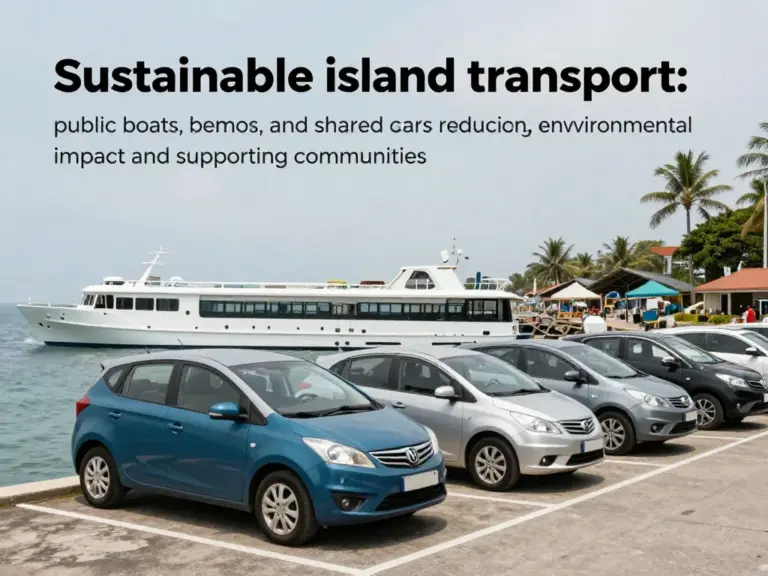
- Why sustainable island transport matters: environmental, social, and economic benefits of public boats, bemos, and shared cars
As the world’s largest archipelago, Indonesia’s identity is inextricably linked to the sea and the movement between its thousands of islands. For the millions of tourists visiting destinations like Bali, Lombok, and the Gili Islands, the way we move matters. Sustainable island transport is no longer just a buzzword; it is a critical necessity for preserving the delicate ecosystems and vibrant cultures that make Indonesia a premier global destination. From the traditional bemos to modern shared car initiatives, the shift toward greener transit offers a path to a more resilient future.
The Environmental Imperative: Protecting Paradise
The most immediate benefit of sustainable island transport is the reduction of environmental degradation. Traditional individual transport methods often contribute to high carbon emissions, noise pollution, and oil leaks that damage coral reefs. By prioritizing public boats and shared transport, we can significantly lower the per-capita carbon footprint of every traveler.
- Marine Life Preservation: Optimized boat routes and electric motors reduce underwater noise that disturbs marine mammals.
- Air Quality: Reducing the number of private vehicles on small island roads keeps the air fresh and breathable.
- Resource Efficiency: Shared cars and bemos utilize fewer resources per passenger than private rentals.
Social Benefits: Connecting Communities and Cultures
Sustainable transport systems like the bemo (traditional Indonesian minibus) are more than just vehicles; they are social spaces. These modes of transport foster interaction between locals and tourists, encouraging a deeper cultural exchange. When tourists choose public boats over private speedboats, they support a system that remains accessible and affordable for local residents, ensuring that tourism infrastructure benefits everyone, not just the wealthy.
Empowering Local Drivers
Shared car programs and regulated bemo networks provide stable employment for local drivers. By formalizing these sectors, islands can ensure fair wages and safer working conditions, which directly translates to better service for visitors and a stronger social fabric for the community.
Economic Advantages: Efficiency and Growth
From a macro-economic perspective, sustainable island transport reduces the need for massive, destructive infrastructure projects like multi-lane highways on small islands. Instead, investment can be channeled into maintaining existing fleets and upgrading to cleaner technologies. For the traveler, shared transport is significantly more cost-effective, allowing budget-conscious explorers to see more of Indonesia while contributing to the local economy.
| Transport Mode | Primary Benefit | Impact Level |
|---|---|---|
| Public Boats | Reduced Fuel Consumption | High |
| Bemos | Cultural Preservation | Medium |
| Shared Cars | Lower Congestion | High |
The Future of Indonesia Tourism
The shift toward sustainability is already happening. In places like the Gili Islands, motorized vehicles are banned in favor of bicycles and horse-drawn carriages (cidomos). Expanding this mindset to larger islands through integrated public boat networks and shared car apps is the next step. As a traveler, choosing these options sends a powerful message to the industry that we value the environment as much as the experience.
คำถามที่พบบ่อย (FAQ)
What is considered sustainable island transport?
It refers to transit methods that minimize environmental impact, such as public boats, shared vehicles, electric shuttles, and traditional low-impact transport like bemos.
Are bemos safe for tourists to use?
Yes, bemos are a standard and safe way to travel locally in Indonesia. They offer an authentic experience and are very affordable, though they may not have air conditioning.
Shared cars reduce the total number of vehicles on the road, which lowers overall CO2 emissions and reduces the physical space needed for parking and roads on small islands.
Can I find public boats easily in Indonesia?
Yes, most major island chains have regular public boat services. They are the backbone of local travel and are a great way to travel sustainably between islands like Bali, Nusa Penida, and Lombok.
References
Official Indonesia Tourism Portal
UNWTO Sustainable Development Goals
- Sustainable Island Transport: How Public Boats, Bemos, and Shared Cars Can Create Greener, Equitable Mobility
- Designing integrated routes and schedules: optimizing connections between ferries, bemos, and shared car hubs for convenience and reduced emissions
- Vehicle and fuel choices for islands: electric/hybrid boats, low-emission bemos, and sustainable charging solutions for shared cars