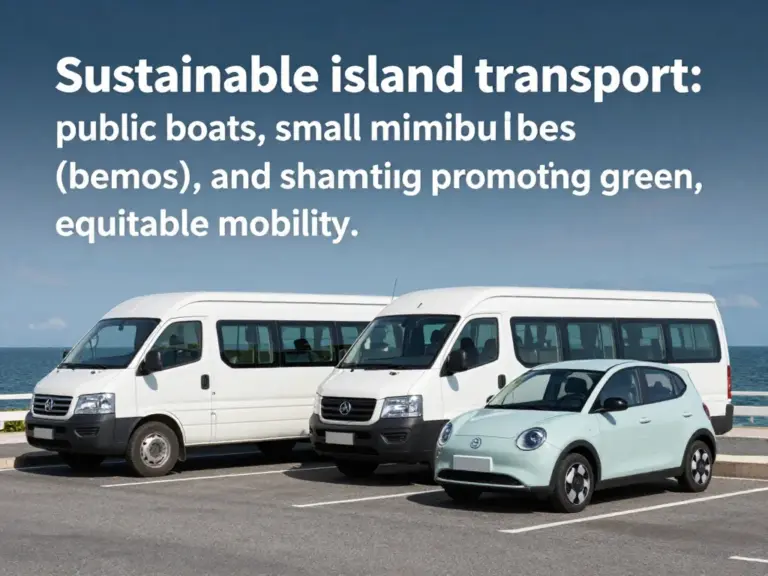
As the global travel industry shifts toward eco-conscious practices, the concept of sustainable island transport has become a cornerstone for preserving the natural beauty of archipelagos like Indonesia. For travelers exploring the ‘Emerald of the Equator,’ the journey is just as important as the destination. By integrating traditional modes of transport like public boats and bemos with modern shared car initiatives, we can foster a mobility system that is not only environmentally friendly but also socially equitable.
The Vital Role of Public Boats in Archipelago Connectivity
In an island nation, waterways are the primary highways. Public boats, ranging from traditional wooden pinisi-style vessels to modern ferries, represent a lower carbon footprint per passenger compared to private speedboats or short-haul flights. Strengthening the public maritime network ensures that remote communities remain connected to economic hubs while minimizing the ecological impact on marine biodiversity.
Bemos: The Heartbeat of Local Mobility
The ‘Bemo’ (a small public minibus) is an iconic sight in Indonesian towns. These vehicles serve as a crucial link in the sustainable island transport chain. By opting for a Bemo over a private rental car, tourists contribute to a reduction in traffic congestion and lower overall emissions. Furthermore, using Bemos supports the local economy directly, ensuring that tourism revenue stays within the community.
While public transit is essential, some destinations require more flexibility. This is where shared car platforms and carpooling initiatives come in. By maximizing vehicle occupancy, shared cars reduce the number of engines on the road. In islands like Bali or Lombok, transitioning from individual scooter rentals to organized shared electric vehicle (EV) hubs could drastically cut noise pollution and air contaminants.
Achieving Equitable Mobility for All
Equitable mobility means ensuring that both tourists and locals have access to affordable, reliable, and safe transport. Sustainable island transport isn’t just about the environment; it’s about social justice. When we invest in public infrastructure—better docks for public boats, more frequent Bemo routes, and subsidized shared transport—we bridge the gap between high-end tourism and local livelihood.
| Transport Mode | Environmental Impact | Social Benefit |
|---|---|---|
| Public Boats | Medium-Low | Connects remote islands |
| Bemos | Low (Shared) | Supports local livelihoods |
| Shared Cars | Varies (Low if EV) | Reduces traffic congestion |
คำถามที่พบบ่อย (FAQ)
What is sustainable island transport?
It refers to transportation methods that minimize environmental damage, such as carbon emissions and pollution, while providing efficient and fair access for all users on an island.
How do Bemos contribute to sustainability?
Bemos are a form of high-occupancy shared transport. By carrying multiple passengers at once, they reduce the number of individual vehicles on the road, leading to lower per-capita emissions.
Are public boats safe for tourists in Indonesia?
Yes, major public ferry routes are regulated. However, it is always recommended to check weather conditions and choose reputable operators for inter-island travel.
Why is equitable mobility important for tourism?
Equitable mobility ensures that the benefits of tourism infrastructure are shared with local residents, preventing the displacement of locals by tourist-only transport services.
References
Wonderful Indonesia Official Tourism Portal
UN Sustainable Development Goals – Transport
- Why sustainable island transport matters: environmental, social, and economic benefits of public boats, bemos, and shared cars
- Designing integrated routes and schedules: optimizing connections between ferries, bemos, and shared car hubs for convenience and reduced emissions
- Vehicle and fuel choices for islands: electric/hybrid boats, low-emission bemos, and sustainable charging solutions for shared cars