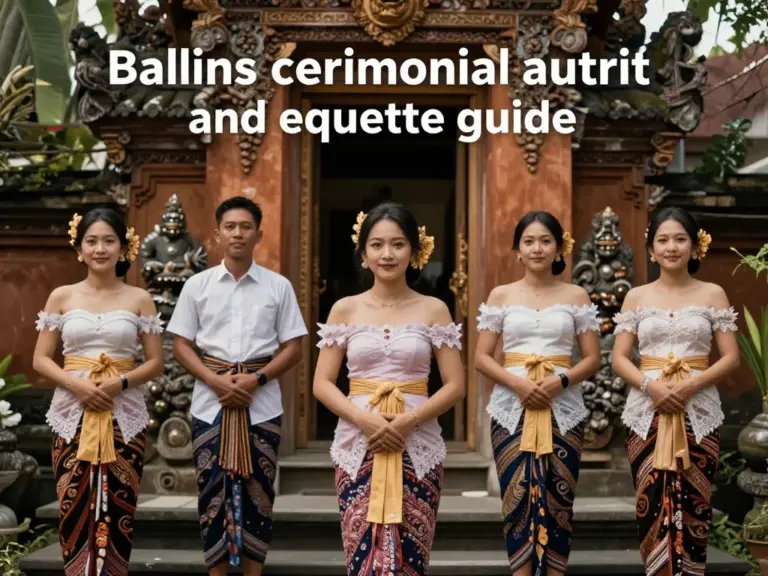
What to Wear, Bring, and Avoid During Balinese Ceremonies
Bali is often called the ‘Island of the Gods,’ and for good reason. The island is alive with vibrant, daily spiritual rituals that are deeply ingrained in the local lifestyle. If you are traveling to Indonesia, witnessing a temple festival or a local ceremony is a profound travel experience. However, it is crucial to understand What to Wear, Bring, and Avoid During Balinese Ceremonies to ensure you are respectful of local traditions and customs.
Balinese Hinduism is a unique practice that blends ancient traditions with local mysticism. When tourists visit sacred sites, the way they present themselves directly reflects their respect for the community. This guide will help you navigate these beautiful cultural events with confidence and grace.
Understanding the Importance of Dress Code
In Balinese culture, temples (Pura) are considered holy spaces. Dressing modestly is not just a suggestion; it is a requirement. You do not need to wear expensive traditional attire, but you must cover your shoulders and knees. This applies to both men and women.
What to Wear
- Sarong: A long piece of fabric wrapped around the waist.
- Sash (Senteng): Tied around the waist over the sarong. It symbolizes the control of lower passions.
- Covered Shoulders: A t-shirt or a kebaya (traditional blouse) is appropriate. Avoid tank tops or spaghetti straps.
What to Bring and What to Avoid
When attending a ceremony, you are an observer. Your goal is to be invisible and respectful. Here is a quick checklist of what to keep in mind regarding your behavior and items.
| Do Bring | Do Avoid |
|---|---|
| Respectful attitude | Pointing feet at shrines |
| Small donation (punia) | Using flash photography |
| Sun protection | Walking in front of people praying |
| Modest clothing | Entering if menstruating |
As seen in the video above, ceremonies are often crowded and dynamic. Always ask permission before taking photos, and never stand higher than the priest or the people praying. If you see a procession, step aside to let them pass. It is a sign of respect to lower your head slightly as you walk past those who are actively praying.
Cultural Etiquette: The Silent Observer
One of the most important rules is regarding menstruation. In Balinese tradition, women who are menstruating are considered ritually impure and are strictly forbidden from entering temples or participating in ceremonies. This is a deeply held belief, and it is vital to respect this boundary without questioning it.
Furthermore, always be mindful of where you place your feet. Never point your feet toward the altar or a priest. When sitting, cross your legs or sit on your heels. If you are unsure about whether you can participate, it is always best to ask a local guide or a village elder. They are usually very welcoming to tourists who show genuine interest and respect.
คำถามที่พบบ่อย (FAQ)
Can I enter a Balinese temple if I am not Hindu?
Yes, most temples in Bali are open to visitors of all faiths, provided you are dressed appropriately (sarong and sash) and behave respectfully.
Why is the sash tied around the waist?
The sash, or senteng, serves a symbolic purpose. It represents the binding of lower, negative emotions, ensuring that your heart and mind are focused on the spiritual intent of the ceremony.
Are there any specific photo restrictions?
Yes. Never use flash photography, as it is considered disruptive. Also, avoid taking photos directly in front of people who are praying or from a position higher than the priests.
What is a ‘Punia’ donation?
Punia is a voluntary donation or offering. While not always mandatory, it is a kind gesture to contribute a small amount to help maintain the temple grounds.
Can I bring food into the temple?
It is generally advised not to bring food into the sacred inner courtyards. If you have snacks, keep them outside the temple area to maintain the sanctity of the space.
References
Official Indonesia Tourism Bali Guide
Bali Culture & Temple Etiquette