Day 1 — Explore Cirebon’s Cultural Gems and Batik Heritage: best places to visit, local cuisine, and tips for batik workshops and transport
- Day 1 — Explore Cirebon’s Cultural Gems and Batik Heritage: best places to visit, local cuisine, and tips for batik workshops and transport
- Discovering the Royal Majesty: Keraton Kasepuhan
- The Mystical Labyrinth of Sunyaragi Cave
- A Taste of Tradition: Cirebon’s Local Cuisine
- Immerse in Art: Batik Trusmi Village and Workshops
- Practical Tips: Transport and Getting Around
- คำถามที่พ่อยบ่อย (FAQ)
- What is the best time to visit Cirebon?
- Is Cirebon Batik different from Jogja Batik?
- Can I visit all these places in one day?
Welcome to Cirebon, the ‘City of Shrimp,’ where the echoes of ancient sultanates meet the vibrant colors of world-class textile art. Nestled on the northern coast of West Java, Cirebon offers a unique blend of Sundanese, Javanese, Chinese, and Islamic cultures. On this first day of your journey, we dive deep into Cirebon’s Cultural Gems and Batik Heritage, exploring the royal palaces that defined the region and the intricate patterns of Megamendung batik that have become a national icon.
Discovering the Royal Majesty: Keraton Kasepuhan
Your exploration of Cirebon’s Cultural Gems and Batik Heritage begins at the oldest and most prestigious palace in the city: Keraton Kasepuhan. Built in 1529, this palace is a living museum of Indonesian history. As you walk through the main gates, you will notice the striking red brick walls, a signature of Cirebon architecture influenced by the Majapahit Empire. The palace grounds house the Singa Barong carriage, a masterpiece of 16th-century engineering that combines elements of a lion, elephant, and dragon, symbolizing the harmony of diverse religions and ethnicities in Cirebon.
The Mystical Labyrinth of Sunyaragi Cave
Next, head to the Sunyaragi Cave (Taman Sari Sunyaragi). Unlike any other cave you have visited, Sunyaragi is a man-made structure of coral rocks and plaster, designed as a meditation site for the Sultans and their families. The name ‘Sunyaragi’ comes from ‘Sunya’ (lonely) and ‘Ragi’ (body), reflecting its purpose as a place for spiritual retreat. The complex features intricate tunnels, secret chambers, and beautiful gardens. It is a photographer’s dream and a cornerstone of Cirebon’s cultural landscape.
A Taste of Tradition: Cirebon’s Local Cuisine
No cultural tour is complete without tasting the local flavors. For lunch, indulge in Cirebon’s most famous dishes.
- Empal Gentong: A savory beef soup cooked in a traditional clay pot (gentong) using firewood. The creamy broth, enriched with coconut milk and local spices, is best enjoyed with lontong (rice cakes).
- Nasi Jamblang: Rice served on teak leaves with a variety of side dishes like fried lung, tofu in spicy sauce, and the iconic ‘sambal goreng.’
- Tahu Gejrot: Fried tofu cut into small pieces and served with a sweet and spicy vinegar-based sauce.
Immerse in Art: Batik Trusmi Village and Workshops
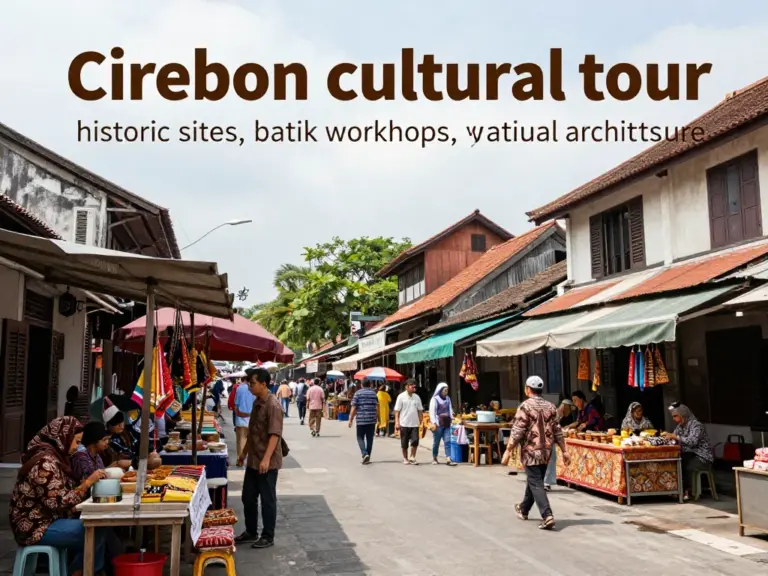
In the afternoon, we transition to the ‘Batik Heritage’ portion of the day by visiting Kampung Batik Trusmi. This village is the heart of Cirebon’s textile industry. Unlike the inland batik of Solo or Yogyakarta, Cirebon batik is known for its coastal style, featuring brighter colors and the famous Megamendung (cloud) pattern. Many showrooms offer batik workshops where you can try your hand at using a ‘canting’ to apply hot wax to fabric. It is a meditative process that gives you a profound appreciation for the skill required to create these wearable masterpieces.
Tips for Batik Workshops
1. Wear dark clothing to avoid permanent wax stains.
2. Start with a simple pattern if you are a beginner.
3. Be patient; the process of ‘mencanting’ requires a steady hand and calm mind.
Practical Tips: Transport and Getting Around
Navigating Cirebon is relatively easy. For the most comfortable experience, renting a car with a driver for the day is recommended, especially for visiting Sunyaragi and Trusmi. Alternatively, you can use ride-hailing apps like Gojek or Grab. For a more traditional experience, try a ‘becak’ (cycle rickshaw) for short distances between the palaces and local eateries. Ensure you negotiate the fare beforehand.
คำถามที่พ่อยบ่อย (FAQ)
References
Wonderful Indonesia – Cirebon Travel Guide
Ministry of Education and Culture – Indonesian Cultural Heritage
- Java North Coast Heritage Trail: Ultimate 6-Day Itinerary from Cirebon to Demak via Lasem
- Day 2 — Scenic Coastal Drive and Historical Stops en Route to Lasem: recommended viewpoints, photo spots, and timing for coastal light and fishing villages
- Day 3 — Lasem Deep Dive: Chinese-Indonesian Architecture, Ancestral Houses, and Local Festivals: walking routes, must-see landmarks, and cultural etiquette