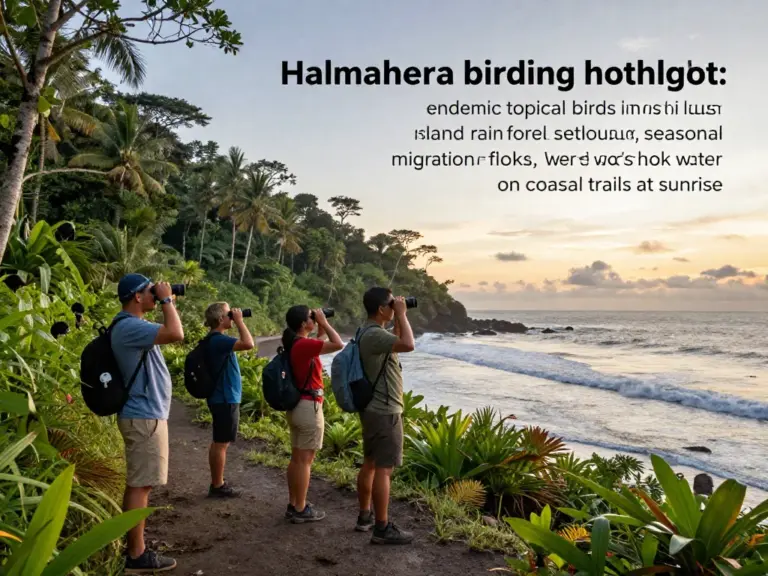
Why Halmahera Is a Birding Hotspot: Key Endemics, Best Seasons, and How to Plan Your Trip
- Why Halmahera Is a Birding Hotspot: Key Endemics, Best Seasons, and How to Plan Your Trip
Halmahera, the largest island in the North Maluku province of Indonesia, is a name that resonates deeply with ornithologists and nature enthusiasts worldwide. Situated within the unique biogeographical region of Wallacea, this K-shaped island serves as a vital bridge between Asian and Australian fauna. The primary reason why Halmahera Is a Birding Hotspot is its incredible concentration of endemic species—birds found nowhere else on Earth—set against a backdrop of rugged volcanic landscapes and pristine tropical rainforests.
The Wallace Line and the Magic of Wallacea
To understand the avian richness of Halmahera, one must look at its geography. Located east of the Wallace Line, Halmahera hosts species that have evolved in isolation for millions of years. This isolation has resulted in high levels of endemism. Unlike the neighboring islands of Papua, Halmahera offers a distinct blend of species that represent the peak of North Moluccan biodiversity. For those seeking the rare and the beautiful, this island provides an unparalleled window into evolutionary history.
Key Endemics: The Crown Jewels of Halmahera
The main draw for visitors is undoubtedly the spectacular array of birds. Here are the must-see species that define why Halmahera is a birding hotspot:
- Standardwing Bird-of-Paradise (Wallace’s Standardwing): Perhaps the most famous resident, discovered by Alfred Russel Wallace himself. The males perform an extraordinary aerial display, fluttering their unique white primary feathers.
- Ivory-breasted Pitta: Known for its striking white underparts and vibrant green wings, this elusive ground-dweller is a prize for any photographer.
- North Moluccan Pitta: Another jewel of the forest floor, displaying a brilliant red belly and deep blue wings.
- Sombre Kingfisher: Despite its name, this large kingfisher is a majestic sight within the mangrove and coastal forests.
- Molukkan Goshawk: A powerful raptor that patrols the canopy of Halmahera’s dense interior.
Beyond these, birders often seek the Invisible Rail, a notoriously difficult bird to spot that inhabits the marshes of Kao Bay. Seeing this bird is often considered the ‘holy grail’ of a Halmahera birding expedition.
Best Seasons for Birdwatching
Timing is everything when planning a trip to North Maluku. While birds can be seen year-round, the dry season is generally the best time to visit. This typically runs from June to October. During these months, forest trails are more accessible, and many species, including the Standardwing Bird-of-Paradise, are in their peak display season. Avoiding the heavy monsoon rains of December to March is advisable, as the rugged terrain can become difficult to navigate and bird activity often decreases during heavy downpours.
How to Plan Your Trip: Logistics and Locations
Planning a trip to Halmahera requires careful logistical preparation. The island is remote, and infrastructure is developing but still basic in many birding areas.
- Getting There: Most travelers fly into Sultan Babullah Airport (TTE) in Ternate. From Ternate, you can take a speedboat to Sidangoli or Sofifi on the Halmahera mainland.
- Key Locations: Foli and Binagara are the premier sites for the Standardwing Bird-of-Paradise. The Aketajawe-Lolobata National Park is the best-protected area for seeing a wide variety of endemics in a single region.
- Accommodation: Expect simple guesthouses (homestays) or basic lodges. Staying close to the birding sites is essential to reach the display grounds before dawn.
- Hiring a Guide: Local knowledge is indispensable. Expert guides know the specific ‘leks’ (display sites) and can identify birds by call, which is crucial in dense rainforest.
| Feature | Details |
|---|---|
| Primary Target | Standardwing Bird-of-Paradise |
| Best Hub | Sidangoli / Weda |
| Physical Difficulty | Moderate (Humidity and uneven terrain) |
| Recommended Duration | 7 – 10 Days |
Conservation and Ethical Birding
As Halmahera gains popularity, it is vital to practice ethical birding. Always follow the instructions of your local guide, keep noise to a minimum, and avoid using heavy playback of bird calls which can stress the animals during breeding seasons. Supporting local eco-tourism initiatives helps ensure that the forests remain standing and that the local communities see the value in protecting their unique avian heritage.
คำถามที่พบบ่อย (FAQ)
1. Why is Halmahera considered a birding hotspot?
Halmahera is a birding hotspot because it is home to over 20 endemic species, including the iconic Wallace’s Standardwing Bird-of-Paradise, and sits in the unique Wallacea transition zone.
2. When is the best time to see the Standardwing Bird-of-Paradise?
The best time is during the dry season, from June to October, when the males are most active in their display leks.
3. Do I need a permit to visit birding sites in Halmahera?
Yes, visits to Aketajawe-Lolobata National Park require a permit (Simaksi), which can usually be arranged through your tour operator or at the park office in Sofifi.
4. Is birding in Halmahera physically demanding?
It can be. While some sites are near roads, others require hiking through humid, tropical rainforest and waking up very early (around 4:00 AM) to reach display sites by sunrise.
5. How do I get to Halmahera?
Fly to Ternate (TTE) from major Indonesian cities like Jakarta or Manado, then take a speedboat to the Halmahera mainland.
References
- BirdLife International – North Maluku Endemics
- eBird Hotspot Data: Halmahera
- Official Indonesia Tourism – Maluku Islands
- Birding in Halmahera: Endemic Species Guide and Leave No Trace Practices for Responsible Wildlife Watching
- Essential Identification Tips for Halmahera Endemics: Field Marks, Vocalizations, and Recommended Guidebooks
- Ethical Birding and Leave No Trace Principles in Halmahera: Minimizing Disturbance to Breeding and Feeding Sites