What is coral restoration voluntourism and why choose Amed and Gili Air for your reef conservation trip?
- What is coral restoration voluntourism and why choose Amed and Gili Air for your reef conservation trip?
The world’s oceans are facing an unprecedented crisis, but a new wave of travel is offering a glimmer of hope. Coral restoration voluntourism is a transformative travel experience that combines the thrill of exploration with the meaningful work of marine conservation. Instead of being a passive observer, travelers become active participants in repairing damaged reef ecosystems. For those looking to dive into this purposeful journey, Indonesia—specifically Amed in Bali and Gili Air in Lombok—stands out as the premier destination for a reef conservation trip.
Understanding Coral Restoration Voluntourism
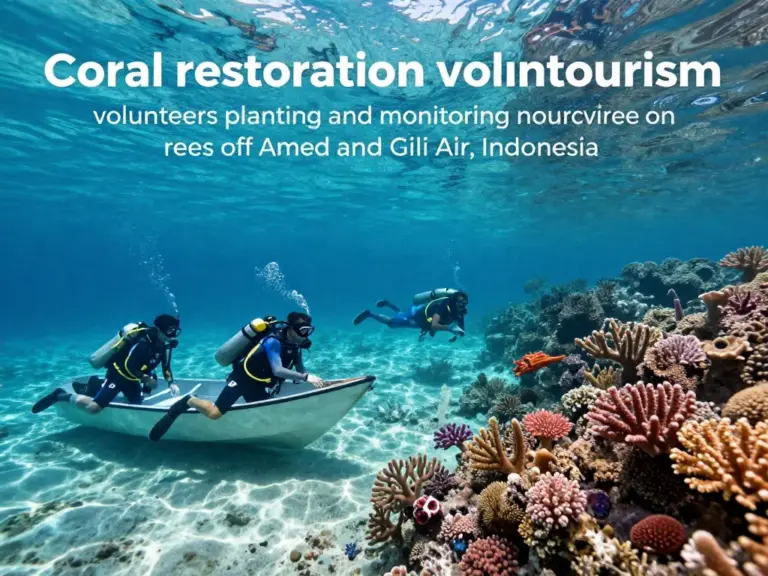
At its core, coral restoration voluntourism involves travelers assisting local NGOs and marine biologists in rehabilitating coral reefs. This process typically includes activities such as building artificial reef structures (like Hexadomes or Biorock), cleaning algae from nursery corals, and out-planting healthy coral fragments back onto the seabed. It is a niche within the blue economy that empowers non-scientists to contribute to scientific efforts, ensuring that the ‘Rainforests of the Sea’ continue to provide habitat for 25% of all marine life.
Why Choose Amed for Your Reef Conservation Trip?
Amed, a string of traditional fishing villages on Bali’s eastern coast, is a sanctuary for divers. Unlike the bustling south, Amed offers a tranquil atmosphere where coral restoration voluntourism thrives. The area is famous for its black volcanic sand and the USAT Liberty Wreck nearby, but its true gem is the community-led reef projects. Organizations here focus on involving the local community, ensuring that the conservation efforts are sustainable and provide long-term employment for the locals.
- Accessible shore diving for all skill levels.
- Integration with local Balinese culture and traditions.
- Diverse marine life, including macro critters and sea turtles.
The Magic of Gili Air: A Hub for Marine Education
Just a short boat ride from Lombok, Gili Air offers a unique ‘car-free’ island experience. It is a hotspot for coral restoration voluntourism due to its crystal-clear waters and established marine research centers. The Gili Shark Conservation project and other local initiatives offer structured programs where volunteers can learn about reef health monitoring, shark identification, and coral propagation. The island’s vibe is perfectly suited for those who want to combine hard work with sunset yoga and a vibrant social scene.
Top Reasons to Choose Indonesia for Conservation
Indonesia sits at the heart of the Coral Triangle, the global center of marine biodiversity. Choosing Amed and Gili Air for your trip ensures that your efforts are placed where they are needed most. The biodiversity here is unmatched, meaning the impact of every coral fragment you plant is amplified by the sheer variety of life it will support. Furthermore, the cost of living and diving in Indonesia is relatively low, making long-term voluntourism more accessible than in the Caribbean or Australia.
| Feature | Amed, Bali | Gili Air, Lombok |
|---|---|---|
| Primary Focus | Community-led restoration | Marine research & education |
| Atmosphere | Quiet, traditional, volcanic | Social, eco-conscious, car-free |
| Best For | Experienced divers & culture seekers | Beginners & marine biology students |
คำถามที่พบบ่อย (FAQ)
Do I need to be a certified diver to participate?
While many programs require a PADI Open Water certification, some projects in Amed and Gili Air offer snorkeling-based restoration or ‘Discover Scuba’ packages for beginners to get involved.
How long should a reef conservation trip last?
Most organizations recommend a minimum of one to two weeks to fully understand the techniques and make a tangible contribution to the reef.
Is coral restoration voluntourism ethical?
Yes, provided you choose reputable organizations that work closely with marine biologists and local communities to ensure long-term survival of the out-planted corals.
What should I pack for a conservation trip in Indonesia?
Reef-safe sunscreen, a reusable water bottle, and your own mask and snorkel are highly recommended to minimize plastic waste and protect the delicate ecosystem.
References
Coral Triangle Initiative on Coral Reefs, Fisheries, and Food Security
Official Indonesia Tourism Website
- Coral Restoration Voluntourism in Amed and Gili Air: How to Help Right — Ethical, Effective Ways to Restore Reefs
- How to prepare for a responsible voluntourism experience: certifications, fitness, gear, and local regulations
- Hands-on coral restoration methods used in Amed and Gili Air: coral gardening, fragment transplantation, and monitoring protocols