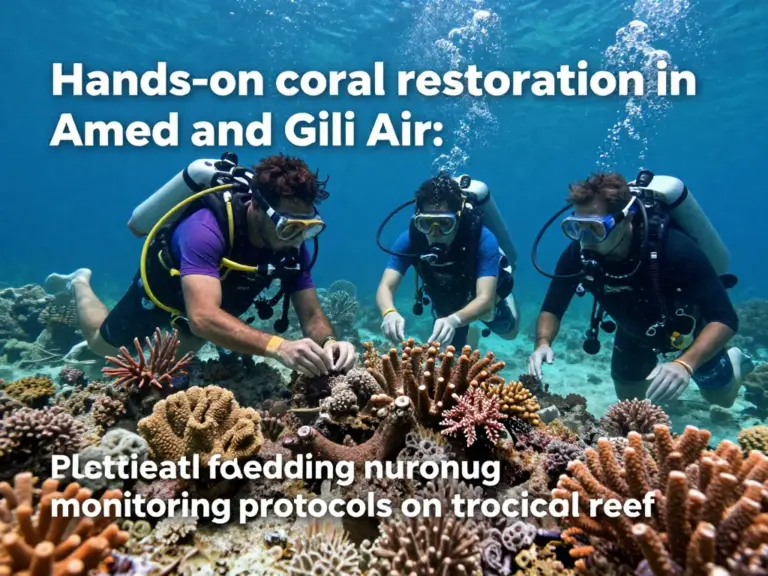
Hands-on coral restoration methods used in Amed and Gili Air: coral gardening, fragment transplantation, and monitoring protocols
- Hands-on coral restoration methods used in Amed and Gili Air: coral gardening, fragment transplantation, and monitoring protocols
The vibrant underwater worlds of Amed in East Bali and Gili Air in Lombok are not just premier diving destinations; they are at the forefront of marine conservation in Indonesia. As climate change and human activities threaten coral reefs, local communities and international NGOs have pioneered hands-on coral restoration methods used in Amed and Gili Air to revitalize these fragile ecosystems. This guide explores the scientific techniques and community-led initiatives that allow travelers to witness and even participate in the rebirth of the ocean’s rainforests.
The Vital Role of Coral Restoration in Indonesia
Indonesia sits at the heart of the Coral Triangle, harboring the world’s highest marine biodiversity. However, reefs in Amed and Gili Air have faced challenges from historical blast fishing, rising sea temperatures, and physical damage. Restoration is no longer a luxury but a necessity. By implementing active coral restoration methods used in Amed and Gili Air, conservationists are accelerating the natural recovery process, ensuring that future generations of tourists can still marvel at the kaleidoscopic marine life.
Coral Gardening: Cultivating Life Under the Sea
One of the primary coral restoration methods used in Amed and Gili Air is coral gardening. This two-step process involves an initial ‘nursery’ phase. In Gili Air, organizations like Gili Shark Conservation often utilize underwater nurseries where small coral fragments are attached to elevated tables or rope nurseries. This protects them from predators and sediment while they grow strong enough to be outplanted. In Amed, local dive centers use similar ‘coral trees’ made of PVC pipes to maximize vertical space and water flow, providing the perfect environment for juvenile corals to thrive.
Fragment Transplantation: Building the Reef Foundation
Once fragments (often called ‘corals of opportunity’—pieces naturally broken by waves) have matured in nurseries, they undergo fragment transplantation. This is a meticulous process where divers manually attach the healthy fragments to stable substrates. In Amed, you will often see ‘Hexadomes’ or ‘Biorock’ structures being used. These structures provide a solid base for the coral to grow. In Gili Air, the focus is often on repairing patches of rubble by securing fragments using eco-friendly cement or specialized clips. This method creates immediate structural complexity, attracting fish and other marine organisms back to the area.
| Method | Primary Focus | Commonly Used In |
|---|---|---|
| Coral Gardening | Nursery Growth | Gili Air & Amed |
| Fragment Transplantation | Reef Structural Repair | Amed |
| Biorock Technology | Accelerated Calcification | Gili Islands |
Monitoring Protocols: Ensuring Long-Term Success
The work doesn’t end once the coral is planted. Rigorous monitoring protocols are the backbone of coral restoration methods used in Amed and Gili Air. Conservationists use ‘Coral Watch’ charts to monitor bleaching and health. Data collection includes measuring growth rates, survival percentages, and the return of biodiversity. In Gili Air, citizen science is a major component; tourists can join ‘Dive Against Debris’ events or assist in photo-monitoring. This data-driven approach ensures that restoration efforts are adaptive and scientifically sound.
How Tourists Can Get Involved
If you are visiting Bali or Lombok, you can contribute directly to these efforts. Many dive shops in Amed offer ‘Eco-Diver’ certifications where you learn the basics of coral transplantation. In Gili Air, you can participate in weekly beach and reef cleanups or donate to local foundations that maintain the underwater nurseries. Engaging with these activities provides a deeper, more meaningful connection to Indonesia’s natural beauty.
คำถามที่พบบ่อย (FAQ)
What is the most effective coral restoration method?
There is no single ‘best’ method; it depends on the environment. However, combining coral gardening (nurseries) with fragment transplantation is widely considered the most effective way to restore biodiversity in Amed and Gili Air.
Can non-divers participate in coral restoration?
Yes! While many activities require scuba certification, non-divers can help with beach cleanups, land-based nursery maintenance, and educational workshops held by conservation groups in Gili Air and Amed.
Is coral restoration permanent?
Coral restoration aims to provide a ‘kickstart’ to the natural ecosystem. If water conditions are favorable and human impact is managed, these restored reefs can become self-sustaining ecosystems over several years.
Why is monitoring so important?
Monitoring allows scientists to see which coral species are most resilient to local stressors. This information helps refine restoration methods used in Amed and Gili Air for better success in future projects.
References
- Coral Triangle Center – Indonesia Conservation
- Gili Shark Conservation Project
- Reef Check Worldwide Monitoring Protocols
- Coral Restoration Voluntourism in Amed and Gili Air: How to Help Right — Ethical, Effective Ways to Restore Reefs
- What is coral restoration voluntourism and why choose Amed and Gili Air for your reef conservation trip?
- How to prepare for a responsible voluntourism experience: certifications, fitness, gear, and local regulations