Why equalization matters in freediving the Gili Islands — common ear and sinus issues and how to prevent them
- Why equalization matters in freediving the Gili Islands — common ear and sinus issues and how to prevent them
The Gili Islands—Trawangan, Meno, and Air—are renowned globally for their crystal-clear turquoise waters, vibrant coral reefs, and gentle currents, making them a perfect sanctuary for freediving enthusiasts. However, even in this tropical paradise, safety remains paramount. If you plan to explore the depths here, understanding why equalization matters in freediving the Gili Islands is not just a technique; it is the most crucial aspect of diver safety. Failing to manage the pressure changes on your body can quickly turn a blissful dive into a painful and potentially dangerous situation, primarily affecting the ears and sinuses. This guide explores the physics behind equalization, details the common issues faced by divers, and provides expert techniques for prevention.
The Essential Role of Equalization in Gili Islands Freediving Safety
As you descend beneath the surface, the pressure exerted by the surrounding water increases rapidly. This is governed by Boyle’s Law, which states that the volume of a gas is inversely proportional to the pressure exerted on it. For every 10 meters (33 feet) you descend, the pressure doubles. This pressure change compresses the air spaces within your body, most notably in the lungs, mask, and, critically, the middle ear and sinuses. Equalization is the act of adding air to these compressed spaces to match the external water pressure, thus preventing injury.
Understanding Pressure and Boyle’s Law
What Happens When You Don’t Equalize? (Barotrauma)
The primary risk of poor equalization is barotrauma—tissue damage caused by pressure differences. The most common form is middle ear barotrauma, or ‘ear squeeze.’ The negative pressure inside the middle ear cavity causes the eardrum to bulge inward. As the pressure differential increases, fluid and blood may be drawn into the space, and in severe cases, the eardrum can rupture. This is a painful condition that will immediately end your Gili diving holiday.
Common Ear and Sinus Issues for Gili Divers
While ear squeeze is the most frequent complaint, freedivers must also be aware of sinus complications. These issues can be exacerbated by existing congestion, allergies, or minor colds, all of which can be common during long-haul travel to destinations like Indonesia.
Middle Ear Squeeze (Barotitis Media)
This is characterized by sharp pain, a feeling of fullness, and muffled hearing. If pain is felt, the diver must stop the descent immediately and ascend slightly until the pain subsides, then attempt to equalize again gently. Never push through pain, especially when freediving in the remote Gili Islands.
Sinus Squeeze and Blockages
Sinus squeeze occurs when the narrow passages connecting the sinuses to the nasal cavity are blocked (usually by mucus or swelling). As pressure increases, blood vessels rupture, leading to facial pain, bloody noses upon surfacing, or even eye injuries (orbital barotrauma). If you feel congestion before a dive, it is safest to skip the session.
Reverse Block
Less common but extremely painful, a reverse block happens on ascent. If the air you put into your middle ear during descent cannot escape due to swelling (often caused by using decongestants that wear off), the expanding air becomes trapped. This can cause severe pain and temporary vertigo. Always use caution with medication before diving.
Mastering Equalization Techniques
The technique you use determines the depth and ease of your dives. Beginners often start with the Valsalva maneuver, but experienced freedivers quickly transition to more efficient methods that conserve air and energy.
The Valsalva Maneuver (Why it’s often discouraged)
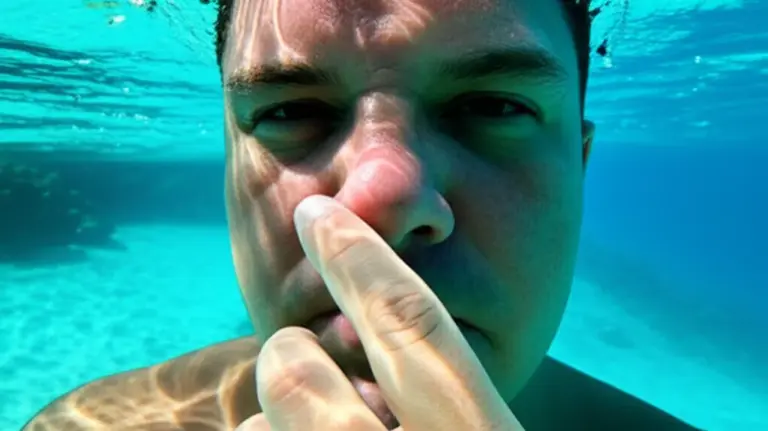
This involves pinching the nose and blowing hard against the closed airways. While effective for SCUBA diving, it is inefficient for freediving because it requires the use of the diaphragm and chest muscles, wasting precious oxygen and making the dive harder. Furthermore, it can increase blood pressure, which is undesirable during breath-hold dives.
The Frenzel Technique (The Freediver’s Standard)
The Frenzel maneuver is the gold standard for freediving. It involves pinching the nose, closing the vocal cords, and using the tongue (like a piston) to push air from the mouth/throat cavity up the Eustachian tubes. Because it uses only small, localized muscles, it is oxygen-efficient and easier to perform repeatedly during rapid descent. Mastering this technique is essential if equalization matters in freediving the Gili Islands for you.
Advanced Techniques: The Mouthfill
For deeper dives, typically beyond 25-30 meters, the residual air in the lungs becomes too compressed to effectively perform the Frenzel. The Mouthfill technique involves taking a gulp of air into the mouth cavity before the residual lung volume becomes too small. This air is then used to equalize the ears and mask during the deeper stages of the dive, allowing divers to reach impressive depths safely.
Prevention: Preparing Your Ears and Sinuses for the Descent
Prevention starts before you even step onto the boat in Gili Trawangan. Good health and proper preparation significantly reduce the risk of barotrauma.
| Preparation Step | Why It Works |
|---|---|
| Start Early and Often | Equalize gently before you feel pressure, ideally on the surface and during the first few meters. This prevents the Eustachian tubes from collapsing. |
| Hydration and Diet | Stay well-hydrated. Dehydration can thicken mucus, making it harder to clear your tubes. Avoid excessive dairy or mucus-forming foods before diving. |
| Descend Feet First | Descending vertically (feet first) makes equalization physically easier than a head-down position, especially for beginners. |
| Check Congestion Status | If you cannot equalize easily on land or feel congested, do not dive. Flying or diving with a cold is the fastest way to guarantee barotrauma. |
Ultimately, successful freediving in the breathtaking Gili Islands depends on respecting the physics of the ocean. By mastering the Frenzel technique and prioritizing safety, you ensure your underwater adventures are filled with the wonder of Indonesia’s marine life, rather than pain and injury. Take a course, practice diligently, and enjoy the deep blue safely.
คำถามที่พบบ่อย (FAQ)
Q: How often should I equalize when freediving?
A: You should equalize very frequently, starting before you even begin your descent (pre-equalization). In the first 10 meters, you should equalize every meter or whenever you feel the slightest pressure. Never wait for pain to start before attempting to equalize.
Q: Can I use nasal spray or decongestants before freediving in the Gili Islands?
A: While decongestants might temporarily help clear congestion, they are generally discouraged. Their effects can wear off during the dive, leading to a dangerous ‘reverse block’ on ascent, where the expanding air cannot escape. If you need medication, you should postpone your dive.
Q: What is the main difference between the Valsalva and Frenzel techniques?
A: Valsalva uses the chest and diaphragm to push air, wasting oxygen and increasing risk. Frenzel uses only the tongue and throat muscles (glottis closure) to efficiently push small amounts of air into the middle ear. Frenzel is essential for deep freediving as it conserves energy and air.
References
- Freediving the Gilis Courses: Essential Equalization Techniques and Safety Protocols for Beginners to Advanced Divers
- Step-by-step equalization methods for Gili conditions — Valsalva, Frenzel, hands-free techniques, and troubleshooting
- Course structure and progression — what Gili freediving courses teach about equalization, depth training, and skill assessments