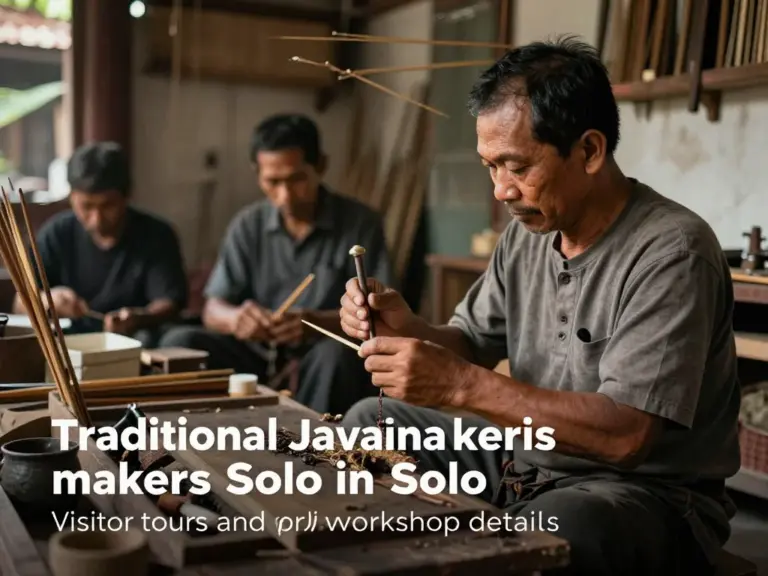
What searchers want to know about who makes Javanese keris in Solo: profiles of traditional makers, workshop locations, and how to visit them (workshops, tour tips, opening hours)
- What searchers want to know about who makes Javanese keris in Solo: profiles of traditional makers, workshop locations, and how to visit them (workshops, tour tips, opening hours)
The city of Solo (Surakarta) is widely regarded as the spiritual and cultural heart of Central Java. Among its many treasures, the Javanese keris in Solo stands out as a masterpiece of UNESCO-recognized intangible heritage. A keris is not merely a dagger; it is a sacred object believed to possess spiritual energy (khodam), crafted through a meticulous process of forging iron, nickel, and steel. For travelers and enthusiasts, visiting the workshops where these blades are born offers a rare glimpse into a living tradition that has survived for centuries.
The Masters of the Forge: Profiles of Traditional Makers (Empu)
In the world of the keris, the maker is known as an Empu. An Empu is more than a blacksmith; they are spiritual guides and artists who fast and pray before beginning the forging process. In Solo, several legendary names continue to uphold this prestige. One of the most prominent figures is the late Empu Pauzan Pusposukadgo, whose legacy continues through his family and apprentices. Another notable figure is Empu Basuki Teguh Yuwono, who is not only a practitioner but also a scholar dedicated to the preservation of Javanese keris in Solo history.
Top Workshop Locations in Solo and Surrounding Areas
If you are looking to witness the creation of a Javanese keris in Solo, there are specific hubs you should visit. The most famous is the village of Palur and the Besalen (workshops) located near the Keraton Surakarta (The Royal Palace). Many skilled craftsmen reside in the Mojo area, where the rhythmic sound of hammers hitting hot steel can be heard throughout the day.
Another essential stop is the Museum Keris Nusantara. While it is a museum rather than a private workshop, it often hosts live demonstrations and houses thousands of historical blades, providing the necessary context before you visit a private forge.
How to Visit: Tour Tips and Opening Hours
Visiting a traditional Besalen requires a blend of planning and cultural etiquette. Most private workshops do not have formal ‘opening hours’ like a retail shop. Instead, they typically operate from 09:00 AM to 04:00 PM, Monday through Saturday. It is highly recommended to visit in the morning when the forge is hot and the energy is high.
- Hire a Local Guide: Many Empus speak limited English. A guide can translate the complex spiritual meanings behind the craft.
- Respect the Space: A workshop is a sacred space. Always ask permission before taking photos, especially of the Empu at work.
- Dress Modestly: As Solo is a traditional city, wearing modest clothing shows respect for the local culture.
The Significance of the Keris in Modern Surakarta
The Javanese keris in Solo remains a vital part of the city’s identity. During the month of Suro (Javanese New Year), thousands of people participate in the ‘Jamasan’ ritual, where blades are cleaned and spiritually recharged. For a visitor, understanding this deep-rooted belief system is what transforms a simple tour into a profound cultural experience.
| Location | Type | Best Time to Visit |
|---|---|---|
| Museum Keris Nusantara | Public Museum | 09:00 – 15:00 (Tue-Sun) |
| Palur Village | Private Workshops | 10:00 – 14:00 (Weekdays) |
| Keraton Surakarta Area | Traditional Artisans | 09:00 – 13:00 (Daily) |
คำถามที่พ่อยบ่อย (FAQ)
Who is the most famous keris maker in Solo?
While many exist, Empu Basuki Teguh Yuwono is currently one of the most respected figures, known for both his craftsmanship and his academic contributions to the study of Javanese keris in Solo.
Can tourists buy a keris directly from the workshops?
Yes, many workshops allow visitors to purchase ready-made blades or commission custom ones. However, authentic, high-quality keris can be expensive and may take months to complete if custom-ordered.
Is there a fee to visit a keris workshop?
Most private workshops do not charge a formal entrance fee, but it is customary to provide a small donation or purchase a small souvenir to support the craftsmen and their tradition.
References
UNESCO: Indonesian Kris Cultural Heritage
Wonderful Indonesia: Exploring Solo (Surakarta)
- Javanese Keris Makers in Solo Workshops Museum and Meanings
- Historical and cultural significance of the keris in Solo: origins, meanings of motifs and symbolism, and how museums present keris heritage
- How keris are made today in Solo workshops: step-by-step craft process, materials, forge techniques, pamor patterns, and modern adaptations