How to Secure Permits and Park Fees for Multi-Day Kayaking — Regulations, Timelines, and Local Operator Requirements
- How to Secure Permits and Park Fees for Multi-Day Kayaking — Regulations, Timelines, and Local Operator Requirements
- The Essential Guide to Multi-Day Kayaking Permits Indonesia
- Key Regulations and Required Documentation
- Navigating the Application Process and Timelines
- Local Operator Requirements and the ‘Conservation Fee’
- Essential Tips for Eco-Conscious Kayaking
- คำถามที่พบบ่อย (FAQ)
- Q: What is the main difference between National Park fees in Raja Ampat and Komodo?
- Q: Can I pay for my Multi-Day Kayaking Permits Indonesia online?
- Q: What happens if I am caught kayaking in a protected area without a permit?
- Q: Is a local guide mandatory for multi-day kayaking in Indonesian National Parks?
- References
Indonesia, with its thousands of islands and vast marine protected areas, offers some of the world’s most spectacular multi-day kayaking experiences. However, navigating the bureaucratic waters of permits and park fees is as crucial as navigating the currents. For any adventurer planning a multi-day expedition, especially in iconic locations like Raja Ampat or Komodo National Park, understanding how to secure Multi-Day Kayaking Permits Indonesia is non-negotiable. These regulations exist to support vital conservation efforts and ensure your safety. This guide breaks down the complex process, from fees and documentation to timelines and the role of local operators.
The Essential Guide to Multi-Day Kayaking Permits Indonesia
The Indonesian government strictly regulates access to its National Parks (Taman Nasional) and Marine Protected Areas (Kawasan Konservasi Perairan). These areas are often the very places sought after by multi-day kayakers for their pristine waters and unique biodiversity. The fees collected are the primary source of funding for park management, anti-poaching patrols, and community development. Ignoring these requirements is not only illegal but directly jeopardizes the fragile ecosystems you wish to explore.
Why Permits are Mandatory: Conservation and Safety
A permit serves two main functions: conservation and accountability. The conservation fee (often called an Entrance Ticket or PIN/Tag) grants you legal access and contributes to the park’s sustainability. The permit application process also registers your presence, which is a critical safety measure, especially in remote areas where search and rescue operations rely on knowing your planned itinerary.
Key Regulations and Required Documentation
The fee structure varies significantly between regions. For example, the fees in Raja Ampat (West Papua) are structured differently from those in Komodo National Park (East Nusa Tenggara).
National Park vs. Marine Protected Area Fees
In major kayaking destinations, you will typically encounter a layered fee system:
- Entrance Ticket (Daily/Per Visit): A basic fee required for entry into the National Park boundary. For foreign tourists in Komodo National Park, this is often a daily rate, plus separate fees for weekends/holidays.
- Marine Park Tag/PIN (Raja Ampat): In Raja Ampat, visitors must purchase a Conservation Fee Tag (PIN) which is typically valid for 12 months. This is a one-time payment for the year, rather than a daily fee.
- Activity Retribution Fees: Separate fees for specific activities such as diving, snorkeling, trekking, and even anchoring a vessel. Since multi-day kayaking involves camping, trekking, and often snorkeling, you must account for these additional charges.
- Ranger/Guide Fees: In conservation zones, such as the Komodo Dragon habitats, a licensed park ranger or local guide is mandatory for safety. This fee is usually charged per group, not per person.
Required Documents for Foreign and Domestic Tourists
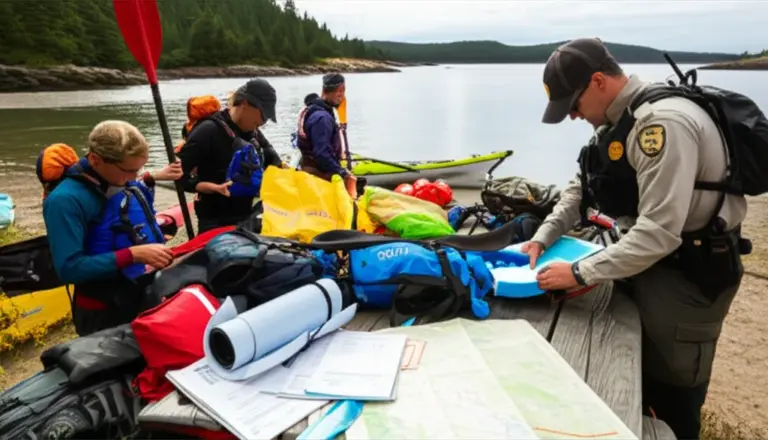
Regardless of whether you book independently or through an operator, you will need to provide:
- A clear copy of your Passport (for foreign tourists) or E-KTP (for domestic tourists).
- Proof of valid travel insurance covering emergency evacuation.
- A completed application form detailing your itinerary, including entry/exit dates and planned camp sites.
- In certain areas, a Surat Izin Berlayar (Sailing Permit) for the kayak support vessel (if applicable) or a written letter of intent for self-supported expeditions.
The process of securing your Multi-Day Kayaking Permits Indonesia can be complex, making the choice between independent and operator-assisted booking critical.
Independent vs. Operator-Assisted Booking
| Method | Pros | Cons |
|---|---|---|
| Independent (Self-Supported) | Full control over itinerary; potentially lower base cost. | Requires direct interaction with park offices; high risk of procedural error; must arrange all logistics (safety, food, water) yourself. |
| Operator-Assisted (Recommended) | Permits handled entirely by the operator; local expertise; built-in safety net and logistics; compliance guaranteed. | Higher upfront cost; less flexibility in itinerary. |
The Typical Permit Application Timeline
For a smooth expedition, especially one requiring multiple permits (e.g., in a large archipelago), you should begin the process well in advance. While some fees can be paid on arrival, the formal permit application often requires lead time.
- 6-12 Months Out: Research operators, confirm availability, and secure your booking. This is when the operator will start compiling your required documents.
- 1-3 Months Out: Finalize your itinerary, as this is the information required for the park permit application (Surat Izin Masuk Kawasan Konservasi – SIMAKSI).
- On Arrival: Some daily entrance fees or activity fees must be paid in cash (Indonesian Rupiah – IDR) directly to the park authority posts at the entry point.
Local Operator Requirements and the ‘Conservation Fee’
Choosing a reputable local operator is the most reliable path to securing your Multi-Day Kayaking Permits Indonesia. They possess the local knowledge and relationships necessary to navigate the often non-standardized process.
Vetting a Responsible Kayaking Operator
A responsible operator should be transparent about the fees they charge. When comparing quotes, ensure they explicitly state what is included in the ‘Conservation Fee’ or ‘Park Fee’ component. Ask the following questions:
- Are the daily National Park entrance fees included?
- Does the fee cover all activity retributions (snorkeling, trekking)?
- Is the mandatory local guide/ranger fee included in the total price?
- Do they provide a copy of the official park entry receipt upon request?
Understanding the Cost Breakdown
While fees fluctuate, here is a general idea of the costs involved, which an operator will typically bundle into your package:
| Fee Type (Foreign Tourist) | Example Location | Approx. Fee Structure |
|---|---|---|
| Marine Park Tag/PIN | Raja Ampat | ~IDR 700,000 (Valid 1 Year) [1] |
| Daily Entrance Fee | Komodo National Park | ~IDR 250,000/day (Weekends/Holidays) [2] |
| Ranger Fee (Group) | Komodo/Rinca Island | ~IDR 120,000/group (up to 5 people) [3] |
| Vehicle/Vessel Fee | Komodo (Motorboat 40-100 PK) | ~IDR 100,000/unit/day [2] |
Essential Tips for Eco-Conscious Kayaking
Your permit and fees fund conservation, but your actions ensure it. Adhere strictly to ‘Leave No Trace’ principles. Use designated camping areas, carry out all waste, and maintain a safe distance from marine life. Supporting the local economy through permitted, regulated tourism is the best way to ensure these incredible kayaking destinations remain pristine for future generations.
คำถามที่พบบ่อย (FAQ)
Q: What is the main difference between National Park fees in Raja Ampat and Komodo?
A: The primary difference is the duration of validity. Raja Ampat requires a one-time Conservation Fee Tag (PIN) that is typically valid for 12 months. Komodo National Park, conversely, charges a daily entrance fee, which may also vary depending on the day of the week (higher on weekends/holidays) and is often supplemented by additional daily activity fees.
Q: Can I pay for my Multi-Day Kayaking Permits Indonesia online?
A: Direct online payment options for individual tourists are often unreliable or non-existent, especially for the complex multi-day permits (SIMAKSI). It is highly recommended to book through a licensed local operator who will handle the necessary payments and paperwork with the relevant park authorities on your behalf, ensuring compliance before your arrival.
Q: What happens if I am caught kayaking in a protected area without a permit?
A: Kayaking in a protected Indonesian national park or marine area without a valid permit can result in significant fines, immediate expulsion from the park, and possible detention by park authorities. The penalties are severe to deter illegal activity and protect the sensitive environment. Always ensure your operator has provided proof of your valid permit.
Q: Is a local guide mandatory for multi-day kayaking in Indonesian National Parks?
A: In many high-conservation areas, particularly those with dangerous wildlife (like Komodo National Park) or complex navigation, a licensed local guide or park ranger is mandatory for both safety and regulatory compliance. Even when not strictly mandatory, hiring a local guide is strongly recommended for their expertise in weather patterns, local customs, and emergency procedures.
References
Raja Ampat National Park Fees Guide
Komodo National Park New Entrance Fees
Komodo National Park Detailed Fee Structure
- Multi-Day Kayaking in Komodo National Park: Ultimate Routes, Permits, and Planning Guide
- Best Multi-Day Kayak Routes in Komodo National Park — Scenic Itineraries, Difficulty Levels, and Wildlife Highlights
- Safety, Gear, and Weather Considerations for Multi-Day Kayaking in Komodo — Tides, Sea Conditions, and Emergency Planning