Safety, Gear, and Weather Considerations for Multi-Day Kayaking in Komodo — Tides, Sea Conditions, and Emergency Planning
- Safety, Gear, and Weather Considerations for Multi-Day Kayaking in Komodo — Tides, Sea Conditions, and Emergency Planning
- Navigating the Komodo Marine Environment: Tides and Currents
- Essential Gear for Kayaking Komodo: Preparation is Key
- Weather Considerations and Emergency Planning
- Leaving No Trace: Sustainable Kayaking in Komodo
- คำถามที่พบบ่อย (FAQ)
- Why are the currents in Komodo so dangerous for kayakers?
- What is the best time of year for multi-day kayaking in Komodo?
- What essential gear is required for communication and navigation?
- Is prior kayaking experience necessary for a multi-day trip?
- How does the presence of Komodo dragons affect camping and safety?
- References
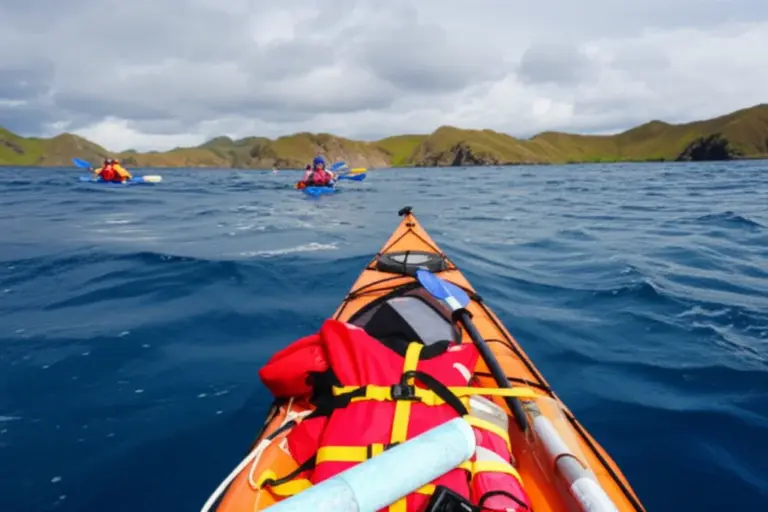
Komodo National Park, a UNESCO World Heritage site, offers one of the world’s most spectacular and challenging sea kayaking destinations. While the prospect of paddling through turquoise waters, past volcanic islands, and encountering Komodo dragons is irresistible, the environment demands respect and meticulous preparation. This guide provides essential information on safety, gear, and weather, ensuring your Multi-Day Kayaking in Komodo Safety is prioritized for a successful expedition. The unique geographical location of Komodo creates complex sea conditions that must be understood by every adventurer.
The single most critical factor for any multi-day kayaking trip in Komodo is the management of tides and the resulting currents. The archipelago acts as a narrow bottleneck between two massive ocean bodies, funneling enormous volumes of water with every tidal shift. These currents are not only strong but can also be unpredictable, creating eddies, whirlpools, and dangerous downdrafts, particularly in narrow straits like Linta Strait.
Understanding the Tidal Range and Flow
- Flow Direction: Generally, water flows from the Indian Ocean (South) to the Pacific (North) on a rising tide, and reverses on a falling tide. The falling tide can often be the strongest.
- Slack Tide: All paddling, especially crossing straits, should be meticulously timed to coincide with ‘slack tide’—the brief period when the current reverses direction. However, in Komodo, slack tide periods can be very short or non-existent.
- Lunar Influence: Spring tides (occurring during new and full moons) produce the strongest currents. Kayaking during neap tides (half moon) offers a more manageable experience.
Essential Gear for Kayaking Komodo: Preparation is Key
Given the remoteness and potential for strong conditions, your equipment must be top-tier and redundancy is vital. Every piece of gear contributes to your Multi-Day Kayaking in Komodo Safety profile.
Personal Safety Equipment
| Item | Purpose |
|---|---|
| PFD (Personal Flotation Device) | Must be worn at all times while paddling. |
| Sun Protection | Wide-brimmed hat, SPF 50+ sunscreen, long-sleeve rash guards. The equatorial sun is intense. |
| Hydration System | Minimum 3L capacity, plus a water filter/purifier for emergency use. |
Cell service is unreliable. A multi-day expedition requires reliable off-grid communication and precise navigation tools. A support boat is highly recommended for safety and logistics.
- VHF Radio: Essential for ship-to-ship and ship-to-shore communication with the support vessel or local authorities.
- Satellite Messenger/PLB: A Personal Locator Beacon (PLB) or Satellite Messenger (e.g., InReach) is mandatory for emergency signaling outside of cell range.
- GPS and Chart: Waterproof GPS device loaded with detailed marine charts, backed up by a physical compass and paper charts.
Weather Considerations and Emergency Planning
Komodo experiences a tropical climate with distinct wet and dry seasons, both of which affect sea conditions and visibility. Planning your trip around these weather patterns is crucial for safety and enjoyment.
Monsoon Seasons and Their Impact
- Dry Season (April to October): Generally considered the best time. Winds are predominantly from the South. The northern islands (like Komodo and Rinca) typically enjoy calm, clear waters, while the southern areas can experience larger swells and cooler water.
- Wet Season (November to March): Winds switch to the North/West. This can make the northern regions choppier and affect visibility. While the south may be calmer, heavy rain and reduced visibility pose their own risks.
Comprehensive Emergency Protocols
Emergency planning in Komodo must account for marine dangers (currents, reefs), wildlife (Komodo dragons on land), and medical situations.
Critical Emergency Procedures
Every group must have a detailed plan for the following scenarios:
- Current Overrun: Procedure for being swept past a planned landing/crossing point. This often involves signaling the support boat immediately.
- Kayak Repair/Capsize: Training in deep-water re-entry and on-the-water repairs.
- Medical Evacuation: Clear protocol for contacting the nearest medical facility in Labuan Bajo via satellite or VHF radio.
- Komodo Dragon Encounter: Never camp on the main islands without armed ranger supervision.
Leaving No Trace: Sustainable Kayaking in Komodo
As a responsible visitor to this fragile ecosystem, adherence to ‘Leave No Trace’ principles is non-negotiable. Komodo National Park is a sanctuary for unique marine and terrestrial life. Pack out all trash, use biodegradable soaps, and avoid anchoring near or standing on coral reefs while snorkeling or landing your kayak. Your actions today ensure the park remains pristine for future generations of adventurers and for the endemic wildlife.
In conclusion, a multi-day kayaking expedition in Komodo is a true bucket-list adventure, combining the thrill of exploration with stunning natural beauty. By respecting the powerful sea conditions, prioritizing your gear, and meticulously planning for the unpredictable, you ensure that your journey is not only memorable but also safe. The rewards of paddling through this wild Indonesian paradise are immeasurable, provided you embark with the right knowledge and respect for the environment.
คำถามที่พบบ่อย (FAQ)
References
- Understanding Komodo’s Complex Tides and Currents
- Sea Kayaking Komodo Archipelago Expedition Details
- Cruising and Weather Considerations in Komodo National Park
- Multi-Day Kayaking in Komodo National Park: Ultimate Routes, Permits, and Planning Guide
- Best Multi-Day Kayak Routes in Komodo National Park — Scenic Itineraries, Difficulty Levels, and Wildlife Highlights
- How to Secure Permits and Park Fees for Multi-Day Kayaking — Regulations, Timelines, and Local Operator Requirements