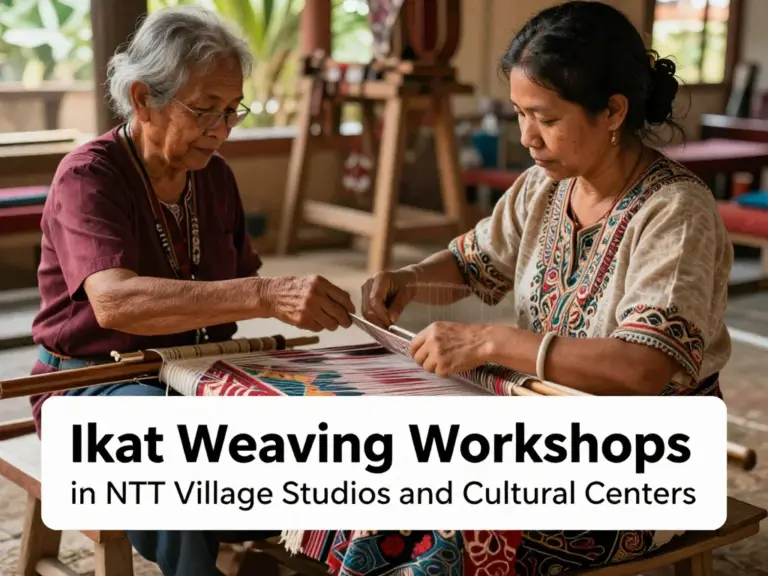
Best Places to Learn Ikat Weaving in NTT, from Village Studios to Cultural Hubs
When travelers seek the heart of Indonesian heritage, few experiences are as profound as witnessing the creation of Ikat. The Best Places to Learn Ikat Weaving in NTT (East Nusa Tenggara) offer more than just a workshop; they provide a gateway into the soul of Sumba and Flores cultures. Whether you are an aspiring artisan or a curious cultural explorer, this guide will navigate you through the most authentic studios and cultural hubs where the ancient art of Ikat is still vibrantly alive.
The Cultural Significance of Ikat in NTT
To truly appreciate the art form, one must understand that Ikat is the identity of the people of East Nusa Tenggara. Each motif tells a story—a lineage, a status, or a spiritual prayer. Learning the craft here is an act of preservation. In Sumba, the hinggi (men’s cloth) and lau (women’s sarong) are intricately tied to funeral rites and wedding dowries. By visiting these studios, you support the local women who have kept these traditional techniques alive for generations.
Where to Learn Ikat Weaving in Sumba
Sumba is arguably the epicenter of Ikat production in Indonesia. The process here is famous for its use of natural dyes derived from indigo plants and morinda roots, creating earthy, timeless tones.
1. Prailiu Village, Waingapu
Located close to the town center of Waingapu, Prailiu is a traditional village that functions as a living museum. Here, you can sit with master weavers who will demonstrate the intricate process of tying the threads before the dyeing begins. It is one of the most accessible locations for travelers to learn the basics of the loom.
2. Pau Village
Deep in the heart of East Sumba, Pau Village offers a more immersive, slow-paced experience. The weavers here are known for their precision and adherence to traditional Sumba motifs. Workshops here often last multiple days, allowing you to participate in the actual dyeing process, which is a rare and rewarding opportunity.
Where to Learn Ikat Weaving in Flores
While Sumba is famous for its bold, animal-patterned Ikat, Flores is renowned for its diverse regional patterns. Every regency, from Ende to Maumere, has a distinct style.
1. Lepo Lorun, Maumere
Founded by the legendary weaver Alfonsa Horeng, Lepo Lorun is a cultural hub dedicated to the preservation of Flores textile traditions. This is arguably the best facility for visitors. They offer structured workshops where you can learn the entire cycle—from spinning raw cotton to the final weave. It is a highly educational environment perfect for those who want to understand the anthropology behind the textiles.
2. Watublapi Village
Watublapi is a collective of women weavers who have gained international recognition for their commitment to natural dyes. Visiting this village allows you to see the community-based approach to weaving. It is not just a studio; it is a collaborative effort to maintain the financial independence of local women through traditional art.
| Region | Key Feature | Best For |
|---|---|---|
| Sumba | Natural Indigo/Morinda Dyes | Deep cultural immersion |
| Flores | Diverse geometric patterns | Learning technical weaving |
Tips for a Respectful Visit
- Always ask permission before taking photos of the weavers.
- Consider purchasing directly from the weavers rather than haggling aggressively; the price reflects months of labor.
- Hire a local guide if you are visiting remote villages to help bridge the language gap.
คำถามที่พบบ่อย (FAQ)
Is prior experience required to learn Ikat weaving?
No, prior experience is not required. Most studios in NTT are very welcoming to beginners and can tailor the experience to show you the basic steps of the loom.
What is the best time of year to visit NTT for weaving workshops?
The dry season, from April to October, is the best time. The weather is favorable for travel between remote villages, and it is the ideal time for the outdoor natural dyeing processes to take place.
Are the materials provided during the workshops?
Yes, all necessary tools, including the loom (backstrap loom), cotton threads, and natural dye ingredients, are typically provided by the host studio.
Can I bring my own woven piece home?
Yes, many visitors create small practice pieces that they can take home as a souvenir of their time in the village.