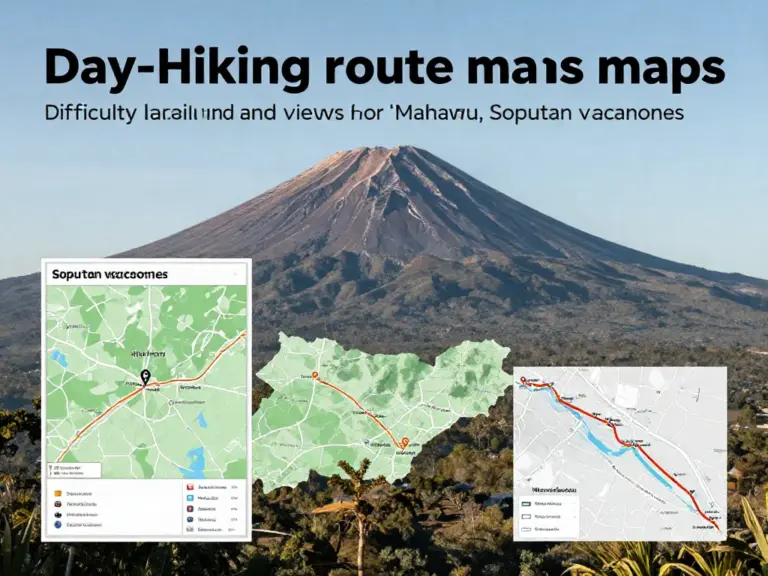
Route Plans, Difficulty Levels, and What to Expect on Mahawu, Lokon, and Soputan Day Hikes
North Sulawesi is a land of dramatic volcanic landscapes, lush highlands, and breathtaking vistas. For outdoor enthusiasts visiting Indonesia, the trio of Mount Mahawu, Mount Lokon, and Mount Soputan represents the pinnacle of day-hiking adventures. Located primarily around the flower city of Tomohon, these peaks offer diverse experiences ranging from leisurely strolls along crater rims to challenging treks through volcanic riverbeds. Understanding the Mahawu, Lokon, and Soputan Day Hikes is essential for anyone looking to experience the raw power of the Pacific Ring of Fire while enjoying the hospitality of the Minahasa people.
Mount Mahawu: The Family-Friendly Crater Walk
Mount Mahawu is often the first stop for hikers in North Sulawesi. Standing at 1,324 meters, it is considered the easiest of the three. The route plan is straightforward: a paved road leads almost to the summit, followed by a short 10-15 minute walk up concrete stairs. This makes it accessible for children and elderly travelers who still want to witness a volcanic crater without the grueling physical toll.
What to expect at Mahawu is a stunning emerald-green sulfuric lake at the bottom of the crater. A well-maintained circular path allows you to walk around the rim, providing 360-degree views of the surrounding area, including Mount Lokon in the distance and the distant islands of Bunaken National Marine Park on a clear day. The difficulty level is Easy, requiring minimal gear other than comfortable walking shoes and a light jacket for the morning mist.
Mount Lokon: Trekking the Active Giant
Mount Lokon (1,580m) offers a more rugged experience compared to Mahawu. As one of the most active volcanoes in Indonesia, the hike focuses on the Tompaluan crater, located in the saddle between the Lokon and Empung peaks. The route plan typically begins in the village of Kakaskasen. Unlike traditional forest trails, the path to Lokon follows an ancient lava flow that has turned into a rocky, dried-up riverbed.
The difficulty level for Mount Lokon is Moderate. Hikers must navigate large boulders and loose gravel, which can be slippery if it rains. The trek takes approximately 1.5 to 2 hours to reach the crater. What to expect is an otherworldly lunar landscape, characterized by steaming fumaroles and the smell of sulfur. It is vital to check the volcanic alert status before heading out, as Lokon is prone to sudden activity.
Mount Soputan: The Ultimate Volcanic Adventure
For those seeking a more intensive challenge among the Mahawu, Lokon, and Soputan Day Hikes, Mount Soputan is the crown jewel. Located further south from Tomohon, Soputan is one of the most aesthetically pleasing volcanoes, featuring a perfect cone and vast fields of black volcanic sand. The route plan is more complex, often starting from the village of Turene or Touure. The initial trek passes through beautiful pine forests before transitioning into steep, sandy slopes.
The difficulty level is Moderate to Hard. The ascent through the loose volcanic scree (sand and small rocks) is physically demanding, as for every two steps forward, you often slide one step back. However, the reward is unparalleled. From the summit or the base of the active cone, you can see the vastness of the Minahasa highlands. Many hikers choose to use a 4WD jeep to reach the base camp (Aeseput) to save time, turning a multi-day trek into a manageable day hike.
| Volcano | Altitude | Difficulty | Estimated Time |
|---|---|---|---|
| Mount Mahawu | 1,324m | Easy | 30 – 60 Minutes |
| Mount Lokon | 1,580m | Moderate | 3 – 4 Hours (Return) |
| Mount Soputan | 1,784m | Moderate – Hard | 6 – 8 Hours (Return) |
Essential Preparation for North Sulawesi Hikes
To ensure a successful adventure across these three peaks, preparation is key. While Mahawu is a walk in the park, Lokon and Soputan require a bit more respect for the elements. Weather: The best time to hike is during the dry season (June to September). Rain can make the volcanic ash on Lokon and Soputan very muddy and hazardous.
Gear Checklist:
- Sturdy hiking boots with good grip (essential for Soputan’s sand).
- Sun protection (hat, sunscreen) as there is little shade on the craters.
- At least 2 liters of water per person.
- A windbreaker or light jacket for the summits.
- Face masks (to protect against sulfur fumes).
Conclusion
The Mahawu, Lokon, and Soputan Day Hikes offer a comprehensive look at the geological wonders of North Sulawesi. Whether you are looking for a gentle morning walk with the family at Mahawu, a rocky adventure into the heart of an active crater at Lokon, or a challenging trek across the black sands of Soputan, this region provides something for every level of adventurer. By planning your routes and respecting the local conditions, you can experience some of the most spectacular volcanic scenery Indonesia has to offer.
คำถามที่พบบ่อย (FAQ)
1. Do I need a guide for these hikes?
For Mount Mahawu, a guide is not necessary. For Mount Lokon and Mount Soputan, it is highly recommended to hire a local guide from Tomohon for safety and to navigate the changing volcanic terrain.
2. Is it safe to hike Mount Lokon?
Mount Lokon is an active volcano. Always check with the local PVMBG (Center for Volcanology and Geological Hazard Mitigation) or your local guide for the current alert level before starting your trek.
3. Can I do all three hikes in one day?
It is physically possible but not recommended. Mahawu and Lokon can be combined in a single day, but Soputan is further away and requires significantly more time and energy.
4. What is the best base for these hikes?
The city of Tomohon is the best base. It is located centrally between the three volcanoes and offers a variety of accommodations and local transport options.
5. Are there entrance fees?
Yes, most trails have a small registration or entrance fee (usually around 10,000 – 30,000 IDR) which goes toward local community maintenance of the trails.