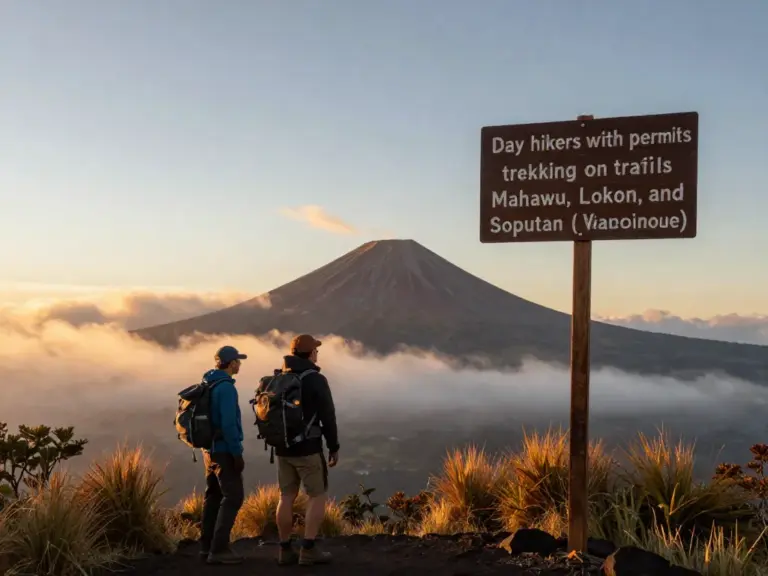
Best Times, Permits, and Safety Tips for Day Hikes to Mahawu, Lokon, and Soputan Volcanoes
North Sulawesi is a land defined by its dramatic volcanic skyline. For adventure seekers visiting Indonesia, the highlands of Tomohon offer a unique opportunity to explore three distinct volcanic giants in relatively close proximity. Engaging in Day Hikes to Mahawu, Lokon, and Soputan Volcanoes allows travelers to witness the raw power of nature, from emerald-colored crater lakes to smoking active vents and desolate lava fields. This guide provides the essential details on timing, logistics, and safety to ensure your trekking experience is both breathtaking and secure.
Mount Mahawu: The Family-Friendly Crater
Mount Mahawu is often the first stop for hikers due to its accessibility. Standing at 1,324 meters, it is considered an extinct volcano, though it still features a stunning 180-meter-wide crater. The hike is relatively short, taking only about 15 to 20 minutes from the parking area to reach the viewing platform. From the rim, you can see the Bunaken Marine Park in the distance and the neighboring Mount Lokon.
- Difficulty: Easy
- Duration: 1 hour total
- Highlights: Lush vegetation and panoramic views of the Minahasa highlands.
Mount Lokon: The Active Giant
In contrast to Mahawu, Mount Lokon is one of Indonesia’s most active volcanoes. When considering Day Hikes to Mahawu, Lokon, and Soputan Volcanoes, Lokon offers the most “volcanic” experience. The trail typically leads to the Tompaluan crater, situated in the saddle between Mount Lokon and Mount Empung. The path follows a dried-up riverbed made of volcanic rock and boulders, providing a rugged trekking experience .
Mount Soputan: The Adventurer’s Choice
Mount Soputan is located further south and is prized for its dramatic aesthetic, resembling a classic cinder cone. It is surrounded by vast sandy plains and pine forests. Reaching the base often requires a 4WD vehicle or a long trek through the woods. The climb to the summit is steep and involves scrambling over volcanic scree, but the reward is a lunar-like landscape that feels worlds away from the tropical jungle.
Best Times to Visit
Timing is crucial for a successful hike in North Sulawesi. The region experiences a tropical climate with two main seasons:
| Season | Months | Conditions |
|---|---|---|
| Dry Season | May – September | Clear skies, stable trails, best visibility. |
| Rainy Season | October – April | Slippery paths, frequent clouds, potential for leeches. |
The absolute best window is between July and August. It is highly recommended to start your hikes at dawn (around 5:00 AM) to catch the sunrise and avoid the midday heat and afternoon clouds that often roll in by 11:00 AM.
Permits and Logistics
For most Day Hikes to Mahawu, Lokon, and Soputan Volcanoes, formal permits from a national park office are not strictly required in the way they are for Mount Rinjani or Bromo. However, there are local protocols to follow:
- Mount Mahawu: There is a small entrance fee at the ranger station near the parking area.
- Mount Lokon: It is mandatory to check in with the local monitoring post (Pos Pengamatan Gunung Api) to ensure the volcano is safe for climbing.
- Mount Soputan: Often requires coordination with local guides in the village of Silian or Tumbak for transport and route guidance.
Essential Safety Tips
Hiking active volcanoes carries inherent risks. Follow these safety guidelines to mitigate danger:
- Monitor Activity Levels: Always check the status of the volcanoes via the MAGMA Indonesia app or website. Mount Lokon and Soputan frequently change status from ‘Normal’ to ‘Alert’.
- Hire a Local Guide: Even for Mahawu, a guide provides cultural context. For Lokon and Soputan, they are essential for navigating changing terrains and monitoring gas emissions.
- Wear Proper Gear: Sturdy hiking boots with good grip are non-negotiable for the volcanic scree of Soputan and the rocky bed of Lokon. Bring a lightweight raincoat and a headlamp.
- Stay Hydrated: The humidity in Sulawesi can be intense. Carry at least 2-3 liters of water per person for the longer Soputan trek.