How to Choose Responsible Tours and Guides in Tangkahan: Red Flags, Certifications, and Local Partnerships
- How to Choose Responsible Tours and Guides in Tangkahan: Red Flags, Certifications, and Local Partnerships
Tangkahan, often referred to as the ‘Hidden Paradise’ of North Sumatra, is a stunning destination where the rainforest meets the river. Known for its community-led conservation efforts and elephant sanctuary, it represents a delicate balance between tourism and nature. However, as popularity grows, so does the importance of choosing responsible tours and guides in Tangkahan. Making the right choice ensures that your visit contributes to the preservation of the Leuser Ecosystem rather than its degradation.
Understanding the Importance of Responsible Tourism in Tangkahan
Responsible tourism in Tangkahan isn’t just a buzzword; it is the foundation upon which the village was built. Historically, the local community shifted from illegal logging to ecotourism to protect their environment. When you hire a responsible guide, you are directly supporting this transition and providing a sustainable livelihood for former loggers turned conservationists.
Red Flags: What to Avoid When Booking
Identifying unethical operators is crucial for any conscious traveler. Here are some major red flags to watch out for:
- Guarantees of physical contact with wild animals (e.g., orangutans or monkeys).
- Guides who encourage feeding wildlife to get better photos.
- Extremely low prices that suggest fair wages are not being paid to local staff.
- Lack of information regarding waste management during jungle treks.
If a tour operator focuses more on ‘entertainment’ than ‘education’ and ‘conservation,’ it is a clear sign that their priorities are not aligned with responsible travel principles.
Certifications and Local Partnerships
While formal international certifications are rare in remote areas like North Sumatra, local recognition and partnerships are the gold standard for responsible tours and guides in Tangkahan. Look for guides who are members of the CTO (Community Tour Operator) or the Lembaga Pariwisata Tangkahan (LPT).
| Organization | Role in Tangkahan |
|---|---|
| LPT (Lembaga Pariwisata Tangkahan) | The local community body managing tourism and conservation. |
| HPI (Himpunan Pramuwisata Indonesia) | The Indonesian Guides Association, ensuring professional standards. |
| Gunung Leuser National Park Authority | The government body regulating access to the protected forest. |
Partnerships with local NGOs working on reforestation or wildlife monitoring are also excellent indicators of a guide’s commitment to the region’s health.
Questions to Ask Your Guide Before Booking
Before finalizing your trek or river activity, engage in a conversation with your potential guide. A truly responsible professional will be happy to answer these questions:
- What is your policy on wildlife encounters? (Correct answer: Keep a safe distance, no noise, no feeding).
- How do you handle trash during treks? (Correct answer: Everything brought in must be carried out).
- Do you employ local people from Tangkahan village? (Correct answer: Yes, supporting the local economy is vital).
- How does this tour contribute to the Tangkahan community?
The Role of the Tangkahan Elephant Sanctuary
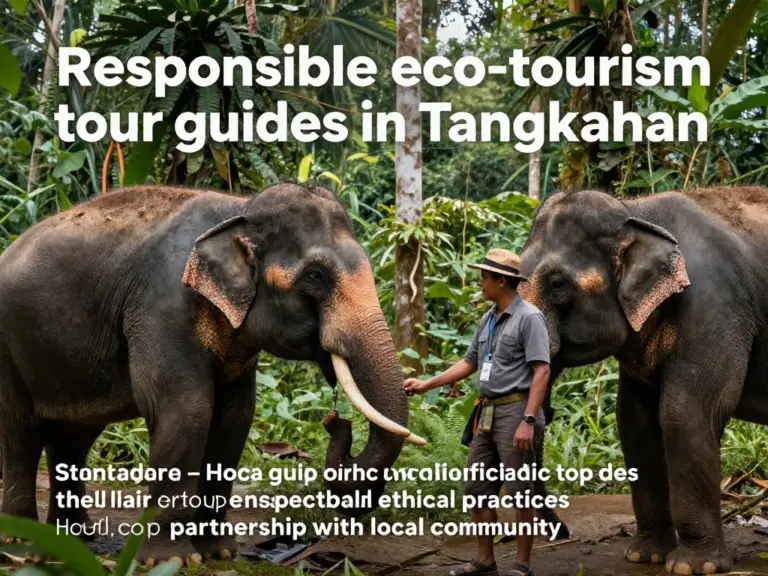
The elephants in Tangkahan are ‘CRU’ (Conservation Response Units) elephants. They are not there for circus-style entertainment; they help rangers patrol the forest against illegal activities. When choosing a tour involving elephants, ensure the focus is on bathing and educational observation rather than riding. Responsible guides will explain the history of these elephants and their vital role in protecting the Leuser Ecosystem.
คำถามที่พบบ่อย (FAQ)
คำถามที่พบบ่อย (FAQ)
How can I verify if a guide is truly local?
Most local guides in Tangkahan grew up in the village and are part of the LPT (Lembaga Pariwisata Tangkahan). You can ask them about the history of the village’s transition from logging to tourism; their personal stories are the best proof of their local roots.
Is elephant riding allowed in Tangkahan?
Responsible tourism practices in Tangkahan have moved away from elephant riding. Ethical tours now focus on elephant bathing and joining the CRU rangers on forest patrols, which is much better for the animals’ welfare.
What should I do if I see a guide breaking eco-rules?
If you witness a guide littering or harassing wildlife, you should report this to the LPT office in the village center. Providing the guide’s name or the tour company details helps the community maintain high standards.
Why are responsible tours more expensive?
Responsible tours ensure fair wages for guides and porters, contribute a portion of the fee to community conservation funds, and include high-quality, eco-friendly equipment and food sourcing.
References
Official Indonesia Tourism – Tangkahan Destination Guide
UNESCO – Tropical Rainforest Heritage of Sumatra