Supporting Sea Turtle Conservation in Bali and Sumba: How to Volunteer and Visit Responsibly
- Supporting Sea Turtle Conservation in Bali and Sumba: How to Volunteer and Visit Responsibly
Indonesia, an archipelago teeming with life, is home to six of the world’s seven species of sea turtles. These magnificent creatures face immense threats, from plastic pollution and habitat loss to illegal poaching. For travelers interested in ethical and meaningful engagement, the islands of Bali and Sumba offer critical opportunities for Supporting Sea Turtle Conservation in Bali and Sumba. This guide outlines how you can transition from a casual tourist to a responsible participant, ensuring your visit contributes positively to the survival of these endangered marine animals.
The Urgent Need for Sea Turtle Conservation in Indonesia
Sea turtles play an indispensable role in maintaining healthy marine ecosystems, particularly coral reefs and seagrass beds. Unfortunately, populations of Green Turtles, Hawksbill Turtles, and Olive Ridley Turtles in Indonesian waters are critically low. Human activity is the primary driver of this decline. Conservation efforts focus not only on protecting nesting sites and hatchlings but also on educating local communities and addressing the devastating impact of plastic waste that turtles often mistake for food.
Bali: Opportunities for Responsible Turtle Encounters
Bali is often the gateway for visitors, and while its bustling tourism sector presents challenges, it also hosts several established and reputable conservation projects. Engaging with these organizations is the best way to ensure your money directly aids conservation rather than exploitative practices.
Key Conservation Centers in Bali
When planning your visit, seek out centers focused on rescue, rehabilitation, and release, rather than those that treat turtles purely as tourist attractions. Two prominent examples are found near the southern tip of the island:
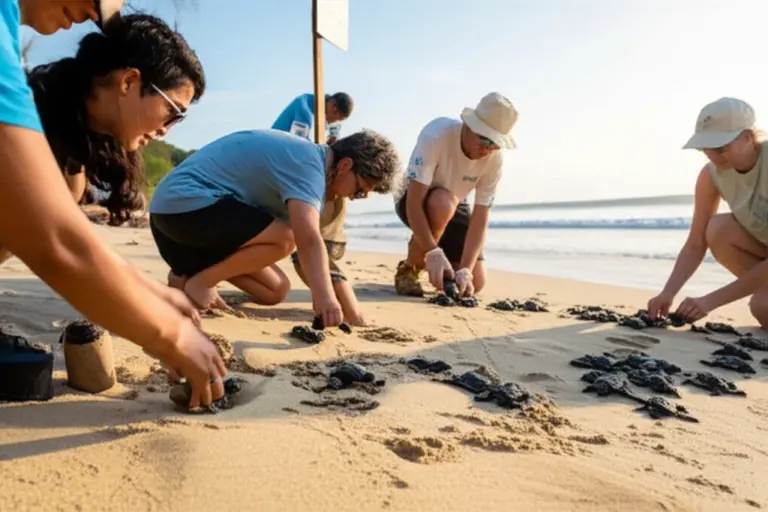
- Bali Sea Turtle Society (BSTS), Kuta Beach: Focused on protecting Olive Ridley nesting sites along Kuta Beach. They offer highly ethical, responsible hatchling release programs during nesting season (typically April to October).
- Serangan Island Turtle Conservation and Education Center (TCEC): This government-backed facility rescues injured turtles, treats them, and manages a hatchery. They offer educational tours that emphasize the threats turtles face and the conservation process.
Ethical Volunteering Guidelines in Bali
True volunteering involves commitment and effort, not just paying a fee for a photo opportunity. Look for long-term programs (1-4 weeks) that focus on tasks like beach cleanups, monitoring nests, data collection, and community outreach. Avoid organizations that allow excessive handling of turtles or promise guaranteed daily releases, as conservation work is unpredictable and dictated by nature.
Sumba: A Frontier for Marine Protection
While Bali offers accessibility, Sumba offers wilderness. Conservation here is less centralized and often involves deep collaboration with local communities, making the act of Supporting Sea Turtle Conservation in Bali and Sumba on this island a profound cultural experience.
Unique Challenges and Local Initiatives in Sumba
Sumba’s remoteness means it faces different pressures than Bali. Poaching for meat and eggs remains a serious issue, often driven by poverty and traditional practices. Conservation projects here are often linked to sustainable resorts or smaller NGOs that employ and empower local Sumbanese people as rangers and educators. By choosing eco-friendly accommodations that actively fund local conservation, you are supporting the movement directly.
Look for initiatives in West Sumba and along the more pristine eastern coast, which often focus on establishing community-managed marine protected areas (MPAs). Direct financial contributions to these grassroots efforts often have a magnified impact due to the lower cost of operations compared to high-profile centers in Bali.
Visiting Responsibly: Sustainable Tourism Practices
Whether you are snorkeling, diving, or simply walking the beaches, your actions matter. Responsible tourism is integral to Supporting Sea Turtle Conservation in Bali and Sumba.
| Do’s (Responsible Actions) | Don’ts (Harmful Actions) |
|---|---|
| Support local businesses committed to sustainability (e.g., zero-plastic resorts). | Purchase souvenirs made from turtle shell (illegal) or coral. |
| Maintain a minimum distance of 10-15 meters if you encounter a turtle while swimming or diving. | Touch, chase, or attempt to feed wild sea turtles. |
| Participate in organized beach cleanups during your stay. | Use bright lights or make loud noises on nesting beaches at night. |
| Use reef-safe sunscreen to protect marine habitats. | Leave any trash behind, especially plastic bags or bottles. |
By making conscious choices—from the tours you select to the trash you carry out—you become part of the solution, helping to ensure that the waters surrounding Bali and Sumba remain safe havens for these ancient mariners.
คำถามที่พบบ่อย (FAQ)
Can I legally adopt a sea turtle in Bali or Sumba?
While you cannot literally take ownership of a sea turtle, many reputable conservation organizations in Bali and Sumba offer ‘symbolic adoption’ programs. These involve making a donation that goes toward the care, rehabilitation, or monitoring of a specific turtle or nest, and you often receive updates on its progress. This is an excellent way to provide financial support.
What is the best time of year to see sea turtle hatchlings released in Bali?
The nesting and hatching season for sea turtles in Bali typically runs from April to October, peaking during the dry season months (June, July, and August). Hatchling releases are dependent on natural nesting cycles, so it is best to check the schedules of organizations like the Bali Sea Turtle Society shortly before your visit.
Are there ethical alternatives to turtle egg consumption in Sumba?
Yes. Many conservation groups in Sumba work with local communities to develop sustainable alternative livelihoods, such as eco-tourism guiding, artisanal fishing (non-destructive methods), or producing sustainable local crafts. Supporting these alternative economies directly helps reduce the pressure on turtle populations currently facing threats from traditional harvesting.
References
World Wildlife Fund (WWF) Indonesia Marine Conservation
Bali Sea Turtle Society Official Website
IUCN Red List of Threatened Species
- Why Sea Turtle Conservation Matters in Bali and Sumba — understanding local species, threats, and conservation goals for tourism-aware visitors
- How to Choose a Credible Volunteer Program — verifying permits, ethical practices, and community partnerships for responsible turtle projects
- What to Expect as a Volunteer or Responsible Visitor — typical activities, costs, seasonal timing, accommodation, and safety guidelines