Conservation Tours and Responsible Trekking: How to Support Orangutan Rehabilitation, Local Communities and Anti-Poaching Efforts
- Conservation Tours and Responsible Trekking: How to Support Orangutan Rehabilitation, Local Communities and Anti-Poaching Efforts
- The Crucial Role of Ethical Tourism in Orangutan Survival
- Identifying Truly Responsible Orangutan Trekking Tours
- Supporting Orangutan Rehabilitation Centers Directly
- Empowering Local Communities Through Your Visit
- How Trekking Finances Anti-Poaching Initiatives
- Practical Guidelines for Responsible Viewing in the Wild
- Conclusion: Your Journey, Their Future
- คำถามที่พบบ่อย (FAQ)
Indonesia, home to the majestic rainforests of Borneo and Sumatra, is the last refuge for the critically endangered orangutan. For the modern traveler passionate about wildlife, the desire to witness these incredible beings in their natural habitat is powerful. However, traditional tourism models often cause more harm than good. This guide focuses exclusively on Conservation Tours and Responsible Trekking, detailing precisely how your travel choices can actively fund rehabilitation, empower local stewards, and finance vital anti-poaching operations, ensuring your Indonesian adventure leaves a positive, lasting footprint.
The Crucial Role of Ethical Tourism in Orangutan Survival
Orangutans face an existential crisis driven primarily by deforestation for palm oil plantations and illegal wildlife trade. While government and NGO efforts are paramount, responsible tourism has emerged as a significant, sustainable revenue stream for conservation. When done correctly, tourism provides an economic incentive for local populations to protect the forest rather than exploit it. This model shifts the value of a living orangutan—and the forest it inhabits—from zero (or negative, if logged) to a high-value asset.
Understanding the Threats: Habitat Loss and Poaching
Poaching remains a severe threat, often targeting infants for the illegal pet trade, which necessitates the mothers’ death. Furthermore, illegal logging and land clearing fragment the remaining wild populations. Effective conservation requires boots on the ground—rangers patrolling, researchers monitoring, and veterinary teams ready for rescue. These operations are expensive. Your ethical tour fee, when properly channeled, directly subsidizes these critical frontline efforts.
Identifying Truly Responsible Orangutan Trekking Tours
Distinguishing between genuine conservation tourism and harmful ‘animal encounters’ is the most important step for any traveler. True responsibility means prioritizing the animal’s welfare and minimizing human impact over getting the perfect selfie.
Red Flags to Watch Out For (Handling/Direct Contact)
Vetting Tour Operators: Accreditation and Transparency
A credible operator will openly discuss where your money goes. Look for partnerships with recognized local conservation NGOs (like the Borneo Orangutan Survival Foundation or dedicated Sumatran centers). They should provide transparent accounting regarding park fees, guide wages, and conservation levies. If they cannot name the specific rehabilitation center they support, treat them with extreme skepticism.
Supporting Orangutan Rehabilitation Centers Directly
Orangutan rehabilitation centers are rescue hubs for orphaned, injured, or confiscated pets. These facilities nurse the apes back to health with the ultimate goal of reintroduction into protected wild areas. Your visit can be structured to maximize support for these vital institutions.
Visiting Sanctuaries vs. True Rehabilitation Sites
Some locations function primarily as tourist attractions, offering limited conservation benefit. Seek out centers that clearly define their stages of rehabilitation: medical care, nursery care, forest school, and pre-release. Responsible tourism often involves guided viewing from a safe distance during feeding times, allowing the animals to remain habituated to humans just enough for monitoring, but wild enough for independence.
Watch: A Look at Conservation in Action
Volunteer Opportunities and Donation Pathways
If trekking isn’t feasible, consider direct support. Many legitimate centers accept volunteers for non-primate tasks (like building enrichment materials or maintaining gardens) or accept direct monetary donations earmarked for specific needs (e.g., milk formula or medical supplies). Always donate through verified channels.
Empowering Local Communities Through Your Visit
Conservation cannot succeed if it ignores the people living alongside the wildlife. When local communities benefit directly from ecotourism, they become the most passionate guardians of the forest. Supporting local economies is intrinsically linked to species protection.
Choosing Locally Owned Homestays and Guides
Prioritize guides and homestays owned and operated by indigenous or local residents rather than large, foreign-owned corporations. This ensures that a larger percentage of your expenditure stays within the immediate region, providing sustainable livelihoods that compete with the short-term gains of illegal logging or poaching. Ask your operator specifically about their local employment policies.
Fair Wages and Cultural Respect
Ensure that guides are paid fair, living wages. Furthermore, responsible trekking demands deep cultural humility. Learn basic phrases, adhere to local customs regarding dress and behavior, and always ask permission before photographing people. Respect is the foundation of ethical partnership.
How Trekking Finances Anti-Poaching Initiatives
Anti-poaching patrols are expensive, requiring salaries, equipment (GPS trackers, communication gear), and logistical support. In areas like Tanjung Puting National Park or the forests of Aceh, park entry fees and mandated guide fees from regulated tours are often the primary source of non-governmental funding for these patrols. By choosing a licensed, fee-paying trek, you are directly contributing to the visibility and security of the wild orangutan population.
| Conservation Element | How Your Trek Supports It | Impact Level |
|---|---|---|
| Rehabilitation Centers | Direct fees allocated for food, medicine, and staff training. | High |
| Anti-Poaching Patrols | Park entrance levies fund ranger salaries and monitoring equipment. | Medium-High |
| Local Employment | Guaranteed income for guides, boatmen, and homestay owners. | High |
Practical Guidelines for Responsible Viewing in the Wild
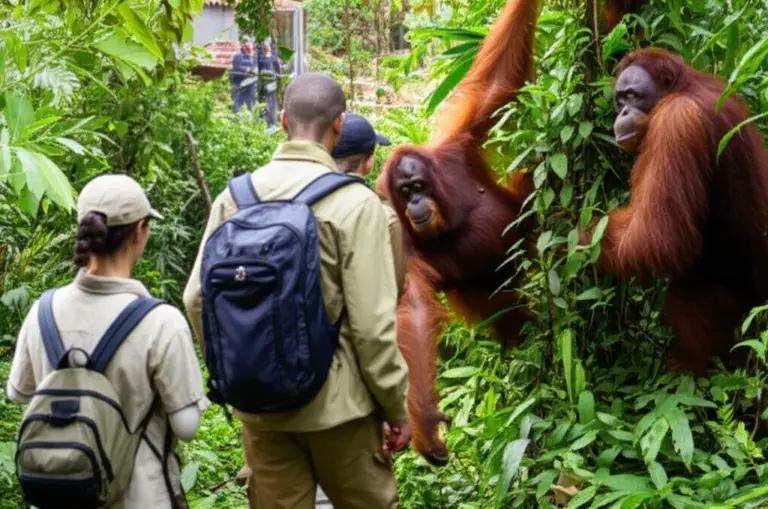
Even when participating in the best Conservation Tours and Responsible Trekking programs, visitor behavior dictates success. The goal is to observe, not interact. Adhering to these guidelines ensures minimal stress on the animals and maintains their natural wild behaviors.
Maintaining Distance and Minimizing Disturbance
- Maintain a minimum distance of 7–10 meters (25–30 feet) at all times.
- Keep voices low and avoid sudden movements or loud noises.
- Never bring food near the viewing areas. Orangutans must forage naturally.
- Use camera flashes sparingly or avoid them entirely, as they can startle the animals.
By adhering strictly to the guidance provided by certified local rangers, you transform from a mere tourist into a temporary conservation partner. This commitment honors the incredible efforts being made to save the ‘Person of the Forest.’
Conclusion: Your Journey, Their Future
Choosing where you spend your tourism dollar in Indonesia is a powerful ethical decision. Responsible tourism, characterized by rigorous vetting of operators and a focus on long-term sustainability, is not just a trend—it is a fundamental requirement for the survival of orangutans. Embrace Conservation Tours and Responsible Trekking, and ensure your adventure contributes meaningfully to the protection of these intelligent, gentle giants and the communities dedicated to their cause.
คำถามที่พบบ่อย (FAQ)
References
If you wish to learn more about the specific organizations mentioned, please consult their official resources. Always verify partnerships before booking your trip.
- Trekking in Sumatra: The Best Trails and Conservation Tours for Eco-Conscious Adventurers
- Why Choose Sumatra for Trekking and What to Expect from Its Ecosystems and Wildlife
- Top Trails in Sumatra: Bukit Lawang, Kerinci Seblat, Gunung Leuser and Multi-Day Jungle Routes (difficulty, duration, best seasons)