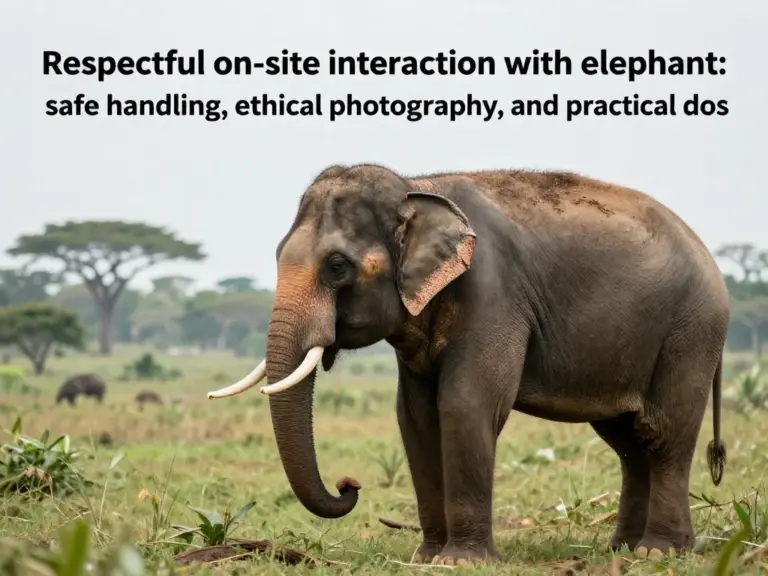
What to Do On-Site: Practical Dos for Respectful Interaction, Photography, and Safety with Elephants
Visiting elephants in Indonesia is a bucket-list experience for many travelers. However, ensuring a positive experience for both you and these majestic creatures requires a deep understanding of elephant interaction protocols. Whether you are visiting a sanctuary in Sumatra or an ethical park in Bali, your behavior directly impacts the welfare of the animals and your own personal safety. This guide provides practical, expert-backed advice on how to engage respectfully and safely.
1. Respectful Physical Interaction
When it comes to elephant interaction, less is often more. In Indonesia’s leading ethical sanctuaries, the focus has shifted from riding to observation. If physical contact is permitted, follow these guidelines:
Approach from the side: Never surprise an elephant from behind or approach directly from the front. Approach slowly from the side where the elephant can see you clearly.
Touch gently: If a mahout (handler) indicates it is safe, touch the elephant on the trunk or side with a flat palm. Avoid the sensitive areas around the eyes and mouth.
2. Photography Etiquette for Wildlife
Capturing the perfect shot is a priority for many tourists, but it should never come at the expense of the animal’s comfort.
Disable Flash: Bright flashes can startle elephants, potentially leading to aggressive reactions. Always use natural light.
Maintain Distance: Use a zoom lens rather than physically moving closer to the animal. Respecting their personal space is the cornerstone of ethical elephant interaction.
No Selfies with Distressed Animals: If an elephant looks agitated (ears pinned back, trumpeting), put the camera away and move back.
3. Safety Protocols for Visitors
Safety is paramount when dealing with multi-ton mammals. Indonesia’s tourism boards emphasize that even domesticated elephants are still wild animals at heart.
- Listen to the Mahout: The handler knows the elephant’s temperament better than anyone. Follow their instructions without question.
- Keep Noise Levels Low: Loud shouting or sudden movements can cause stress to the herd.
- Wear Proper Footwear: Avoid flip-flops. Wear closed-toe shoes with good grip in case you need to move quickly on uneven terrain.
4. Feeding and Treats
Feeding can be a wonderful part of elephant interaction, but only when done correctly. Only offer food provided by the facility, such as bananas or sugarcane. Never bring outside food, as it may contain pesticides or be unsuitable for their diet. Place the food in their trunk or a designated feeding basket as instructed.
คำถามที่พบบ่อย (FAQ)
Is it safe to touch an elephant’s trunk?
What should I wear for an elephant sanctuary visit in Indonesia?
Can I use a drone for elephant photography?
References
World Animal Protection: Ethical Elephant Tourism Standards
Indonesia Travel: Way Kambas National Park Safety Guide