What is Community-Based Tourism (CBT) and why it matters for Indonesian villages — benefits for local economies, culture preservation, and sustainable development
- What is Community-Based Tourism (CBT) and why it matters for Indonesian villages — benefits for local economies, culture preservation, and sustainable development
Indonesia, with its thousands of islands, rich biodiversity, and deep cultural tapestry, stands at a critical juncture in its tourism evolution. While mass tourism has certainly brought economic benefits, it often bypasses the most vulnerable communities and risks cultural erosion. Enter **Community-Based Tourism (CBT) for Indonesian villages**—a paradigm shift prioritizing local ownership, authentic experience, and long-term sustainability. This approach is not merely an alternative; it is becoming essential for ensuring that tourism growth truly benefits those who call these beautiful locations home.
Expert Insight: CBT ensures that the majority of tourism revenue stays within the village ecosystem, fostering resilience against external economic shocks.
Deconstructing Community-Based Tourism (CBT): A Local First Approach
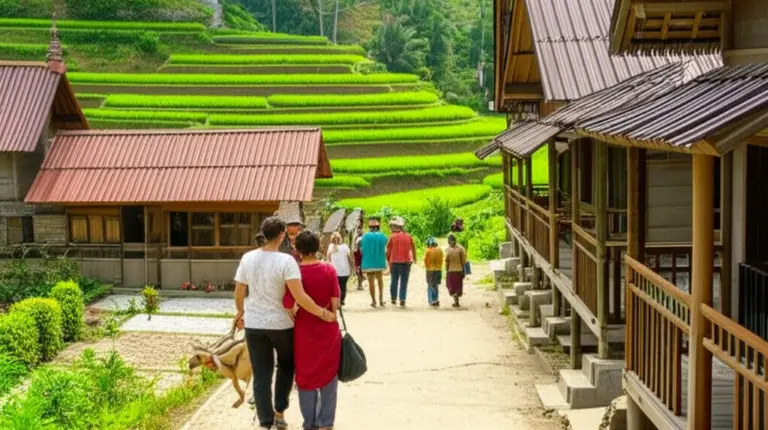
Community-Based Tourism (CBT) is fundamentally defined by local control. Unlike conventional tourism models where external operators dictate infrastructure, pricing, and visitor flow, CBT initiatives are initiated, owned, managed, and profited from primarily by the local community residing in or immediately adjacent to the site. In the Indonesian context, this often means transforming traditional village life—from farming communities in Java to coastal communities in Eastern Indonesia—into vibrant, yet preserved, tourist destinations.
Core Principles of CBT
For CBT to be effective, it must adhere to several non-negotiable principles:
- Local Ownership & Control
- Environmental Stewardship
- Equitable Benefit Distribution
- Authentic Cultural Exchange
The Critical Importance of CBT for Indonesian Villages
The archipelago’s diverse communities are the true treasure trove of Indonesian tourism. CBT provides the necessary framework to leverage this asset responsibly. When implemented correctly, the benefits ripple outward, addressing major socio-economic challenges prevalent in rural areas.
Economic Empowerment and Leakage Reduction
In large-scale tourism, revenue often leaks out to international hotel chains, airlines, and foreign tour operators. CBT reverses this trend. By encouraging tourists to stay in community-run homestays, eat locally sourced food, hire local guides, and purchase authentic crafts, the economic multiplier effect is maximized within the village boundaries. This direct financial injection supports local entrepreneurship, creates diverse job roles beyond traditional farming, and builds local capital for community projects.
Safeguarding Intangible Cultural Heritage
Culture is often commodified or simplified for mass consumption. CBT demands authenticity. Villagers showcase their traditional ceremonies, culinary arts, weaving techniques, and ancestral knowledge because the visitor seeks genuine experience, not a watered-down spectacle. This necessity to preserve and actively practice traditions for visitors reinforces cultural pride among younger generations, acting as a powerful defense against cultural homogenization.
Driving Genuine Sustainable Development
Sustainability in CBT goes beyond simply using less plastic. It involves holistic planning that respects ecological limits. Communities manage visitor numbers, protect sensitive natural areas (like coral reefs or rainforest boundaries), and often reinvest tourism profits into essential services like clean water infrastructure or local schools. This long-term vision ensures that the attraction remains viable for future generations of both residents and travelers.
Experiencing CBT in Action
See how one community transformed its future through responsible tourism practices.
Case Studies: CBT Success Stories Across the Indonesian Archipelago
While specific details require on-the-ground verification, several regions exemplify the potential of this model. For instance, villages near Mount Bromo or in the less-developed parts of Flores have successfully implemented homestay networks that offer unparalleled access to local life while adhering to strict environmental guidelines. These successful models prove that high-value, low-impact tourism is achievable.
| Benefit Area | Impact of CBT | Indicator |
|---|---|---|
| Economy | Increased disposable income retention | |
| Culture | Revitalization of traditional crafts | |
| Environment | Community-led conservation efforts |
Challenges and Future Outlook for CBT Implementation
Despite its promise, scaling CBT faces hurdles. These include limited access to digital marketing channels for remote villages, the need for standardized quality control in services (like hygiene in homestays), and the risk of ‘commodification creep’ if community leadership wavers. Government and NGO support must focus on capacity building—training in business management, language skills, and digital literacy—rather than purely infrastructure development. The future success of **Community-Based Tourism (CBT) for Indonesian villages** hinges on balancing external visitor demand with internal community consensus.
คำถามที่พบบ่อย (FAQ)
References
For deeper exploration into sustainable tourism frameworks in Southeast Asia, consider reviewing reports from the UN World Tourism Organization (UNWTO) publications on grassroots development. Further insights into economic leakage can be found in academic journals focusing on responsible travel economics.
- Community-Based Tourism in Indonesia: How Your Trip Can Support Local Villages
- How to choose ethical CBT experiences in Indonesia — red flags, certifications, and questions to ask tour operators and village hosts
- What a typical CBT itinerary looks like — examples of activities, homestays, meals, cultural exchange, and environmental practices