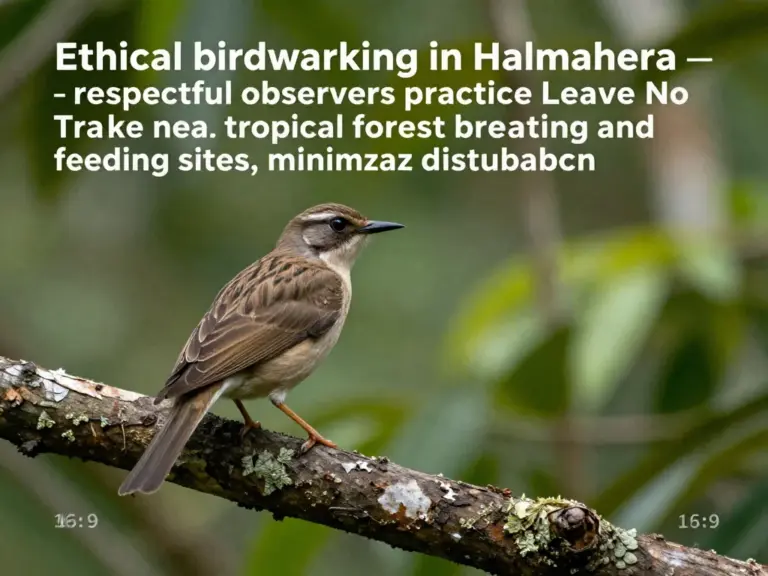
Ethical Birding and Leave No Trace Principles in Halmahera: Minimizing Disturbance to Breeding and Feeding Sites
Halmahera, the largest island in the Maluku archipelago, is a crown jewel for avian enthusiasts worldwide. Home to the legendary Standardwing Bird-of-Paradise and the Ivory-breasted Pitta, the island offers a glimpse into a prehistoric world of vibrant feathers and unique calls. However, as the popularity of birdwatching grows, so does the responsibility of visitors. Practicing Ethical Birding and Leave No Trace Principles in Halmahera is not just a recommendation; it is a necessity to ensure that these endemic species continue to thrive in their natural habitats without the stress of human interference.
Understanding the Fragility of Breeding Sites
Breeding seasons are the most vulnerable times for birds. In Halmahera, many species rely on specific micro-climates and undisturbed forest patches to raise their young. When birders approach nests too closely or use excessive playback (recorded bird calls) to attract a species, they risk causing the parents to abandon the nest. This is a critical violation of ethical birding. To minimize disturbance, always maintain a respectful distance and use high-quality optics rather than physical proximity to get a better view.
Leave No Trace: Protecting Halmahera’s Ecosystem
The Seven Principles of Leave No Trace are essential for anyone exploring the rugged terrain of North Maluku. In Halmahera, this means staying on established trails to prevent soil erosion and the destruction of undergrowth where ground-dwelling birds like the Wallace’s Scrubfowl might forage. Pack out all trash, including organic waste like fruit peels, which can attract non-native predators or introduce diseases to the local bird population.
Minimizing Disturbance at Feeding Sites
Feeding sites, such as fruiting fig trees, are magnets for hornbills and parrots. Ethical birding involves observing quietly and avoiding sudden movements. If a bird stops feeding and looks directly at you with a frozen posture, you are too close. Move back slowly. Disrupting a bird during its feeding window can lead to energy deficits, especially for migratory species or those preparing for the breeding season.
| Action | Ethical Approach | Impact |
|---|---|---|
| Bird Calls | Limited or no playback | Reduces stress and territorial defense energy |
| Photography | No flash, long lenses | Prevents startling and eye damage |
| Group Size | Small, quiet groups | Minimizes the overall footprint in the forest |
The Role of Local Guides in Ethical Tourism
Hiring local guides in Halmahera is one of the most effective ways to ensure ethical practices. These experts understand the behavior of the birds and the geography of the land. By supporting local communities, you create an economic incentive for them to protect the forest from logging and poaching. A good guide will prioritize the bird’s well-being over a ‘perfect shot’ for the tourist.
คำถามที่พบบ่อย (FAQ)
Q1: Why is bird playback discouraged in Halmahera?
A: Playback can trick birds into thinking a rival is in their territory, causing unnecessary stress and distracting them from feeding or mating.
Q2: What is the best time for birdwatching in Halmahera?
A: The dry season, typically from June to October, is ideal for spotting the Standardwing Bird-of-Paradise during their display rituals.
Q3: How can I contribute to conservation while visiting?
A: Follow Leave No Trace principles, hire local guides, and report any illegal poaching or logging activities to local authorities.
References
- BirdLife International – Conservation of Indonesian Birds
- Leave No Trace Center for Outdoor Ethics
- Wonderful Indonesia – Official Tourism Site
- Birding in Halmahera: Endemic Species Guide and Leave No Trace Practices for Responsible Wildlife Watching
- Why Halmahera Is a Birding Hotspot: Key Endemics, Best Seasons, and How to Plan Your Trip
- Essential Identification Tips for Halmahera Endemics: Field Marks, Vocalizations, and Recommended Guidebooks