What to Expect on an Ethical Orangutan Trek: Itineraries, Safety Protocols, Visitor Guidelines, and Minimizing Disturbance
- What to Expect on an Ethical Orangutan Trek: Itineraries, Safety Protocols, Visitor Guidelines, and Minimizing Disturbance
Venturing into the lush rainforests of Indonesia to witness the “Man of the Forest” in its natural habitat is a bucket-list experience for many travelers. However, as tourism increases in sensitive ecosystems like Gunung Leuser National Park and Tanjung Puting, the importance of choosing an ethical orangutan trek cannot be overstated. This guide outlines the essential components of a responsible wildlife encounter, ensuring your visit supports conservation rather than hindering it.
Understanding the Itinerary of an Ethical Orangutan Trek
An ethical orangutan trek differs significantly from standard commercial tours. The focus is on observation rather than interaction. Most itineraries begin in gateways like Bukit Lawang (Sumatra) or Pangkalan Bun (Borneo). Depending on your fitness level, treks can range from a half-day walk to multi-day expeditions deep into the jungle.
- Half-Day Treks: Ideal for those with limited time, focusing on secondary forest areas where semi-wild orangutans are often found.
- Multi-Day Treks: These involve camping in the jungle, offering a higher chance of seeing truly wild orangutans and other wildlife like Thomas Leaf Monkeys and Hornbills.
- Klotok Tours: In Borneo, treks are often combined with living on a traditional boat, visiting various rehabilitation stations within the national park.
Strict Safety Protocols for Humans and Primates
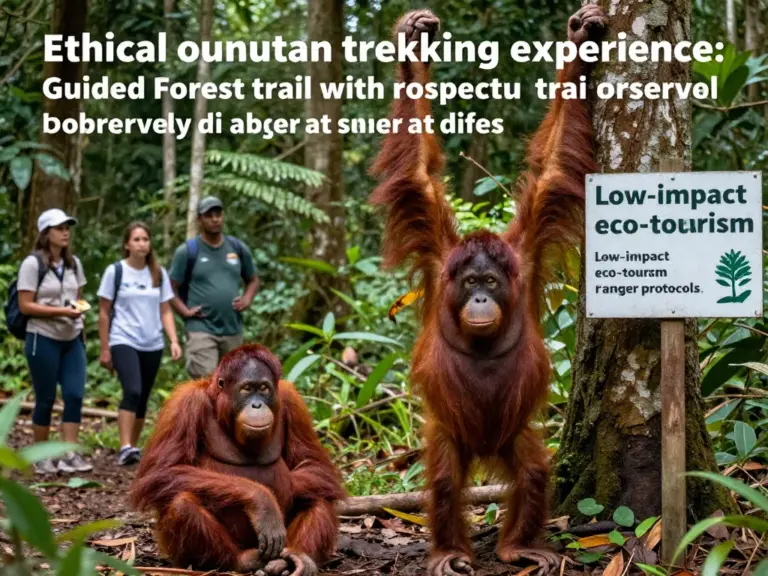
Safety on an ethical orangutan trek is a two-way street. Because orangutans share approximately 97% of human DNA, they are highly susceptible to human respiratory illnesses and other zoonotic diseases. A responsible guide will enforce a minimum distance of 7 to 10 meters at all times. If an orangutan approaches you, the protocol is to move back slowly and calmly.
| Protocol | Reasoning |
|---|---|
| Health Checks | Visitors with colds or flu are prohibited from trekking to prevent infecting the primates. |
| Distance Maintenance | Keeps animals wild and prevents aggressive behavior or disease transmission. |
| No Feeding | Prevents dependency on humans and disruption of natural foraging habits. |
Visitor Guidelines: The “No Touch, No Feed” Rule
The cornerstone of any ethical orangutan trek is the absolute prohibition of feeding or touching the animals. Feeding orangutans alters their natural behavior, making them more likely to approach humans aggressively for food, which can lead to dangerous conflicts. Furthermore, human food can be toxic to their digestive systems. Visitors are expected to keep all food inside sealed bags and only eat in designated areas away from the wildlife.
Minimizing Disturbance in the Rainforest
To ensure a sustainable future for Indonesia’s tourism, minimizing our physical and auditory footprint is vital. Noise levels should be kept to a minimum; loud talking can stress the animals and cause them to flee. Additionally, “Leave No Trace” principles are strictly enforced. All trash, including organic waste like fruit peels, must be carried out of the park to prevent the introduction of non-native seeds or pathogens.
When taking photos, never use a flash. The bright light can startle orangutans, especially mothers with infants, leading to potential falls from the canopy. Respect the silence of the jungle to fully immerse yourself in the experience.
คำถามที่พบบ่อย (FAQ)
References
- The Orangutan Project – Conservation and Ethics
- WWF – Orangutan Species Overview and Threats
- Official Indonesia Tourism Portal
- Ethical Orangutan Encounters in Sumatra: How to Choose Responsible Guides in Bukit Lawang for a Sustainable Wildlife Experience
- Why Ethical Tourism Matters: Understanding Orangutan Conservation, Local Communities, and Visitor Impact in Bukit Lawang
- How to Identify Responsible Guides and Tours: Certifications, Animal Welfare Practices, and Community-Based Partnerships