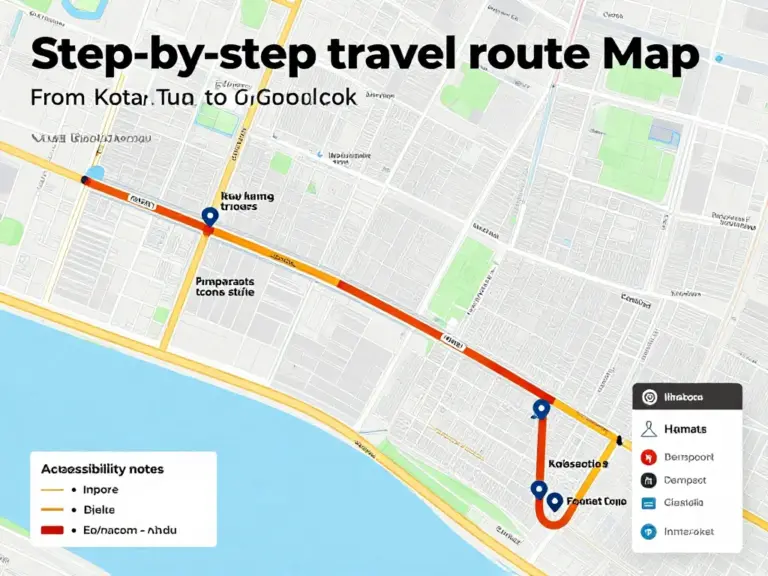
Planning your route: step-by-step itinerary from Kota Tua to Glodok, map tips, transportation between stops, walking times, and accessibility considerations
- Planning your route: step-by-step itinerary from Kota Tua to Glodok, map tips, transportation between stops, walking times, and accessibility considerations
Exploring the historical heart of Jakarta offers a fascinating glimpse into the city’s colonial past and its vibrant cultural evolution. An itinerary from Kota Tua to Glodok is more than just a walk; it is a journey through time, transitioning from the Dutch colonial architecture of Old Batavia to the bustling, aromatic streets of Indonesia’s oldest Chinatown. This guide provides a comprehensive roadmap for travelers looking to navigate this iconic route efficiently while ensuring a rich, immersive experience.
Step 1: Starting at Fatahillah Square (Kota Tua)
Your journey begins at the iconic Fatahillah Square. This open plaza is surrounded by preserved colonial buildings that now serve as museums. Spend about 60-90 minutes here visiting the Jakarta History Museum or the Wayang (Puppet) Museum. The atmosphere is nostalgic, filled with colorful ‘Onthel’ bicycles that define the aesthetic of Old Jakarta.
From Fatahillah Square, the most authentic way to reach Glodok is by walking south along Jalan Pintu Besar Utara. This path allows you to see the transition of the city’s architecture. The total walking distance is approximately 1.2 kilometers (0.75 miles). Walking Time: 15–20 minutes at a steady pace.
Transportation Options Between Stops
If walking is not preferred, you have several quick alternatives:
- Ride-Hailing (Grab/Gojek): The fastest way, taking about 5-7 minutes depending on traffic.
- TransJakarta: Take Corridor 1 from Kota Station to Glodok Station (only 1 stop).
- Onthel Bike: You can negotiate a short ride with local bike operators for a unique experience.
Step 3: Entering the Heart of Glodok (Chinatown)
As you enter Glodok, the scenery shifts to red lanterns and traditional Chinese medicine shops. Your first stop should be Petak Sembilan Market. This narrow alleyway is a sensory explosion of exotic fruits, fresh produce, and street food. Continue your walk to Dharma Bhakti Temple (Jin De Yuan), the oldest Chinese temple in Jakarta, built in 1650.
Accessibility Considerations
When planning your itinerary from Kota Tua to Glodok, it is important to note the varying levels of accessibility:
| Feature | Kota Tua | Glodok |
|---|---|---|
| Sidewalks | Wide and paved | Narrow and often crowded |
| Wheelchair Access | Good (Plaza area) | Difficult (Market alleys) |
| Restrooms | Available in Museums | Limited to Malls (Pancoran Tea House) |
Map Tips for Travelers
Digital maps are generally accurate, but the dense alleys of Glodok can sometimes cause GPS lag. Tip: Download an offline version of Google Maps for Central Jakarta. Look for landmarks like the ‘Pancoran Tea House’ to orient yourself when entering the Glodok area.
คำถามที่พบบ่อย (FAQ)
Is it safe to walk from Kota Tua to Glodok?
Yes, it is generally safe during daylight hours. However, be mindful of your belongings in crowded market areas and use designated pedestrian crossings when crossing large roads like Jalan Gajah Mada.
What is the best time to visit Glodok?
The best time is between 8:00 AM and 11:00 AM. This is when the traditional markets are most active, and the temperature is relatively cooler than in the afternoon.
Are there entrance fees for these areas?
Fatahillah Square is free to enter, though museums have small entry fees (usually 5,000 – 15,000 IDR). Temples in Glodok are free, but donations are appreciated.
How long does the total itinerary take?
A relaxed tour covering both areas usually takes 3 to 5 hours, depending on how long you spend in museums and enjoying street food.
References
Official Indonesia Tourism – Jakarta Old Town
Jakarta Tourism Board – Explore Glodok
- Colonial and Chinatown Heritage Walks in Jakarta: A Self-Guided Route with Food Stops for History and Street Food Lovers
- Why this walk matters: overview of colonial and Chinese-Indonesian heritage, best times, safety, and what to expect on a self-guided route in Jakarta
- Top historical sites and stories en route: must-see colonial landmarks, temples, museums, and the cultural significance of each stop with suggested visit durations